What is a hot wallet
A hot wallet is a cryptocurrency wallet connected to the internet. Learn how hot wallets work, their risks, types, setup steps, and how they compare to cold wallets.
A hot wallet is a cryptocurrency wallet that maintains a constant connection to the internet. It enables you to send and receive digital assets rapidly, but that speed comes at the cost of increased exposure to online threats.
#What is a hot wallet?
A hot wallet is a software-based crypto wallet that stays connected to the internet, allowing quick transactions but increasing exposure to online threats. Your private keys are kept on an internet-connected device, such as a smartphone or computer. As a result, you can initiate transactions whenever you need to.
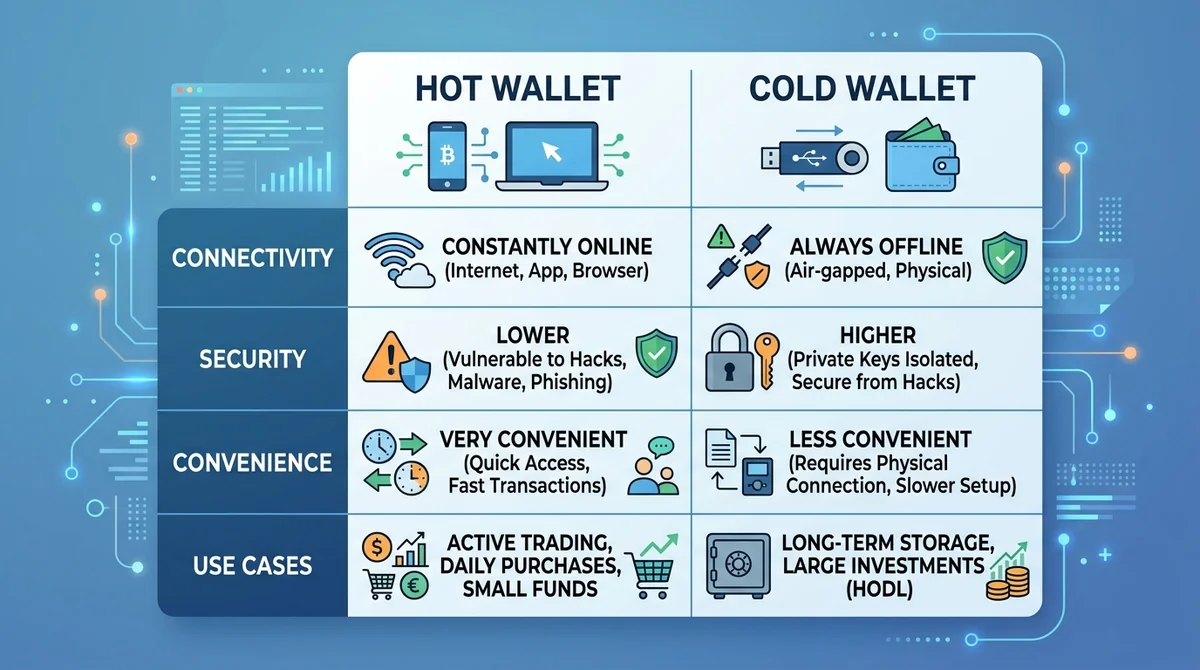
Picture a hot wallet as the cash you carry in your front pocket. It's perfect for everyday purchases, but if a pickpocket gets to it, the money is gone. A cold wallet, by contrast, resembles a home safe—less convenient to open but far better protected. Learn more about cold wallets in our related guide.
How does a hot wallet work?
When you set up a hot wallet, it creates two linked keys: a public key (your receiving address) and a private key (the credential that unlocks your funds). The private key lives on your device, usually in encrypted form.
Each time you make a transaction, the wallet uses that private key to sign it and then broadcasts the signed transaction to the blockchain.
What are examples of hot wallets?
- Mobile wallets like Trust Wallet or MetaMask mobile
- Web wallets like the MetaMask browser extension or exchange-hosted wallets
- Desktop wallets like Exodus or Electrum
#What is the difference between a hot wallet and a cold wallet?

A hot wallet stays connected to the internet, while a cold wallet remains offline, making the latter more secure but less convenient for frequent transactions. Connectivity is the core distinction. A hot wallet stays linked to the internet, whereas a cold wallet remains fully offline. Cold wallets keep private keys on hardware devices or paper, which shields them from online attacks but makes them less practical for frequent trading or spending.
Which is safer: hot or cold wallet?
Cold wallets offer stronger protection because they operate offline. Hackers simply cannot access your keys over the internet. Hot wallets face greater exposure to phishing scams, malicious software, and exchange breaches. That said, hot wallets win on convenience for day-to-day transactions.
When should you use a hot wallet?
Turn to a hot wallet for small, regular transactions—think buying a coffee with crypto or actively trading on an exchange. For substantial holdings or long-term storage, a cold wallet is the wiser choice.
#What are the types of hot wallets?
Hot wallets generally fall into three categories: mobile, web, and desktop.
What is a mobile wallet?
A mobile wallet is an application installed on your smartphone. It suits on-the-go payments and frequently supports QR code scanning. Trust Wallet and Coinbase Wallet are two well-known examples.
What is a web wallet?
A web wallet operates inside your browser, either as an extension or through a website. Its main advantage is accessibility from any device, but that convenience also makes it more susceptible to phishing sites. MetaMask stands out as a widely used web wallet.
What is a desktop wallet?
A desktop wallet is a program you install on your computer. It grants you more control than a typical web wallet, yet if malware infects your machine, your assets could be compromised. Exodus and Electrum are among the most common desktop wallets.
#How to set up a hot wallet?
Getting a hot wallet up and running usually takes just a few minutes. Here's how:
- Pick a reputable wallet provider. Prioritize one with solid reviews and an established track record.
- Download the wallet from the official website or app store. Steer clear of third-party links to avoid malware.
- Create a new wallet. The app will generate a recovery phrase (typically 12 or 24 words).
- Write the recovery phrase on paper. Keep it offline in a secure location. Never share it or store it digitally.
- Set a strong password. Choose a unique password that you don't reuse elsewhere.
- Enable two-factor authentication (2FA) if the option exists. This adds another layer of protection.
⚠️ 数字资产有风险,先小仓位试水。
What do you need before setting up?
You'll need a device (phone or computer) with internet access, plus a safe offline spot to store your recovery phrase.
How to choose a hot wallet provider?
Evaluate the provider's reputation, security track record, and user feedback. Favor wallets that are open-source and have undergone audits. Stay away from new or unverified wallets.
How to secure your hot wallet?
- Keep your software up to date
- Use a strong, unique password
- Turn on 2FA
- Never reveal your recovery phrase
- Watch out for phishing emails and counterfeit websites
#What are the risks of using a hot wallet?
Hot wallets deliver convenience, but they come with several notable risks:
How can hot wallets be hacked?
- Phishing attacks: Fake websites or deceptive emails trick you into entering your private key or recovery phrase.
- Malware and viruses: Malicious software on your device can steal your keys or tamper with transactions.
- Exchange hacks: If you hold funds in a custodial hot wallet on an exchange, a breach at the exchange itself could put your assets at risk.
- User error: Misplacing your recovery phrase or sending funds to an incorrect address can lead to irreversible loss.
How to protect your hot wallet from theft?
- Only download wallets from official sources.
- Use a hardware wallet for large amounts.
- Regularly scan your device for malware.
- Double-check URLs before typing any sensitive information.
- Keep your recovery phrase offline and never share it.
#Hot wallet vs cold wallet: which should you choose?
There is no universal answer. The right choice hinges on your specific situation.
What factors should you consider?
- Transaction frequency: If you trade regularly, a hot wallet is far more practical.
- Amount of funds: For larger sums, a cold wallet provides better security.
- Security needs: If protecting your assets is your top priority, cold storage is the way to go.
- Convenience: Hot wallets are the clear winne
This guide is brought to you by MSX Learn.
常见问题
What is a hot wallet in simple terms?
A hot wallet is a cryptocurrency wallet that is connected to the internet. It allows you to send and receive crypto quickly, but it is more vulnerable to online attacks than a cold wallet.
Is a hot wallet safe?
Hot wallets are safe if you follow good security practices, like using strong passwords, enabling 2FA, and keeping your recovery phrase offline. However, they are less secure than cold wallets because they are online.
Can a hot wallet be hacked?
Yes, hot wallets can be hacked through phishing, malware, or exchange breaches. You can reduce the risk by using reputable wallets, avoiding suspicious links, and keeping your device secure.
What is the difference between hot and cold wallets?
Hot wallets are connected to the internet and convenient for frequent transactions. Cold wallets are offline and more secure for long-term storage. Many people use both.
Do I need a hot wallet?
If you want to make frequent small transactions or trade on exchanges, a hot wallet is useful. For long-term holding of large amounts, a cold wallet is recommended.
相关词条
想看看概念的真实数据吗?
注册后即可查看相关资产的实时行情、资金费率和费率。
去看实时行情和费率 →