What Is Margin Rate? A Beginner's Guide to Calculating Contract Margin Levels in 2026
Margin rate: minimum % of contract value required as margin; reciprocal to leverage. Covers initial & maintenance margin examples. Not investment advice.
Margin rate (TRUMPUSDT perpetual futures margin requirements explained) is the percentage of the total contract value required as margin to open a position, and it is the reciprocal of leverage. For example, a 10% margin rate corresponds to 10x leverage.
This article is for conceptual explanation only and does not constitute investment advice; specific margin rates are subject to each platform's actual rules.
#What Is Margin Rate?
Margin rate is the minimum percentage of the contract value required as margin to open and maintain a position in contract trading. It can be simply compared to a down payment on a home purchase: for a house worth 1 million, a down payment of 100,000 corresponds to a 10% down payment ratio, which is similar to the margin rate; however, the margin mechanism in contracts includes a maintenance margin requirement, which is not exactly the same as a home down payment.
Margin rate is typically divided into two types:
- Initial margin rate: The minimum percentage of margin required when opening a position.
- Maintenance margin rate: The minimum percentage that margin cannot fall below during holding; otherwise, it may trigger a margin call or forced liquidation.
For related content, see What is margin?.
#How to Calculate Contract Margin Rate?
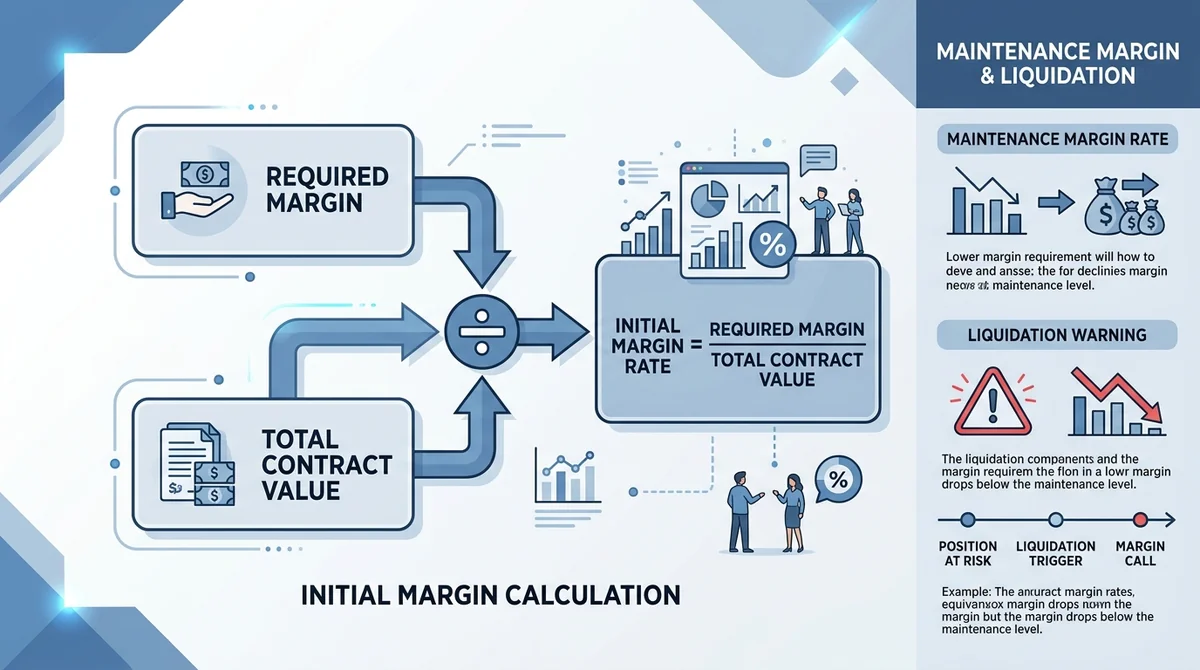
Initial margin rate = Required margin ÷ Total contract value. Total contract value = Price × Contract quantity. For example, if one contract is worth $1,000 and an exchange requires an initial margin rate of 10%, then $100 of margin is needed to open the position.
Maintenance margin rate is usually lower than the initial margin rate—for example, assume it is 5%. If price fluctuations cause the margin to fall below this percentage, the exchange will typically require additional margin, otherwise it may forcibly liquidate the position. When calculating, note that margin rates may differ across exchanges and contracts; actual values should be based on platform announcements.
#An Example to Understand Margin Rate and Leverage
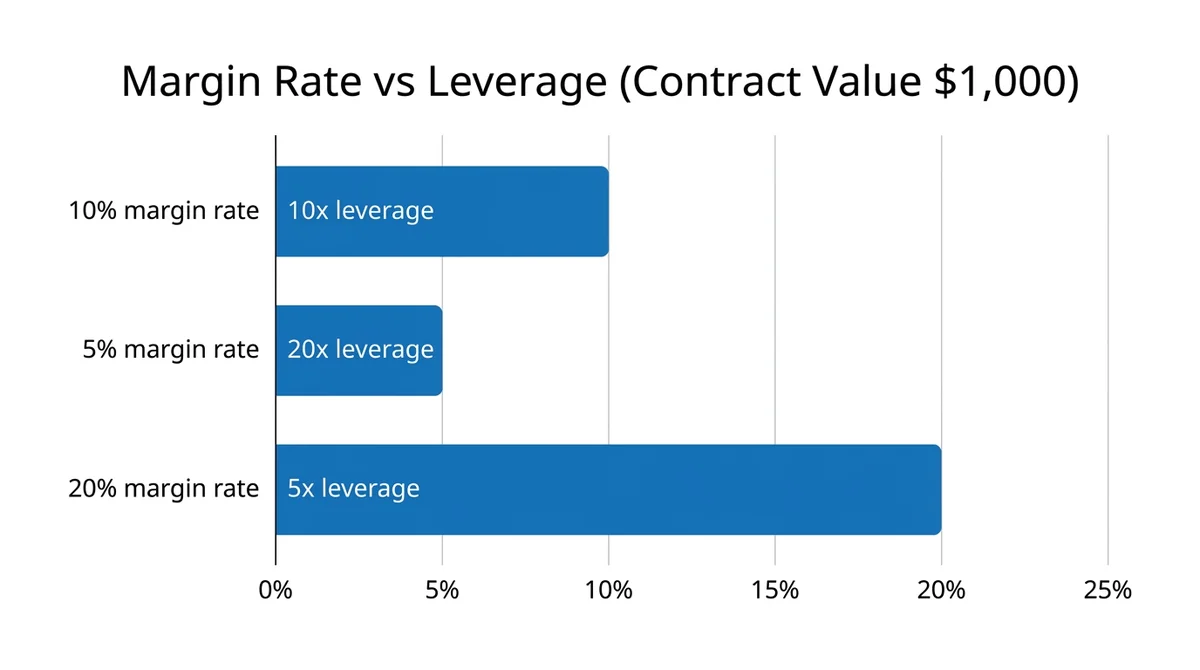
The following is a hypothetical example, used only to illustrate the calculation relationship:
| Contract Value | Margin Required | Margin Rate | Corresponding Leverage |
|---|---|---|---|
| $1,000 | $100 | 10% | 10x |
| $1,000 | $50 | 5% | 20x |
| $1,000 | $200 | 20% | 5x |
The lower the margin rate, the higher the leverage, and the greater the amplification of potential profit and loss, but the corresponding liquidation risk also increases.
#Why Margin Rate Matters? Common Misconceptions
Margin rate directly determines the capital required to open a position and the size of leverage, affecting capital efficiency. High leverage (low margin rate) allows a larger position with less capital, but a small adverse price movement may trigger liquidation.
Common misconceptions:
- Misconception 1: A higher margin rate is safer. In reality, a higher margin rate only means lower leverage; if the position size is large, the absolute loss amount can still be high.
- Misconception 2: Focusing only on the initial margin rate and ignoring the maintenance margin rate. The maintenance margin rate is the actual reference line that triggers a margin call or forced liquidation.
Before trading, confirm both the initial margin rate and maintenance margin rate, and implement proper position and risk control. This article is for conceptual explanation only and does not constitute any investment advice.
FAQ
What is margin rate?
Margin rate is the percentage of the total contract value required as margin to open a position. For example, if a contract is worth $1,000 and you pay $100 as margin, the margin rate is 10%. It is the reciprocal of leverage.
What is the relationship between margin rate and leverage?
Margin rate and leverage are reciprocal. A 10% margin rate corresponds to 10x leverage, and 5% corresponds to 20x leverage. The lower the margin rate, the higher the leverage, and the more pronounced the profit and loss amplification, as well as the greater the liquidation risk.
What is the difference between initial margin rate and maintenance margin rate?
The initial margin rate is the minimum percentage required to open a position; the maintenance margin rate is the percentage that margin cannot fall below during holding. The maintenance margin rate is usually lower, and falling below that line triggers a margin call or forced liquidation.
How to calculate contract margin rate?
Initial margin rate = Required margin ÷ Total contract value. Total contract value = Price × Contract quantity. For example, a $1,000 contract with a 10% initial margin rate requires $100 of margin.
Is a lower margin rate better?
No. A lower margin rate means higher leverage, allowing smaller capital to control a larger position, but adverse price movements can easily trigger liquidation. Beginners should first use low leverage and a higher margin rate to become familiar with the mechanism.
Related Terms
Want to see the real data for this concept?
After you sign up, you can view live prices, funding rates, and fees for the related assets.
View live prices and fees →