Hot Wallet vs Cold Wallet: How to Choose Based on Asset Size in 2026? (Detailed Differences)
Hot wallets for small daily use; cold wallets for large long-term storage. Key difference: whether private keys touch the internet. Choose by asset size.
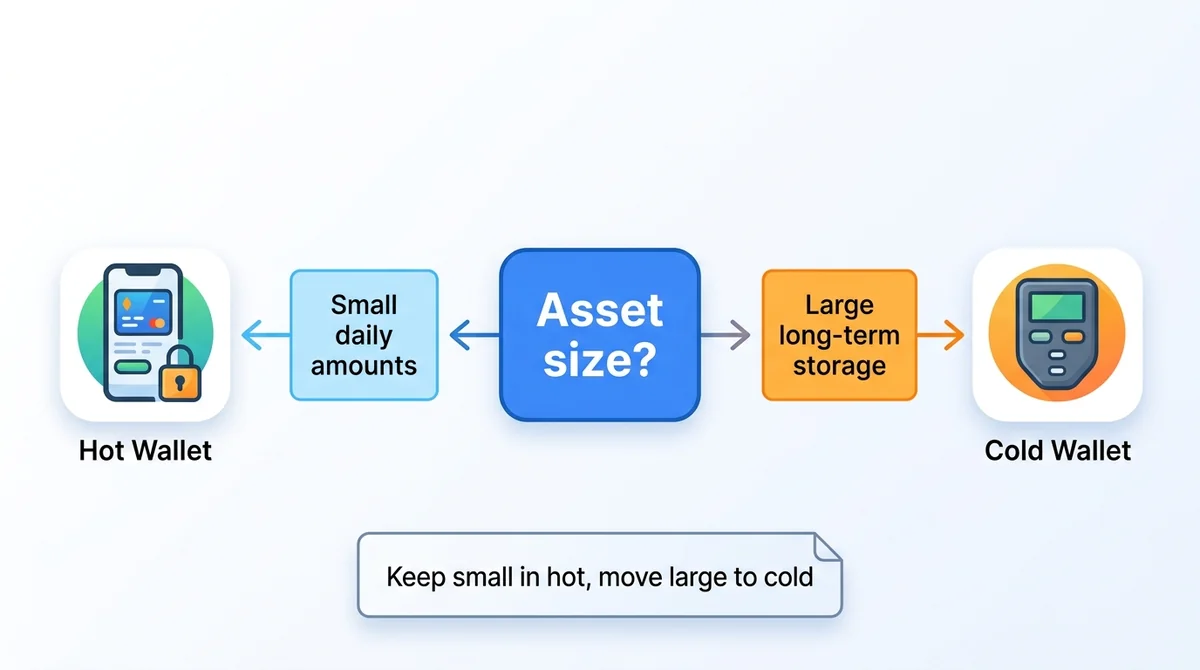
The core difference between hot wallets and cold wallets lies in whether the private key touches the internet: hot wallets are always online and keep private keys online, suitable for holding small amounts of assets used for daily transactions; cold wallets keep private keys offline, like locking a key in a safe, suitable for long-term storage of large amounts of assets. Different asset sizes call for different choices—keep small amounts in hot wallets and move large amounts to cold wallets, which is a universal principle of crypto asset management.
#What Is the Difference Between Hot Wallets and Cold Wallets?
The essential difference between hot wallets and cold wallets comes down to one thing: whether the private key is exposed to an internet-connected environment. A hot wallet stores private keys on an internet-connected device—whether a phone, computer, or browser extension—so as long as the device is connected to the internet, the private key may be stolen remotely. A cold wallet keeps private keys on completely offline hardware or media, making it impossible for hackers to launch attacks over the network.
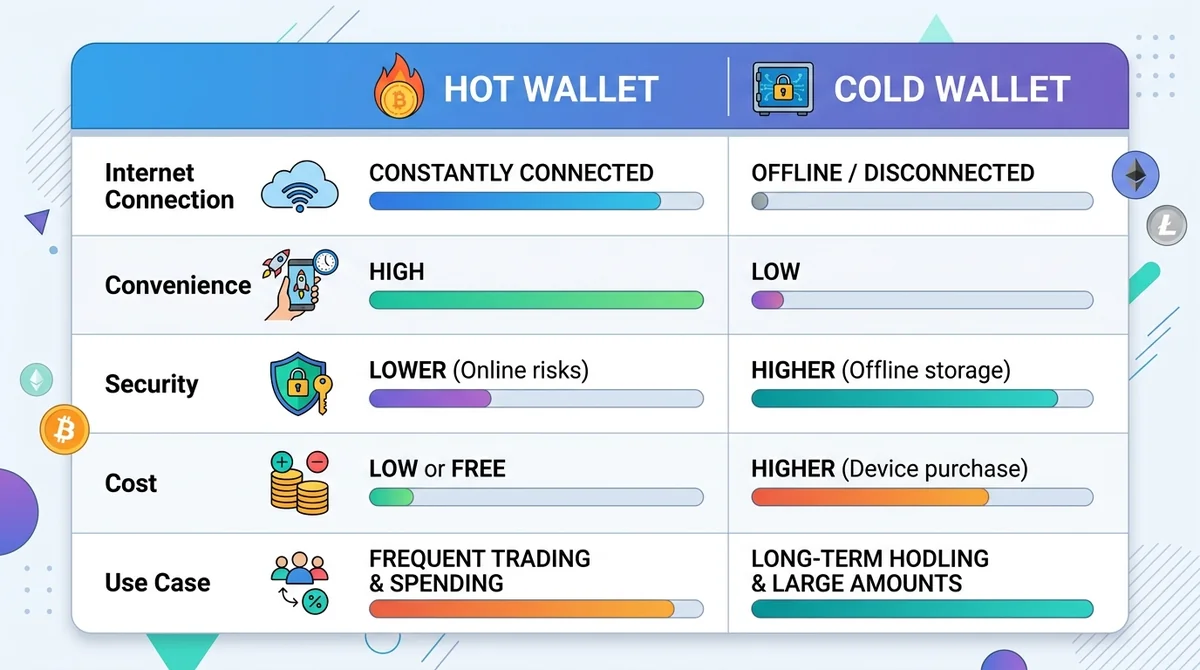
| Dimension | Hot Wallet | Cold Wallet |
|---|---|---|
| Internet connection | Always online, private keys online | Completely offline, private keys never touch the internet |
| Convenience | High, can initiate transactions anytime | Low, needs to connect device or manually import |
| Security | Lower, vulnerable to phishing and malware | Higher, protects against remote theft but requires guarding against physical loss/theft |
| Cost | Usually free (software/exchange wallets) | May require hardware purchase (e.g., Ledger, Trezor) |
| Use case | Small daily amounts, frequent trading | Large long-term amounts, cold storage |
Remember: the private key is the sole proof of ownership of your assets. Whoever controls the private key controls the on-chain assets. Therefore, understanding whether the private key touches the internet is the first step in choosing a wallet type. To learn more about private key management, refer to the private key security guide.
#What Is a Hot Wallet? What Are the Risks and Precautions?
A hot wallet is any cryptocurrency wallet that can be used while connected to the internet, including mobile software wallets (such as Trust Wallet and MetaMask mobile), exchange account wallets, and browser extension wallets. They are like a pocket wallet you carry around—convenient to access, but also more likely to be stolen.
The core risks to hot wallet security come from the network attack surface:
- Phishing websites: Fake login pages that imitate well-known wallets or exchanges, tricking you into entering your seed phrase or private key.
- Fake wallet apps: Counterfeit versions that appear in app stores or third-party sites; once downloaded, your assets may be transferred out.
- Malware/keyloggers: After infecting your device, they capture information when you type your password or seed phrase.
- Malicious DApp approvals: When connecting to decentralized applications, if you casually sign unlimited approvals, contracts may drain your tokens without your knowledge.
To address these risks, follow these practical recommendations:
- Only download wallets from official websites or official app stores, and verify the developer information.
- Enable two-factor authentication (2FA); for exchange accounts, be sure to bind Google Authenticator or a similar tool.
- Do not click any links sent by strangers, especially "customer support" that asks you to enter your seed phrase.
- Regularly check and revoke DApp approvals you no longer use; refer
FAQ
热钱包和冷钱包哪个更安全?
冷钱包更安全。因为私钥离线,黑客无法远程盗取。但如果你丢失硬件钱包或助记词,资产同样可能拿不回。安全取决于保管方式,而不是钱包类型本身。
新手应该先用热钱包还是冷钱包?
建议先用正规热钱包熟悉操作。资产少时风险可控,等资产规模达到你无法承受损失的程度,再把大部分转入冷钱包。先学习再升级。
热钱包有哪些常见风险?
钓鱼网站、假钱包应用、恶意软件都可能偷走私钥。只从官方渠道下载,不要点击不明链接,不要泄露助记词。连接 DApp 时要确认网站真实性。
冷钱包需要花钱买吗?
硬件钱包通常需要购买,价格因品牌和型号而异;纸钱包或离线设备可能免费,但使用更麻烦,且介质容易丢失或损坏。请根据自身情况选择。
助记词泄露了怎么办?
立即将资产转移到新的钱包,并重新生成一套助记词。原钱包不再使用,因为任何人拿到助记词都能转走资产。不要相信任何要求提供助记词的人。
Related Terms
Want to see the real data for this concept?
After you sign up, you can view live prices, funding rates, and fees for the related assets.
View live prices and fees →