What Is a Bank IPO? A Beginner’s Guide to Bank Initial Public Offerings
Learn how a bank's first public share sale works, with key examples, benefits, risks, and common misconceptions in this beginner-friendly guide.
#What Is a Bank IPO?
A bank IPO is the first public offering of a bank’s shares, allowing it to raise capital from public investors while becoming a publicly traded company. It converts a privately held bank into a publicly traded entity after meeting regulatory requirements.
Key Takeaways
- A bank IPO is the process by which a bank offers its shares to the public for the first time.
- The bank must meet regulatory requirements before listing.
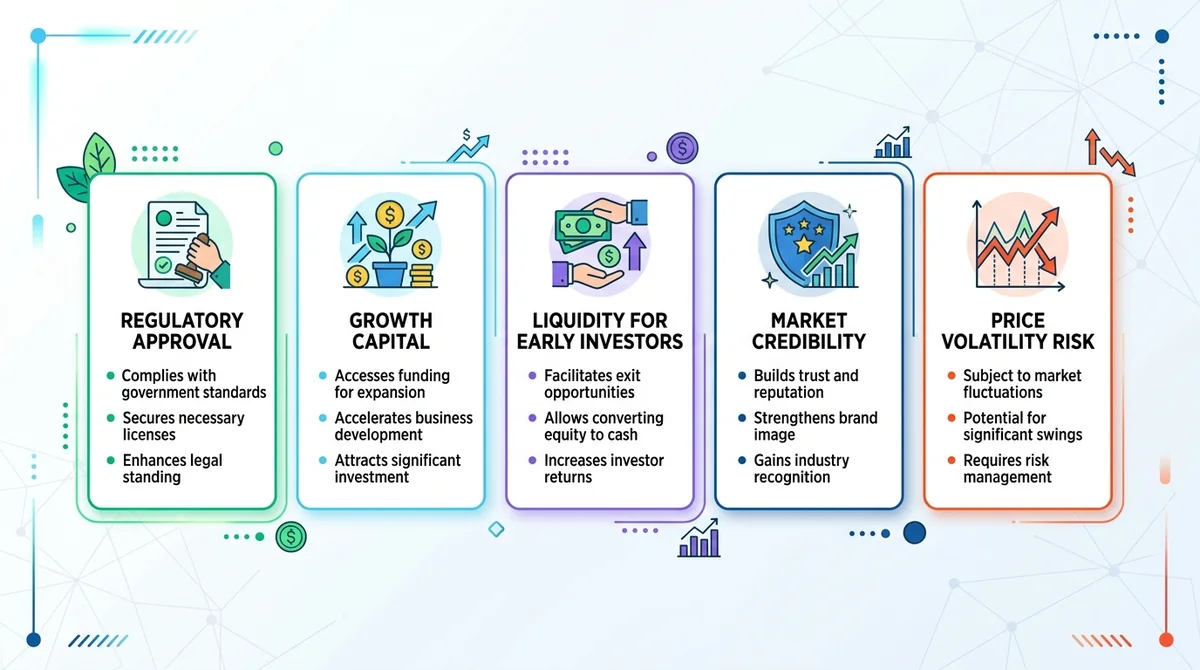
- Bank IPOs raise growth capital, provide liquidity to early investors, and boost market credibility.
- Investors should be aware of risks such as price volatility and regulatory changes.
#What Is a Bank IPO in Simple Terms?
A bank IPO is the process by which a bank offers its shares to the public for the first time. It converts a privately held bank into a publicly traded company, and the bank must meet regulatory requirements before listing.
#How a bank IPO differs from a regular company IPO
While the core mechanics are similar, bank IPOs face additional regulatory scrutiny because banks handle public deposits and are integral to the financial system. Regulators review the bank’s financials, risk management, and business model more intensively before approval.
#How Does a Bank IPO Work?
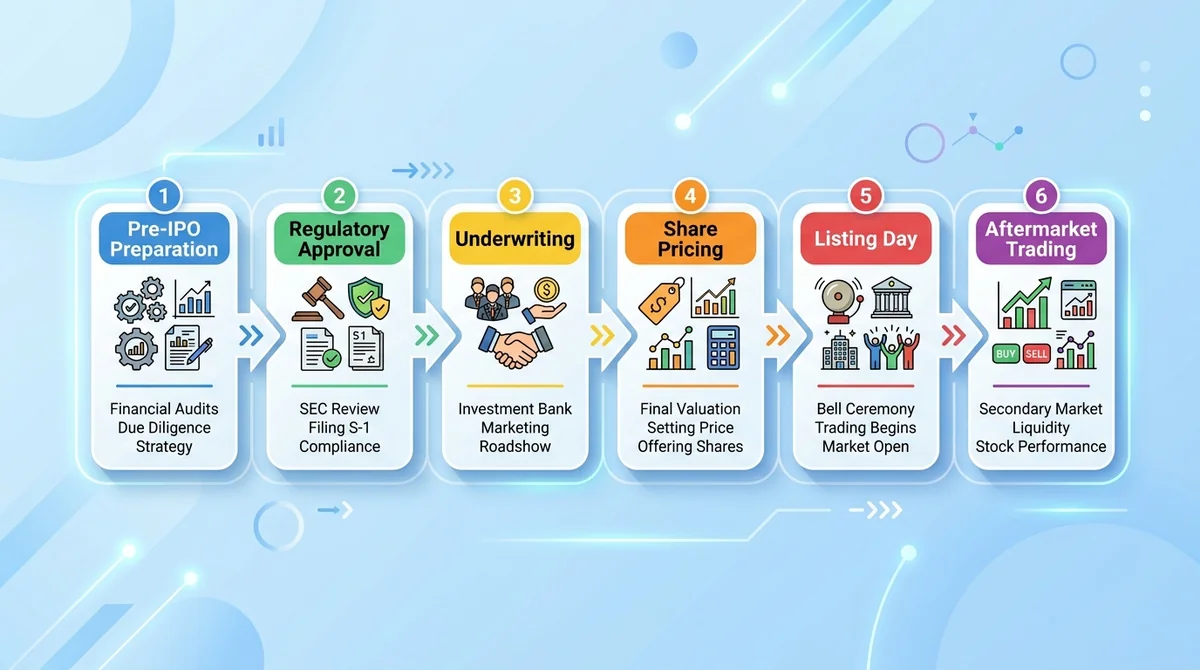
A bank IPO involves regulatory approval, underwriting, pricing, and then public trading of shares on an exchange.
#Pre-IPO preparation and regulatory approval
The bank hires underwriters to manage the offering. Regulators review the bank’s financials and business model before approval.
#Underwriting and share pricing
Shares are priced based on demand and the bank’s valuation. Underwriters help determine the initial price range and allocate shares to institutional and retail investors.
#Listing day and aftermarket trading
After listing, shares trade on a stock exchange. The opening price may differ from the IPO price, and the stock can be volatile in the first days of trading.
#What Are Examples of Bank IPOs?
Examples of bank IPOs vary by region and market conditions. Some banks list on major exchanges like NYSE or LSE. Case studies illustrate different IPO outcomes.
#Notable bank IPOs in recent years
While specific examples depend on market timing, recent bank IPOs have occurred across global exchanges, with varying aftermarket performance. Investors often study these cases to understand typical patterns.
#Why Is a Bank IPO Important?
A bank IPO is important because it raises growth capital, provides liquidity to early backers, and boosts market credibility.
#Capital raising for growth
A bank IPO provides funds for expansion, technology, and regulatory capital. This capital can be used to open new branches, invest in digital banking, or strengthen the bank’s balance sheet.
#Liquidity for early investors
It allows early investors and employees to sell shares, converting their ownership into cash. This liquidity event is often a key motivation for going public.
#Market credibility and brand visibility
Public listing can enhance a bank’s reputation and access to capital markets. Being publicly traded often increases brand recognition and trust among customers and partners.
#What Are the Risks or Common Misconceptions About Bank IPOs?
Investors should be aware that bank IPOs carry risks such as price volatility and regulatory changes, and that not all IPOs perform well initially.
#Risks for investors
Bank stocks can be volatile after listing. Regulatory changes can impact bank profitability. Not all IPOs deliver immediate gains; some may decline.
#Common misconceptions
A bank IPO does not guarantee the bank is financially strong. Investors sometimes assume that an IPO automatically means a healthy company, but thorough due diligence is still required.
#Related Terms
- IPO: Initial Public Offering, the first sale of stock by a company to the public.
- Underwriting: The process by which investment banks raise capital from investors on behalf of a company.
- Stock exchange: A marketplace where securities are bought and sold.
- Capital raising: The process of obtaining funds to finance operations or growth.
FAQ
What is a bank IPO?
A bank IPO is the first public offering of a bank’s shares, allowing it to raise capital from public investors while becoming a publicly traded company.
How does a bank IPO work?
A bank IPO involves regulatory approval, underwriting, pricing, and then public trading of shares on an exchange.
Why is a bank IPO important?
A bank IPO is important because it raises growth capital, provides liquidity to early backers, and boosts market credibility.
What are the risks of investing in a bank IPO?
Risks include price volatility after listing and potential regulatory changes that could impact profitability. Not all IPOs deliver immediate gains.
Is a bank IPO a guarantee of financial strength?
No, a bank IPO does not guarantee the bank is financially strong. Investors should still perform due diligence.
Want to see the real data for this concept?
After you sign up, you can view live prices, funding rates, and fees for the related assets.
View live prices and fees →