What Is Bookbuilding?
Learn how bookbuilding works in crypto token launches to set a fair price. Discover the steps, risks, and why it matters for price discovery.
#What Is Bookbuilding?
Bookbuilding is the process of gathering investor orders and price indications before finalizing the offer price for a new asset, such as a token or stock. It helps issuers gauge demand and set a price that balances supply and interest.
Key Takeaways
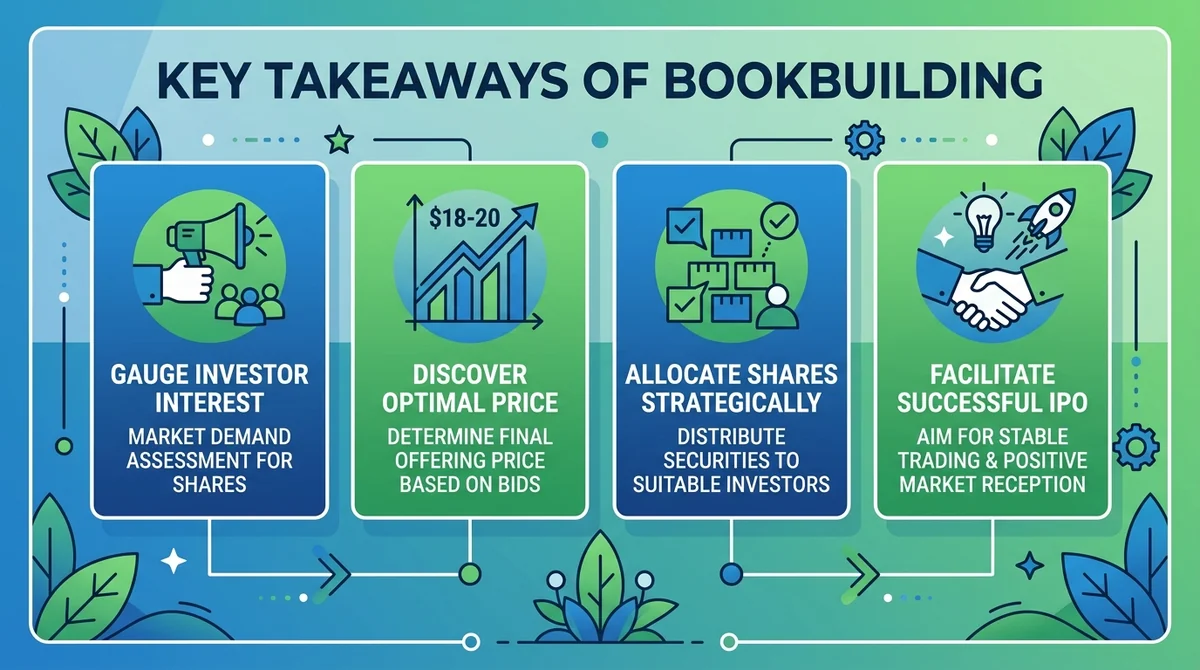
- Bookbuilding collects investor bids to determine the optimal launch price.
- It is used in traditional IPOs and increasingly in crypto token launches.
- The process can reduce underpricing or overpricing risks.
- Retail investors may face allocation bias or limited access.
#What Is Bookbuilding?
Bookbuilding is a demand-gathering process used to determine the optimal issue price for a new asset, such as a token or stock, based on investor interest. The "book" refers to the record of demand from potential buyers. In traditional finance, investment banks act as bookrunners, but in crypto, the process may occur on a decentralized platform or a centralized launchpad.
#How Does Bookbuilding Work in Crypto?
In crypto, bookbuilding typically involves collecting investor bids over a set period, then using that demand data to set the token's launch price and allocation. Issuers or their agents open an order book where investors submit bids indicating quantity and price. The collected bids help set a price range or final offering price. After the book closes, allocations are made based on demand and other criteria.
#What are the steps in a crypto bookbuilding process?
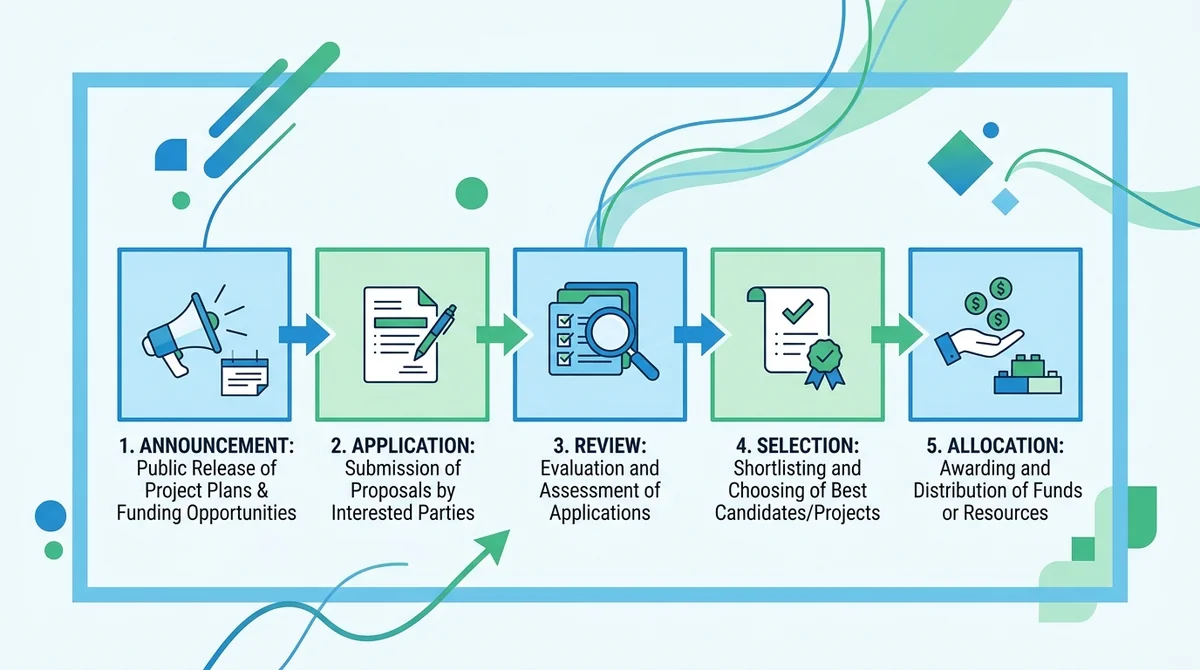
- Announcement: The issuer announces the token sale and opens the order book.
- Bid submission: Investors submit bids with desired quantity and price.
- Book aggregation: The issuer collects and analyzes all bids.
- Price determination: A final price is set where demand meets supply.
- Allocation: Tokens are distributed to investors based on rules (e.g., pro-rata, tiered).
#Who are the key participants in bookbuilding?
- Issuers: The project team or company launching the token.
- Investors: Retail and institutional buyers who submit bids.
- Underwriters/Launchpads: Platforms that facilitate the process and may guarantee a minimum price.
- Regulators: In some jurisdictions, oversee the fairness of the process.
#Bookbuilding Example in a Token Launch
A token launch may use bookbuilding to collect investor price bids and then set the final sale price at a level that clears the available supply. For example, a hypothetical token sale where investors submit bids between $0.80 and $1.20 per token. The issuer aggregates bids and sets the final price at $1.00, where demand is balanced. Allocation may favor larger or earlier bidders depending on the rules.
#Why Is Bookbuilding Important?
Bookbuilding is important because it improves price discovery and helps align the offering price with actual market demand, reducing the risk of a failed launch. It helps discover a fair market price for a new asset, reduces the risk of underpricing (leaving money on the table) or overpricing (failed launch), provides issuers with insight into demand and investor composition, and can improve post-launch price stability.
#Risks and Common Misconceptions About Bookbuilding
Common risks in bookbuilding include information asymmetry, preferential allocation to large investors, and lack of transparency, which can disadvantage retail participants. Bookbuilding is not a guarantee of fair pricing, and some processes may be manipulated.
#Is bookbuilding the same as an auction?
No, bookbuilding is not exactly an auction. In an auction, all bids are visible and the highest bid wins. In bookbuilding, the issuer has discretion to set the final price based on the collected bids, often favoring certain investors.
#Can retail investors always participate?
Not always. Some bookbuilding processes are restricted to institutional or accredited investors, or retail investors may receive smaller allocations.
#Related Terms
- IPO (Initial Public Offering): The first sale of stock by a company to the public.
- Token Sale: A fundraising event where new tokens are sold to investors.
- Price Discovery: The process of determining the price of an asset through supply and demand.
- Underwriting: The process where a financial institution guarantees the sale of securities.
- Order Book: A list of buy and sell orders for an asset, showing demand and supply.
FAQ
What is bookbuilding in simple terms?
Bookbuilding is the process of collecting investor orders and price indications to set the final offer price for a new asset like a token or stock.
How does bookbuilding work in a crypto token launch?
Investors submit bids with quantity and price during a set period. The issuer aggregates these bids to determine the token's launch price and allocation.
What are the benefits of bookbuilding?
Bookbuilding helps discover a fair market price, reduces underpricing or overpricing risks, and provides issuers with demand insights.
What are the risks of bookbuilding?
Risks include information asymmetry, allocation bias toward large investors, lack of transparency, and potential manipulation.
Is bookbuilding the same as an auction?
No, bookbuilding gives issuers discretion to set the final price based on collected bids, unlike an auction where the highest bid wins.
Want to see the real data for this concept?
After you sign up, you can view live prices, funding rates, and fees for the related assets.
View live prices and fees →