What to Read Next After a Hardware Wallet? Connecting the Core Concepts of Private Key Storage (2026)
A hardware wallet stores private keys offline and signs on-device; assets stay on-chain. Link private keys, seed phrases, signing and cold storage into one security map.
A hardware wallet is a dedicated device that keeps private keys offline and signs transactions inside the device when needed, while the assets themselves always remain on-chain. Once you understand that, the next concepts to fill in are private keys, seed phrases, signing, and cold storage.
#What is a hardware wallet and how does it work? What exactly does it store?
A hardware wallet does not store assets; it stores private keys. Assets are recorded on the blockchain, and the device only controls signing authority.
The core difference from an ordinary wallet app is whether the private key ever touches an internet-connected environment. A software wallet keeps its private key on a networked device, while a hardware wallet keeps its private key inside an offline device.
Analogy: a hardware wallet is like a key box for a safe — the money sits in the bank account, and the box only exists to stop the key from being copied. The analogy is only for intuition; the actual mechanism follows cryptographic principles.
#How are private keys and seed phrases related?
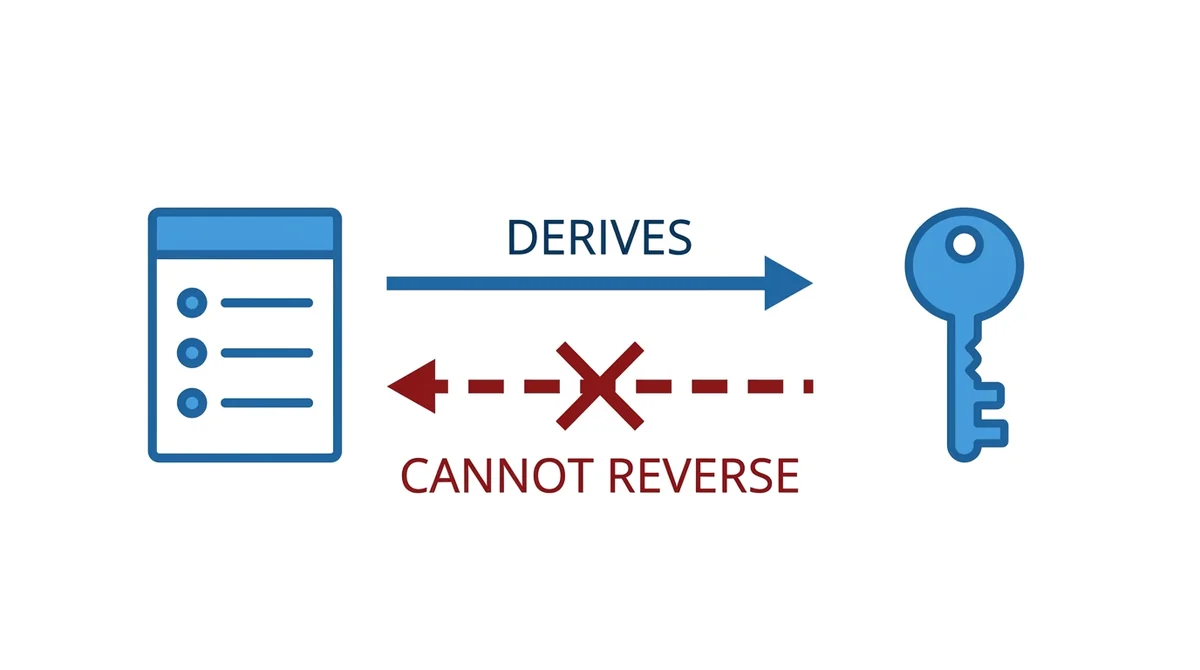
A private key is the credential that controls on-chain assets, and a seed phrase is a human-readable backup form of the private key. If either one leaks, you lose control of your assets.
- Private key: a string of characters used to sign and authorize
- Seed phrase: a set of common words that can restore the private key
- Relationship: a seed phrase can derive the private key, but not the other way around
Analogy: the private key is like a password, and the seed phrase is like a written password hint card — if the card is lost, the password cannot be recovered.
#How does cold storage relate to hardware wallets?
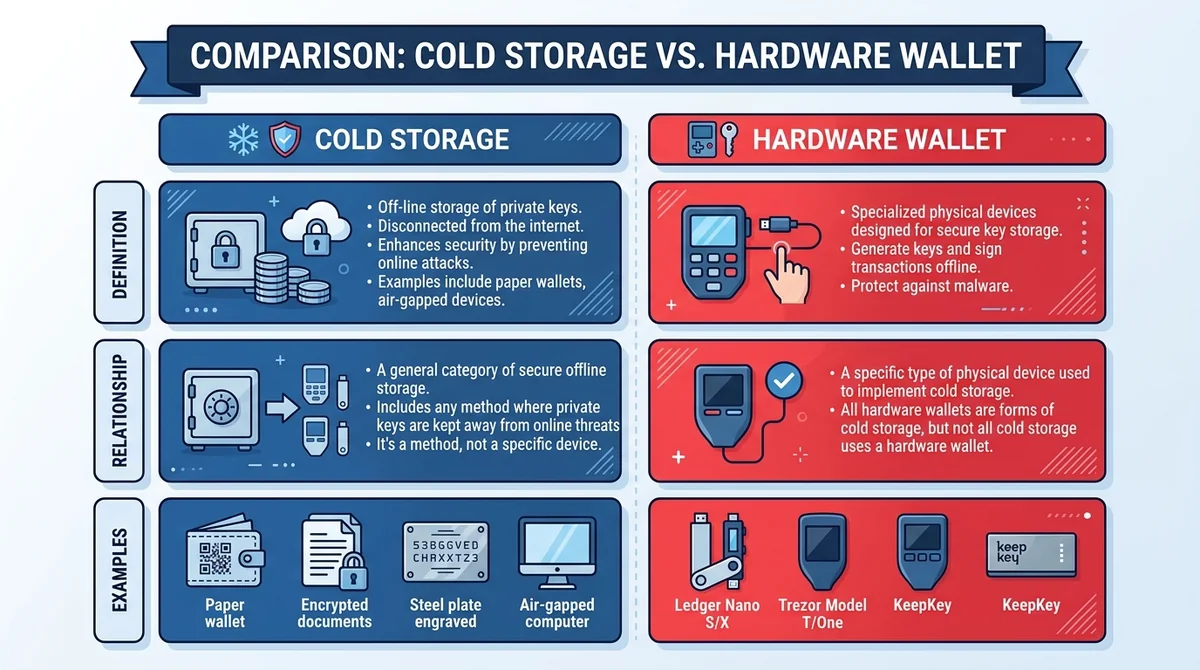
Cold storage means private keys stay away from internet-connected environments for the long term. A hardware wallet is one common implementation, but the two are not synonyms.
How to create a paper wallet safely, an old offline-signing computer — these also follow the cold storage idea. A hardware wallet simply turns this into a dedicated device.
#What actually happens during transaction signing?
Signing is the act of authorizing a transaction with a private key. A hardware wallet completes the signature inside the device, so the private key never leaves it.
That is why you must check the device screen before signing: the recipient address and amount shown on that screen are what is actually being authorized.
#In what order should you read to build a wallet security concept map?
Recommended order: private keys → seed phrases → signing → cold storage → hardware wallets. Separate the easily confused concepts first, then move on to security practices.
The two most commonly confused pairs: private keys vs. seed phrases, and cold storage vs. hardware wallets.
Once the concepts are clear, you can move on to content about What is a non-custodial wallet and withdrawal operations. This article covers concepts only and does not involve any specific assets or operational advice. Note that custody fee structures vary by platform and are outside the scope here.
⚠️ Digital assets carry risk; this is not investment advice.
FAQ
Does a hardware wallet store assets or private keys?
It stores private keys. Assets are always recorded on the blockchain; a hardware wallet only keeps the private key offline and signs inside the device when needed, so the device itself never holds the assets.
Are a seed phrase and a private key the same thing?
No. A private key is the credential that controls assets, while a seed phrase is a human-readable backup form of the private key from which the private key can be derived. A leak of either means losing control of your assets.
Is a hardware wallet the same as cold storage?
Not exactly. Cold storage means private keys stay away from internet-connected environments for the long term, and a hardware wallet is one common implementation. How to create a paper wallet safely and offline computers also follow the cold storage idea.
Does the private key leave the device when a hardware wallet signs?
No. Signing happens inside the device and the private key never leaves it. That is why you should verify the address and amount on the device screen before signing to guard against tampered transactions.
What should I read next after the hardware wallet concepts?
Build your concept map in the order of private keys, seed phrases, signing, cold storage, and hardware wallets, then move on to What is a non-custodial wallet and withdrawal operations, and finally to security practices.
Related Terms
Want to see the real data for this concept?
After you sign up, you can view live prices, funding rates, and fees for the related assets.
View live prices and fees →