How to Buy RWA
Before buying RWA, set up a crypto wallet and stablecoins, then verify, deposit, and place a spot order on a supported platform. Watch issuer and contract risks.
Buying RWA usually means using a crypto platform to buy tokens that represent real-world assets with stablecoins on a spot basis, then holding them in your own wallet or platform account. Whether you can buy, and in what form, depends on the compliance requirements of your jurisdiction and platform support.
#What Is RWA? Why Is It Different From Ordinary Crypto Tokens?
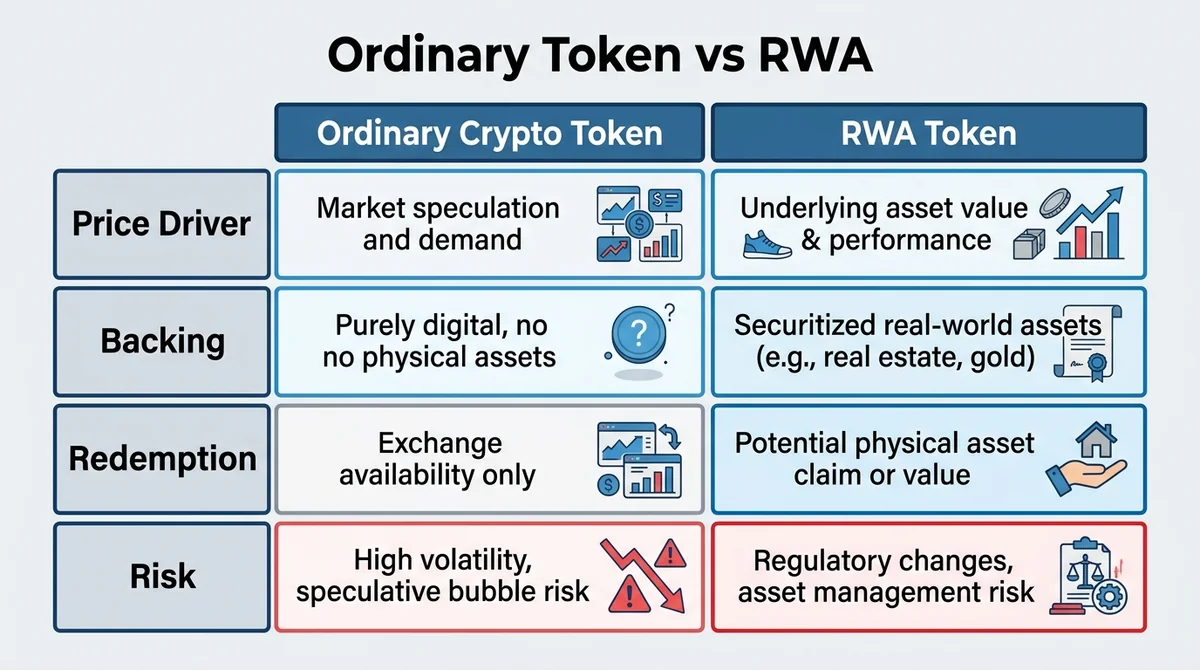
RWA (Real World Assets) are on-chain tokens created by putting real assets such as treasury bonds and gold on-chain. Their value mainly relies on the underlying assets and issuer redemption, rather than being priced purely by market sentiment.
Analogy: An ordinary crypto token is more like a limited-edition sneaker, with its price driven by hype; RWA is more like a certificate, with its price driven by how much the asset behind it is worth.
Common types:
- Tokenized bond: usually represents a claim on assets such as short-term tokenized treasury bonds.
- Tokenized commodities: usually represents a claim on physical gold in a vault.
It is important to stress that the token you hold is generally a certificate or claim promised by the issuer, and is not the same as directly holding the underlying asset; whether it can be redeemed, and how, depends on the issuer's legal arrangements and repayment ability. Structures vary widely between projects, so read the offering documents before buying.
#What Do You Need to Prepare Before Buying RWA?
First create and back up a crypto wallet, then prepare stablecoins as the purchase medium. A cold wallet is safer but more cumbersome to use, while a hot wallet is convenient but carries relatively higher online risk; the trade-off depends on how much you hold and how often you transact.
Analogy: A cold wallet is like a safe, and a hot wallet is like a wallet you carry with you.
Purchases are generally made on a spot basis, and using margin trading with perpetual futures leverage is not recommended. Spot means buying and holding the asset directly, while margin trading means borrowing funds to enlarge a position, which also magnifies loss risk.
Analogy: Spot is like buying a house outright, while margin trading is like taking out a mortgage; the latter is more sensitive to price swings.
#How to Buy RWA: What Are the Steps?
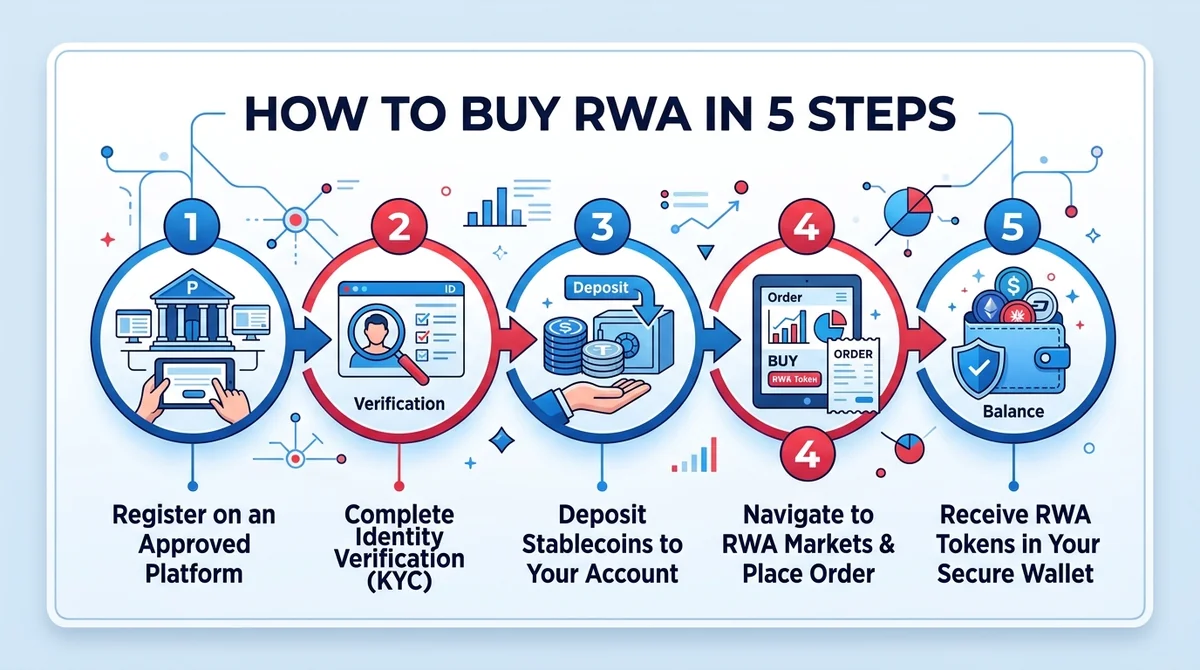
- Choose a platform: Find a platform that supports the RWA token you want to buy, and confirm its compliance qualifications and availability in your region.
- Complete verification: Submit your identity information as required by the platform and complete the KYC (Know Your Customer) process.
- Deposit funds: Transfer stablecoins into your platform account; the specific fiat or stablecoin types supported are subject to the platform's instructions.
- Place a spot order: Buy at market or limit price, and confirm the execution price and quantity.
- Check your holdings: View the token balance in your wallet or platform account, and confirm the redemption conditions.
⚠️ Digital asset prices are highly volatile, and RWA also involves issuer credit risk. It is advisable to start with a small amount. This article does not constitute investment advice.
#What Fees and Mechanisms Will You Encounter When Buying RWA?
On-chain transfers usually require a Gas fee (network fee), the amount of which varies with network congestion. Smart contracts handle the issuance and transfer of tokens and are self-executing programs, but whether the contract code has vulnerabilities needs to be verified through independent audits.
Analogy: A Gas fee is like a delivery fee, and a smart contract is like a vending machine.
How does perpetual futures funding rate work and contract margin are concepts of derivatives trading such as perpetual futures, and are not the same thing as buying RWA on a spot basis. Buying RWA usually does not involve funding rates; but if you trade RWA-related contracts on a derivatives platform, margin and funding rates will apply.
#What Risks Should You Watch Out for When Buying RWA?
- Issuer credit risk: If the issuer defaults or redemption is restricted, the token may not be redeemed as expected.
- Price deviation risk: When liquidity is insufficient, the secondary market price of the token may deviate significantly from the value of the underlying asset.
- Compliance and jurisdictional risk: Different regions have different regulatory requirements for tokenized assets news, and some products may be unavailable to users in certain regions.
- Scam risk: Be wary of fake projects under the RWA banner, and verify the issuer's qualifications, audit reports, and proof of reserves.
- Private key custody risk: Once the private key of a self-custody wallet is lost, the assets usually cannot be recovered.
This article only covers concepts and processes and does not constitute investment advice.
FAQ
Do I need a crypto wallet before buying RWA?
Usually yes. If you hold it in a self-custody manner, you need a crypto wallet to receive and store RWA tokens, and you should back up your seed phrase; if the token is held in custody by the platform, follow the platform's account process. The specific form depends on the platform and product structure.
Should I use stablecoins or fiat to buy RWA?
In most on-chain scenarios, stablecoins are used as the purchase medium, and whether fiat deposits are supported depends on the platform and your region. Before depositing, confirm the platform's compliance requirements and supported currencies.
What is the difference between buying RWA and buying ordinary cryptocurrency?
The main difference is the source of value: RWA tokens rely on underlying real assets and issuer redemption, while ordinary cryptocurrencies are priced more by market supply and demand. The buying process may be similar, but RWA also requires extra attention to issuer credit, redemption terms, and compliance restrictions.
What are the main risks of buying RWA?
They mainly include issuer default or restricted redemption, secondary market prices deviating from the underlying asset, insufficient liquidity, compliance and regional restrictions, fake project scams, and loss of private keys. Beginners should start small and verify project qualifications and audit information.
Related Terms
Want to see the real data for this concept?
After you sign up, you can view live prices, funding rates, and fees for the related assets.
View live prices and fees →