How to Join an IPO: What Is an IPO Subscription?
An IPO subscription means applying for new shares at the issue price before listing. Learn eligibility, the four-step process, allocation, and break-issue risk.
IPO subscription: this is applying for new shares when a company makes its initial public offering (IPO). Only after you are allocated shares can you buy them at the issue price.
#What is an IPO subscription?
An IPO subscription is the act of an investor submitting an application during a company's initial public offering and, after being allocated shares, buying the new shares at the issue price. It happens before the stock lists, not in secondary-market trading after listing.
An IPO (initial public offering) is when a company issues shares to the public for the first time and applies to list. An IPO subscription is the application submitted at this stage.
Analogy: it is like a limited number of tickets handed out before a new store opens—only those who get a ticket can buy at the opening price. This analogy only helps explain "apply first, allocation later"; it does not mean an IPO subscription is guaranteed to be profitable.
Buying shares normally means buying from other investors in the secondary market after the stock lists, at whatever the market price is; an IPO subscription means applying at the issue price before listing. The difference can be summed up as: with an IPO subscription, what matters is whether you get allocated shares; in the secondary market, what matters is whether you are willing to trade at the current price.
#What do you need to take part in an IPO subscription?
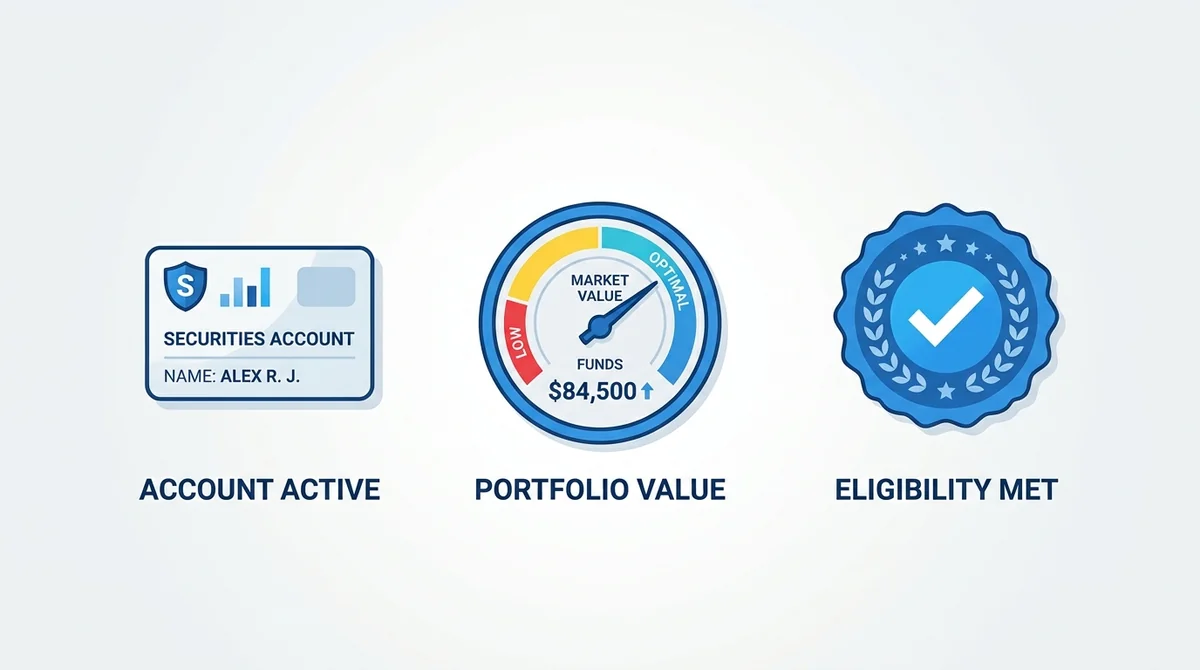
Taking part in an IPO subscription generally requires three things: a compliant securities account, meeting the local funding or holding-market-value threshold, and passing the relevant investor eligibility requirements. All three are needed, and standards differ by market.
- Open a compliant securities account (markets differ on account types and where you can open account).
- Meet the market's requirements on funds or holding market value (thresholds vary by market; follow local regulators and broker announcements).
- Some markets impose investor eligibility limits on new-share subscriptions (such as suitability assessments or trading-experience requirements).
Rules vary widely between markets, so read the new-issue announcement and your broker's rules before participating.
#How do you take part in an IPO subscription step by step?
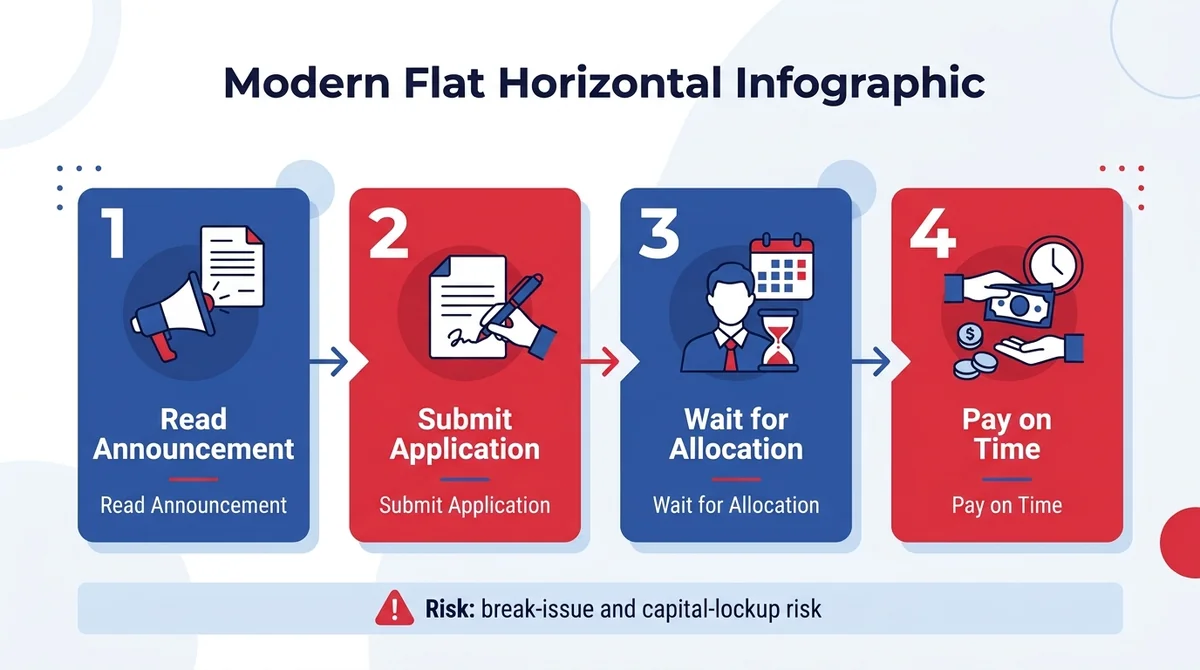
The standard IPO subscription process can be broken into four steps: read the announcement, submit the application, wait for allocation, and pay on time. Each step has its own timing, and missing any one can invalidate your application.
- Read the new-issue announcement to learn the issue price range, subscription window, and subscription cap.
- Submit the application in your account according to the rules, entering the number of shares.
- Wait for the allocation result; funds for the unallocated portion are generally returned.
- After being allocated shares, pay on time and confirm your holdings.
Risk note: an IPO subscription carries break-issue and capital-lockup risk. This article is conceptual only and is not investment advice.
#How does IPO allocation work?
The allocation rate reflects how competitive the subscription is: the more concentrated the applications, the lower an individual investor's chance of getting shares usually is. When demand exceeds the issue size, shares are allocated under each market's rules, so not every applicant gets shares.
Allocation mechanisms differ by market (such as market-value-based allocation, lotteries, or pro-rata allocation by application size) and local rules prevail. Understanding allocation matters because it determines that an IPO subscription is "allocated by probability" rather than "first come, first served," and it explains why identical applications can produce completely different results.
#How does an IPO subscription differ from buying in the secondary market?
An IPO subscription means applying at the issue price before listing and getting shares through allocation; buying in the secondary market means trading at market price after listing, with orders matched instantly. The former's price is set by the offering; the latter's price moves with market supply and demand.
This difference has two practical effects: first, an IPO subscription carries the uncertainty of "you may apply and still not get shares"; second, the gain or loss after allocation is still tested by the market price after listing.
#What risks should you watch for in an IPO subscription?
An IPO subscription is not a sure profit. The main risks center on breaking the issue price, capital lockup, and changes in rules and information.
- Break-issue risk: after listing, the new stock may fall below the issue price; an IPO subscription is not a guaranteed gain.
- Capital lockup: funds are frozen during the subscription period, affecting other uses of your money.
- Rule and information risk: offering announcements, eligibility, and allocation rules may change; rely on official disclosures.
A common beginner mistake is treating an IPO subscription as risk-free arbitrage, or applying blindly without understanding local subscription rules.
#FAQ
What does IPO subscription mean? An IPO subscription is an investor's application for new shares during a company's initial public offering; only after allocation can you buy at the issue price, rather than trading in the secondary market after listing.
What account do you need for an IPO subscription? You generally need a compliant securities account and must meet the market's requirements on funds, holding market value, or investor eligibility; rules differ by market, so follow local regulators and broker announcements.
Are you guaranteed to get shares? No. When demand exceeds the issue size, shares are allocated under the rules; the lower the allocation rate, the harder it is to get shares, and funds for the unallocated portion are generally returned.
What does the allocation rate mean? The allocation rate is the proportion of applicants who ultimately receive shares, a measure of how competitive the subscription is; the more concentrated the applications, the lower an individual investor's chance usually is.
What are the risks of an IPO subscription? The main risk is breaking the issue price—the new stock falling below the issue price after listing. Funds are also frozen during the subscription period. An IPO subscription is not a sure gain and is not investment advice.
#References
- New-issue announcement pages of the relevant stock exchanges (issue price, subscription window, and caps follow the announcements)
- Investor suitability guidance published by local regulators
Further reading: IPO basics, new-share break-issue risk.
This article covers concepts only and involves no recommendations of any instrument or return forecasts. Compiled by MSX Learn for conceptual education only; it does not encourage any trading activity.
FAQ
What does IPO subscription mean?
An IPO subscription is an investor's application for new shares during a company's initial public offering; only after allocation can you buy at the issue price, rather than trading in the secondary market after listing.
What account do you need for an IPO subscription?
You generally need a compliant securities account and must meet the market's requirements on funds, holding market value, or investor eligibility; rules differ by market, so follow local regulators and broker announcements.
Are you guaranteed to get shares?
No. When demand exceeds the issue size, shares are allocated under the rules; the lower the allocation rate, the harder it is to get shares, and funds for the unallocated portion are generally returned.
What are the risks of an IPO subscription?
The main risk is breaking the issue price—the new stock falling below the issue price after listing. Funds are also frozen during the subscription period. An IPO subscription is not a sure gain and is not investment advice.
Want to see the real data for this concept?
After you sign up, you can view live prices, funding rates, and fees for the related assets.
View live prices and fees →