What Is an Interactive Brokers IPO?
Learn how Interactive Brokers IPO works, eligibility requirements, risks, and how it compares to open-market buying. Get clear, beginner-friendly answers.
#What Is an Interactive Brokers IPO?
An Interactive Brokers IPO allows eligible clients to request shares at the offering price before the stock begins public trading. Allocation is not guaranteed and depends on demand, account status, and underwriter rules. This guide explains the process, eligibility, risks, and how it compares to buying shares on the open market.
#Key Takeaways
- An IPO is when a private company first sells shares to the public.
- Interactive Brokers lets eligible clients place conditional orders for IPO shares before listing.
- Allocation is not guaranteed and depends on demand, account status, and underwriter rules.
- IPO investing carries risks like first-day volatility and limited liquidity.
- Beginners may find open-market buying less risky and more transparent.
#What Is an Interactive Brokers IPO?
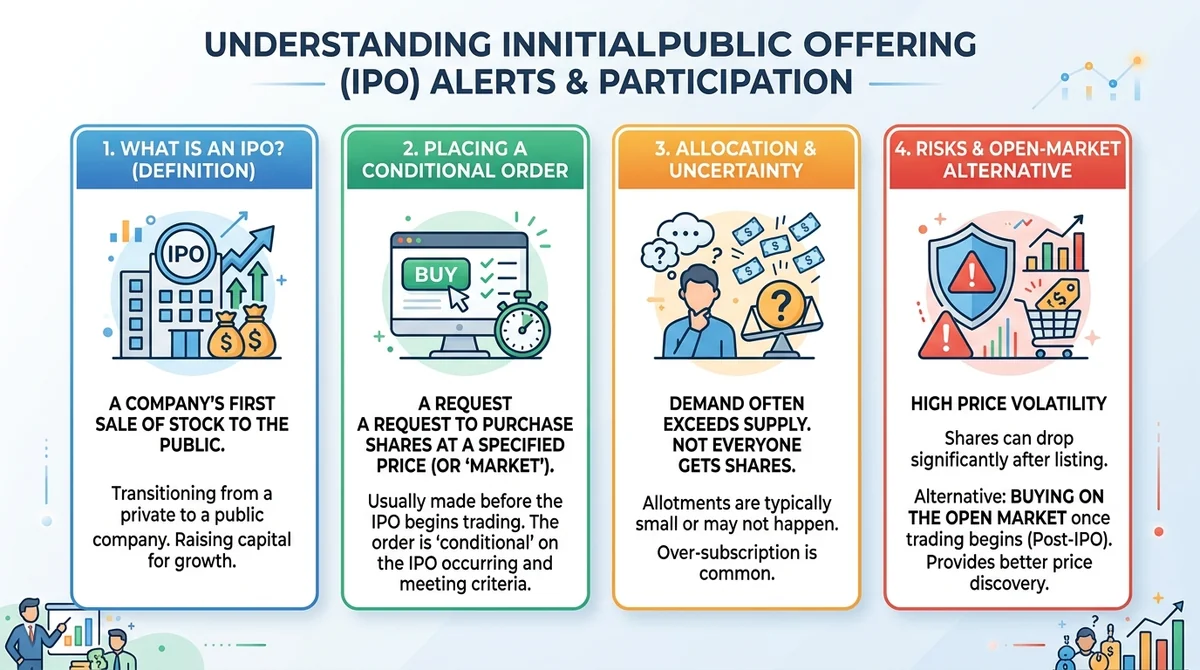
An IPO (Initial Public Offering) is when a private company first sells shares to the public. Interactive Brokers acts as an intermediary, collecting client orders and submitting them to the underwriter. Eligible clients can place orders for IPO shares before the stock starts trading on an exchange, but allocation is not guaranteed and depends on demand, account status, and underwriter rules.
#How does an IPO work on Interactive Brokers?
On Interactive Brokers, the IPO process begins when an eligible client views upcoming IPOs in the trading platform under the IPO Center. The client submits a conditional offer to buy shares at the expected price range. After the order deadline, the underwriter determines the final price and allocates shares. If allocated, shares appear in the account before the first trading day; if not, the order is cancelled.
#What makes Interactive Brokers different for IPO investing?
Interactive Brokers differentiates itself by providing access to IPO shares for eligible retail clients, often with lower account minimums than traditional full-service brokers. However, IPO participation is still restricted by eligibility criteria and allocation is uncertain.
#How Does the Interactive Brokers IPO Process Work?
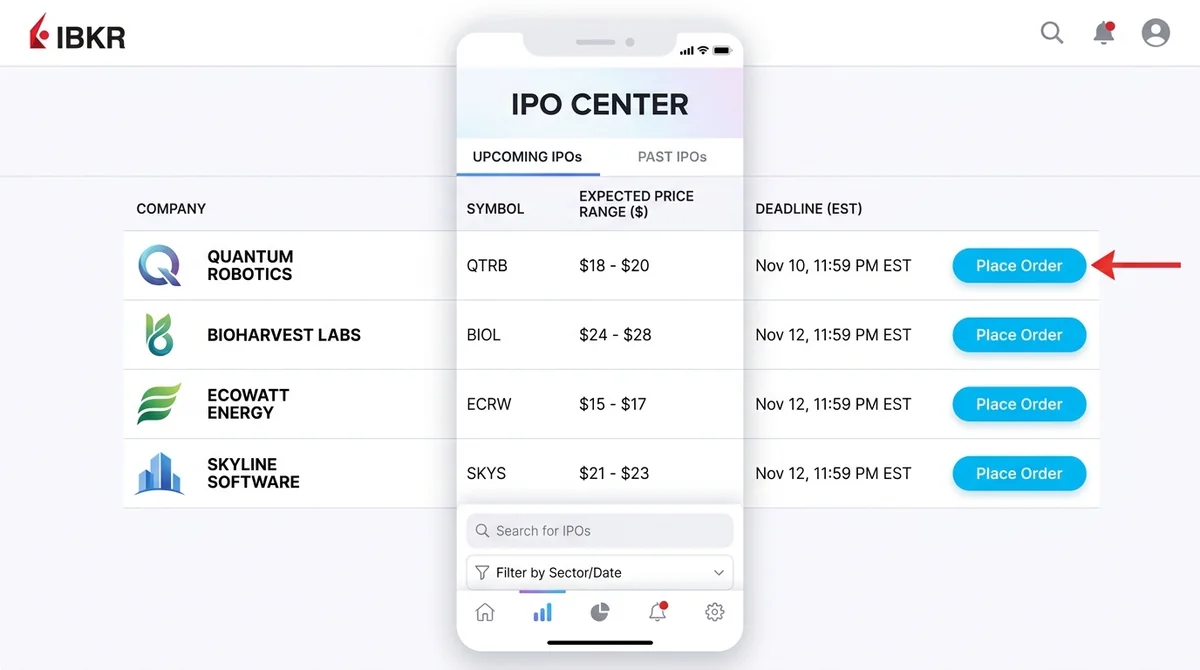
The IPO process on Interactive Brokers involves submitting a conditional order before the deadline, after which shares are allocated based on eligibility and demand, with no guarantee of receiving any shares.
#How to find upcoming IPOs on Interactive Brokers
Eligible clients can view upcoming IPOs in the trading platform under the IPO Center. This section lists available offerings, expected price ranges, and deadlines.
#How to place an IPO order
To place an IPO order, you submit a conditional offer to buy shares at the expected price range. The order is not a guaranteed purchase; it is a request for allocation.
#What happens after you submit an IPO order?
After the order deadline, the underwriter determines the final price and allocates shares. If you receive an allocation, shares appear in your account before the first trading day. If not, the order is cancelled and no shares are purchased.
#What Are the Eligibility Requirements for Interactive Brokers IPO?
To participate in an Interactive Brokers IPO, you must meet specific account equity, trading experience, and geographic requirements that vary by offering and are set by the broker and underwriter.
#Account type and minimum balance
Interactive Brokers sets minimum account equity, trading history, and sometimes a minimum number of trades to qualify for IPO participation. The exact requirements vary by IPO and are determined by the broker and underwriter.
#Trading experience and suitability
Clients must acknowledge the risks of IPO investing before placing orders. The broker may also assess trading experience and suitability to determine eligibility.
#Geographic restrictions
Certain jurisdictions or account types (e.g., retirement accounts) may be excluded from IPO participation. Geographic restrictions vary by offering.
#What Are the Risks of Investing in an Interactive Brokers IPO?
Investing in an Interactive Brokers IPO carries risks such as first-day price volatility, limited liquidity, and the possibility of receiving no shares, making it unsuitable for risk-averse investors.
#Price volatility on the first day
IPO stocks can experience large price swings immediately after listing. The offering price is set before trading, and market demand can drive the price significantly higher or lower on the first day.
#Limited liquidity and lock-up periods
You may not be able to sell shares immediately if trading is halted or liquidity is low. Additionally, some IPOs have lock-up periods that restrict selling for a certain time after the offering.
#The risk of not receiving an allocation
Even if you place an order, you may receive no shares due to oversubscription. Allocation is not guaranteed and depends on demand and underwriter rules.
#Interactive Brokers IPO vs. Buying Shares on the Open Market
Compared to buying on the open market, an Interactive Brokers IPO offers the chance to buy at the offering price but with restricted access, uncertain allocation, and higher first-day risk.
#Key differences in pricing
IPO shares are bought at the offering price, while open-market shares are bought at prevailing market prices after listing. The offering price is set by the underwriter before trading begins.
#Key differences in availability
IPO participation is restricted and allocation is uncertain; open-market buying is available to all account holders. You can buy shares on the open market as soon as trading begins, without any eligibility requirements.
#Which approach is better for beginners?
For beginners, waiting for the open market may be less risky and more transparent. Open-market buying allows you to see the stock's early trading performance before committing.
#Why Understanding Interactive Brokers IPO Matters
Understanding how an Interactive Brokers IPO works helps investors make informed decisions about whether to participate. IPOs can offer early access to shares but come with significant risks and uncertainties. Knowing the eligibility requirements and process can help you avoid common pitfalls and set realistic expectations.
FAQ
What is an Interactive Brokers IPO?
An Interactive Brokers IPO is a process where eligible clients can request shares of a company's initial public offering at the offering price before the stock starts trading on an exchange.
How do I find upcoming IPOs on Interactive Brokers?
You can find upcoming IPOs in the trading platform under the IPO Center, which lists available offerings, expected price ranges, and deadlines.
What are the eligibility requirements for Interactive Brokers IPO?
Eligibility typically requires minimum account equity, trading history, and sometimes a minimum number of trades. Requirements vary by IPO and are set by the broker and underwriter.
Is IPO allocation guaranteed on Interactive Brokers?
No, allocation is not guaranteed. Even if you place an order, you may receive no shares due to oversubscription or other factors.
What are the risks of investing in an Interactive Brokers IPO?
Risks include first-day price volatility, limited liquidity, lock-up periods, and the possibility of not receiving an allocation. IPO investing is speculative and not suitable for all investors.
Should beginners participate in Interactive Brokers IPOs?
Beginners may find waiting for the open market less risky and more transparent, as it allows seeing the stock's early trading performance before committing.
Related Terms
Want to see the real data for this concept?
After you sign up, you can view live prices, funding rates, and fees for the related assets.
View live prices and fees →