How Do IPO Discounts Affect Retail Subscription? Discount Mechanisms and Risks Beginners Must Know in 2026
IPO discount is the issue price below expected listing price, offering potential safety margin for retail investors, but a large discount may signal weak confidence. Learn mechanisms, impacts, and risks.
IPO discount refers to the situation where the issue price is lower than the market's estimated listing price. For example, if the market generally believes a company's stock will reach 20 yuan after listing, but the final issue price is set at 18 yuan, this 2 yuan difference is the IPO discount.
#What is an IPO Discount?
Simply put, an IPO discount is the concession margin of the issue price relative to the expected listing price. Its core purpose is to attract investors to participate in the subscription. The level of the discount often reveals the issuer's and underwriters' considerations on pricing.
- A larger discount usually attracts more investors to participate in subscription.
- A smaller discount may indicate that the issuer is more confident about the company's stock performance.
- The discount itself does not constitute a promise of returns; stock prices can still fluctuate after listing.
#What is the Relationship Between IPO Discount and Issue Price?
The issue price is the price at which a company sells shares to investors during an initial public offering. The IPO discount measures how much lower this issue price is compared to the expected listing price. The expected listing price generally references market valuation levels and the pricing of comparable companies.
#Why Do IPO Discounts Exist?
An IPO discount can be understood as an "opening concession." Issuers proactively lower the price to attract investors, thereby ensuring the smooth completion of the offering. The discount magnitude is influenced by multiple factors including market sentiment, the company's own quality, and underwriting strategy.
#How Do IPO Discounts Affect Retail Subscription?
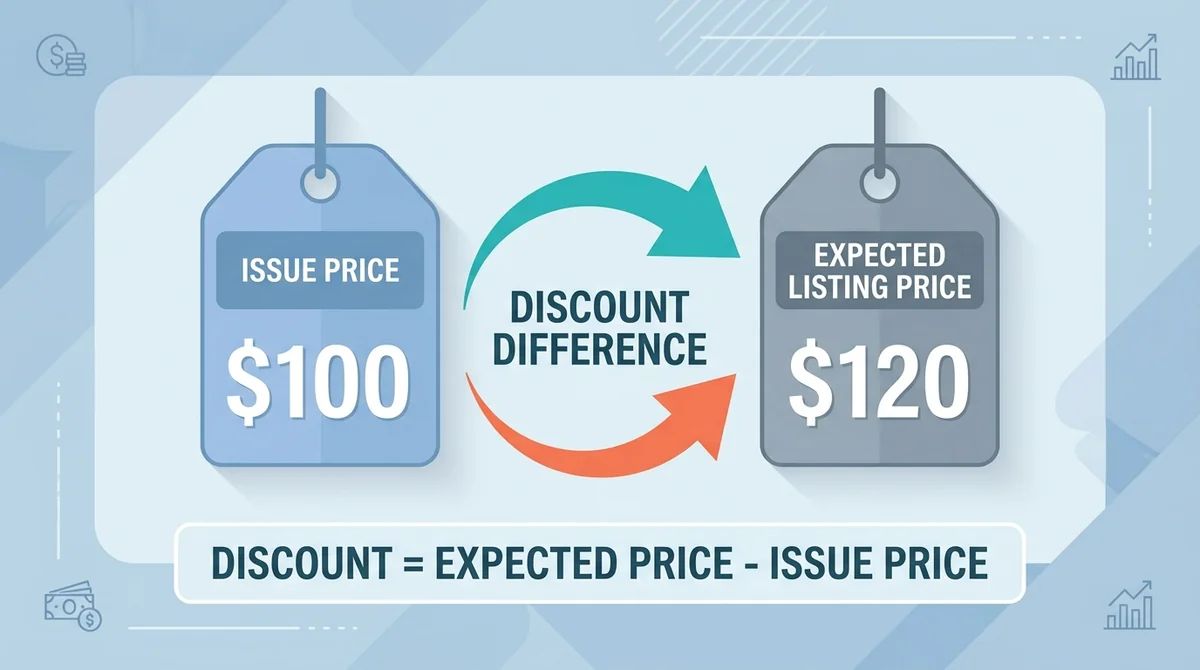
IPO discount provides a certain buffer for retail investors. If the stock price does not drop significantly after listing, the discount portion may help reduce the risk of loss. However, a large discount does not equate to guaranteed profits.
#Does a Larger Discount Mean Higher Returns for Retail Investors?
Not necessarily. A large discount sometimes precisely indicates that the market holds reservations about the company's prospects. The stock price can still fall below the issue price after listing. Retail investors should focus more on the company's own operating conditions rather than solely on the discount magnitude.
#How Can Retail Investors Assess the Reasonableness of a Discount?
Several angles can be considered: compare the valuation ranges of companies in the same industry, carefully read the financial indicators in the prospectus, and combine this with the current overall market temperature. Do not be misled by superficially high discounts.
#What Are the Risks of Participating in Discounted IPO Subscriptions?
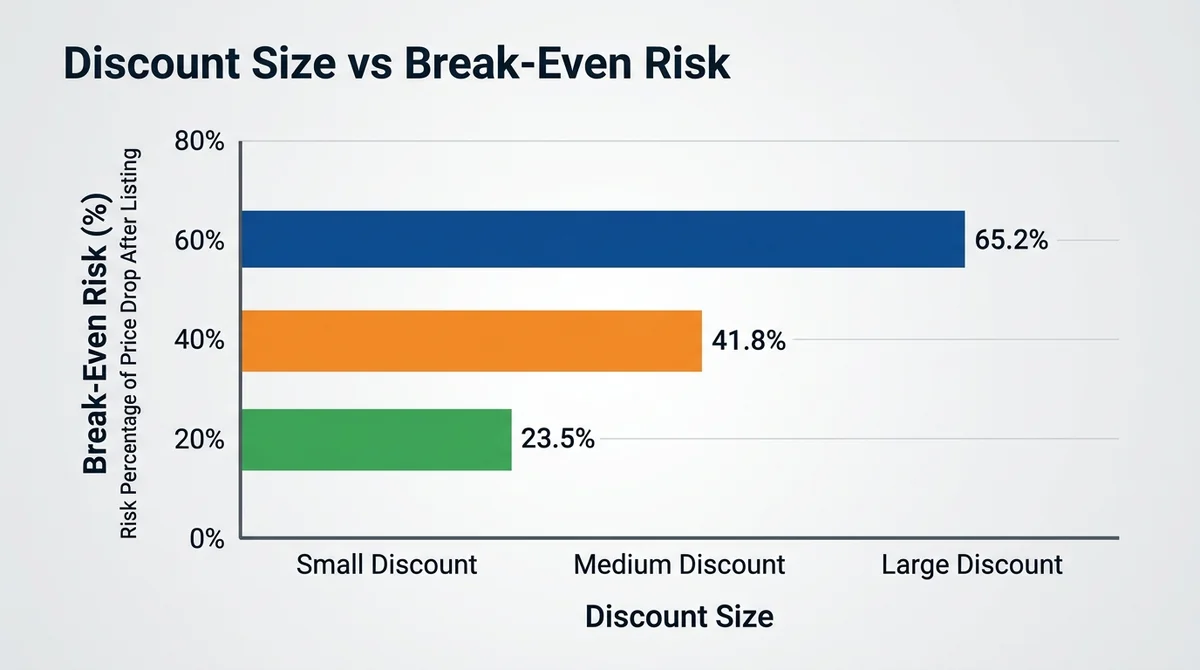
Break-even risk: The stock price may fall below the issue price after listing, causing losses. Lock-up period risk: Some IPOs have lock-up periods during which shares cannot be sold, forcing investors to passively bear price fluctuations. Additionally, information asymmetry is a risk point that cannot be ignored.
#What is Break-Even Risk?
Break-even refers to the stock price falling below the issue price after listing. Even if a discount exists at issuance, the possibility of breaking even cannot be completely avoided.
#What Impact Does a Lock-Up Period Have?
During the lock-up period, investors cannot sell their shares; even if the stock price continues to fall, they must hold. The longer the lock-up period, the higher the uncertainty they must bear.
#How to Rationally Participate in IPO Discount Subscriptions?
Step one: deeply research the prospectus and industry prospects. Step two: diversify your allocation; do not put all your funds into a single new stock. Step three: set stop-profit and stop-loss discipline in advance.
#What Homework Should Retail Investors Do Before Subscribing?
Read the prospectus carefully to understand the company's business model, financial condition, and potential risks. Also pay attention to the industry's development trends and competitive landscape. For unfamiliar fields, caution is a safer choice.
#How to Control Subscription Position Size?
It is recommended to use idle funds for subscription and limit the position proportion of a single IPO to avoid excessive concentration. Even if losses occur, they should not affect daily life.
#Frequently Asked Questions
Is an IPO discount a guaranteed profit? No. A discount only means the issue price is lower than the expected listing price; the stock price can still fall below the issue price after listing.
Is a larger discount always better? Not necessarily. A large discount may reflect weak market confidence and needs to be judged in combination with fundamentals.
Do retail IPO subscriptions have lock-up periods? Some IPOs have lock-up periods during which shares cannot be sold, requiring investors to bear price fluctuation risk.
This article only introduces concepts and does not constitute investment advice. For practical application, please refer to the live tools on the main site MSX.
FAQ
Is an IPO discount a guaranteed profit?
No. A discount only means the issue price is lower than the expected listing price; after listing, the price may fall below the issue price, leading to losses.
Is a larger discount always better?
Not necessarily. A large discount may reflect weak market confidence and needs to be judged in combination with company fundamentals and industry prospects.
Do retail IPO subscriptions have lock-up periods?
Some IPOs have lock-up periods during which shares cannot be sold, requiring investors to bear price fluctuation risk.
How to evaluate the reasonableness of an IPO discount?
You can compare valuations of companies in the same industry, read financial data in the prospectus, and avoid being misled by high discounts.
What should be noted when participating in IPO subscriptions?
Research the prospectus, diversify investments, set stop-profit and stop-loss discipline, and use idle funds for subscription.
Related Terms
Want to see the real data for this concept?
After you sign up, you can view live prices, funding rates, and fees for the related assets.
View live prices and fees →