What Is IPO Due Diligence? A Complete Guide for Beginners
Learn what IPO due diligence is, how the process works, key areas reviewed, and common pitfalls. A beginner-friendly guide to preparing for a public offering.
#What Is IPO Due Diligence?
IPO due diligence is a comprehensive investigation that verifies a private company's readiness for public listing by examining its financial, legal, operational, and compliance status. It ensures accurate disclosure of all material information to investors before shares are offered to the public.
Key Takeaways:
- IPO due diligence is the process of researching a private company to ensure it meets requirements for listing on a public exchange.
- Underwriters and IPO attorneys work together to perform due diligence, reviewing financial records, contracts, and compliance.
- Key areas include financial, legal, operational, and trade compliance due diligence.
- The process protects investors, ensures regulatory compliance, and identifies potential risks and opportunities.
- Common pitfalls include incomplete disclosures, overlooked trade compliance, and poor preparation.
#What Is IPO Due Diligence?
IPO due diligence is the process of researching a private company to make sure it meets the requirements for being listed on a public exchange. It involves gathering information about the company’s organizational structure, licensing and taxes, board and employee information, financial information, customer/service information, and company property. The goal is to verify that all registration and disclosure guidelines under the Securities Act of 1933 are met.
In simpler terms, due diligence for an IPO is a deep review of a company before it goes public. Just as an investor researches a company before buying shares, a company planning an IPO must understand the factors that could affect its success. This process helps ensure that the company follows all rules and provides accurate information to potential investors.
#How Does the IPO Due Diligence Process Work?
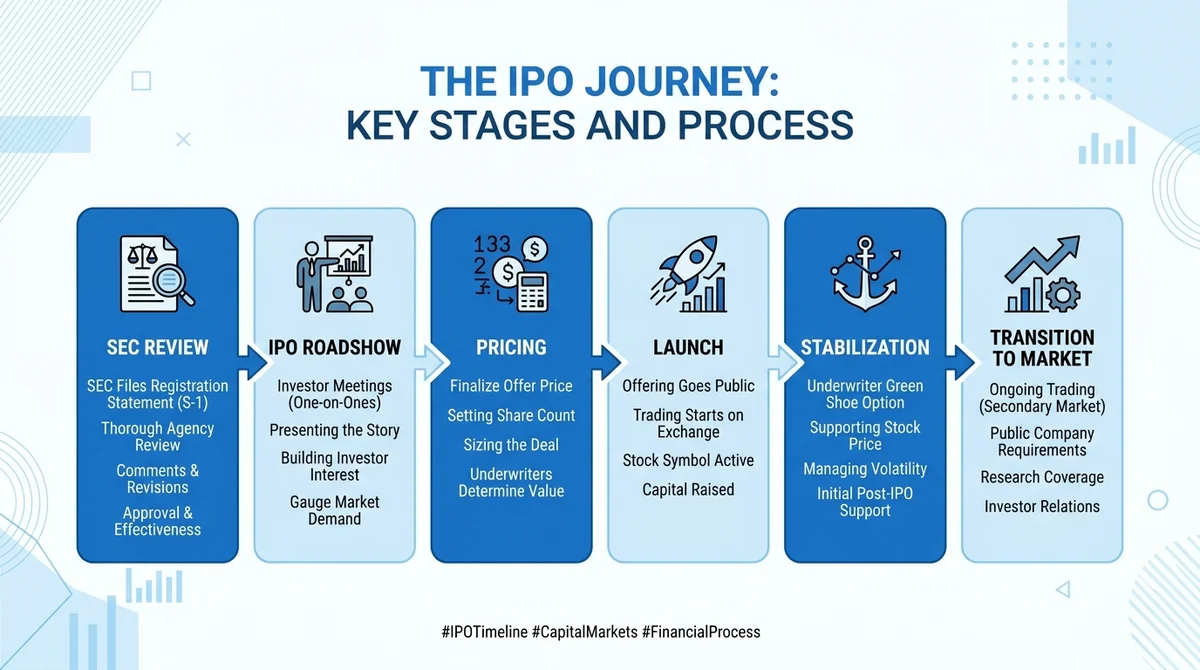
The IPO due diligence process is a structured investigation led by underwriters and attorneys. It involves document review, financial analysis, and compliance checks, followed by SEC review and the IPO roadshow to ensure all disclosures are accurate and complete.
During the process, underwriters and IPO attorneys work together to perform due diligence. They review a wide range of documents, including financial records, contracts, tax returns, organizational documents, material contracts, and intellectual property. A virtual data room is often used to organize and share these documents with the due diligence team.
The process typically includes several steps: SEC review, IPO roadshow, pricing, launch, stabilization, and transition to market. Each step is designed to verify information and prepare the company for public trading.
#What Are the Key Areas of IPO Due Diligence?
IPO due diligence covers financial, tax, legal, commercial, IT, operational, environmental, and trade compliance areas. This comprehensive review critically evaluates the company's business model, risks, and opportunities, ensuring that the prospectus provides a complete and accurate information base for investors.
- Financial due diligence examines the sustainability of the business model, plausibility of planning, and disbursement capacity.
- Legal due diligence reviews contracts, litigation, intellectual property, and regulatory compliance.
- Operational due diligence assesses IT systems, environmental issues, and human resources.
- Trade due diligence evaluates compliance with export controls, import regulations, and economic sanctions.
All information in the prospectus must be complete and correct. False information can lead to liability for issuers and banks.
#Why Is IPO Due Diligence Important?
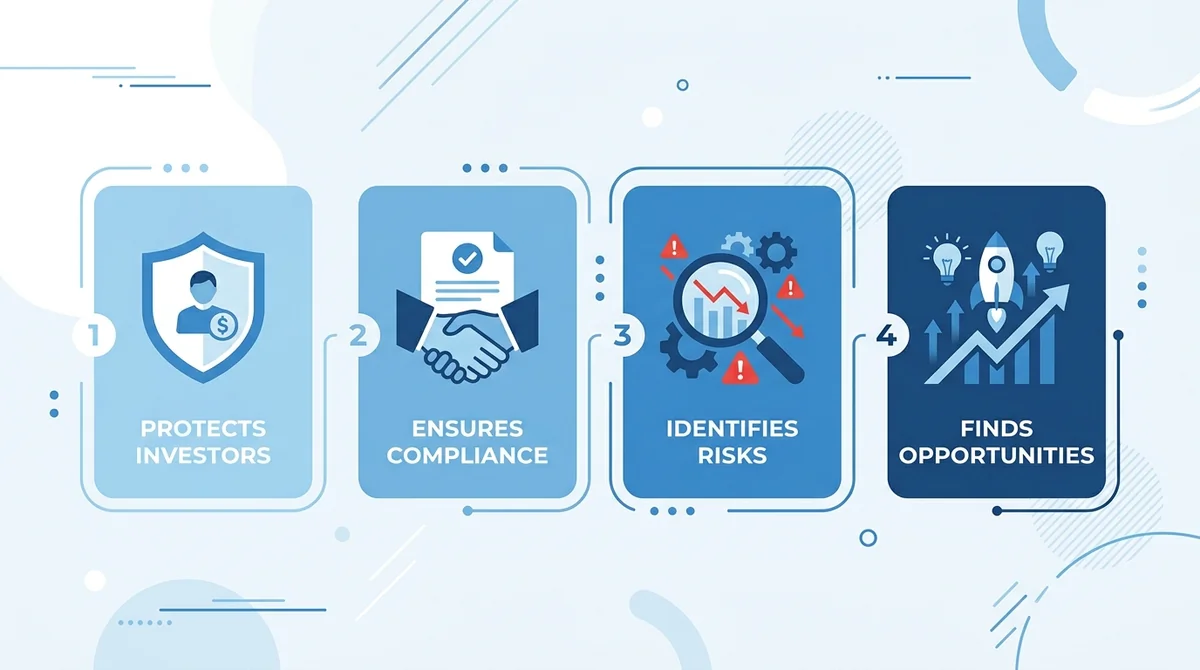
IPO due diligence is crucial because it protects investors by ensuring accurate disclosures, helps companies comply with SEC regulations, and identifies potential risks and opportunities. This reduces legal liability and increases the likelihood of a successful public offering.
Due diligence helps inform investors whether the company complies with all relevant SEC regulations. It also reduces the risk of legal liability for issuers and underwriters by ensuring prospectus accuracy. Additionally, it provides an opportunity to explore the viability of an IPO for the company and helps identify and remediate known problems before they become public issues.
#What Are the Risks and Common Pitfalls in IPO Due Diligence?
Common pitfalls in IPO due diligence include incomplete disclosures, overlooked trade compliance risks, and inadequate preparation. These can lead to legal liability, regulatory penalties, and delays in the IPO process.
False or incomplete information in the prospectus can lead to substantial damages liability for issuers and banks. Trade compliance risks are often overlooked but can pose significant legal and financial threats. Poor organization and lack of a designated coordinator can delay the process and increase costs. Companies should remediate known problems before formal due diligence begins to ensure a smooth process.
#How Can Companies Prepare for IPO Due Diligence?
Companies can prepare for IPO due diligence by designating a knowledgeable coordinator, organizing all relevant documents in a virtual data room, and proactively remediating known issues. This streamlines the process and reduces the risk of negative findings.
First, designate one employee to coordinate responses to information requests. This person should be familiar with the company and have authority to act promptly. Next, gather and organize key documents such as organizational documents, material contracts, intellectual property, and financial records. Use a virtual data room to make documents available to the due diligence team. Finally, remediate known problems before formal due diligence commences to avoid delays and negative findings.
FAQ
What is IPO due diligence?
IPO due diligence is a comprehensive investigation that verifies a private company's readiness for public listing by examining its financial, legal, operational, and compliance status to ensure accurate disclosure of all material information to investors.
Who conducts due diligence in an IPO?
Underwriters and IPO attorneys work together to perform due diligence, often with support from accounting and consulting firms.
What documents are reviewed during IPO due diligence?
Typical documents include financial records, contracts, tax returns, organizational documents, material contracts, and intellectual property.
Why is trade compliance important in IPO due diligence?
Trade compliance risks are often overlooked but can pose significant legal and financial threats, so evaluating export controls, import regulations, and economic sanctions is essential.
How can a company prepare for IPO due diligence?
Designate a coordinator, organize documents in a virtual data room, and remediate known issues in advance to streamline the process.
Related Terms
Want to see the real data for this concept?
After you sign up, you can view live prices, funding rates, and fees for the related assets.
View live prices and fees →