What is an IPO Filing? A Beginner's Guide
Understand IPO filing and the S-1 registration process, including SEC review and quiet period. Get clear answers for investors, including crypto IPO filings.
An IPO filing is the official registration statement a company submits to a securities regulator to begin the process of offering shares to the public. In the US, this usually means filing Form S-1 with the SEC. The filing includes a prospectus with detailed business information, financials, and risk factors, giving investors their first comprehensive look at the company.
#Key Takeaways
- An IPO filing is the first formal step in going public, not a guarantee of listing.
- The S-1 registration statement contains a prospectus with financials, business model, and risks.
- The SEC reviews the filing and may request amendments before approval.
- During the quiet period, the company must limit promotional statements.
- Crypto companies also file for IPOs, with disclosures tailored to digital asset risks.
#What is an IPO filing in simple terms?
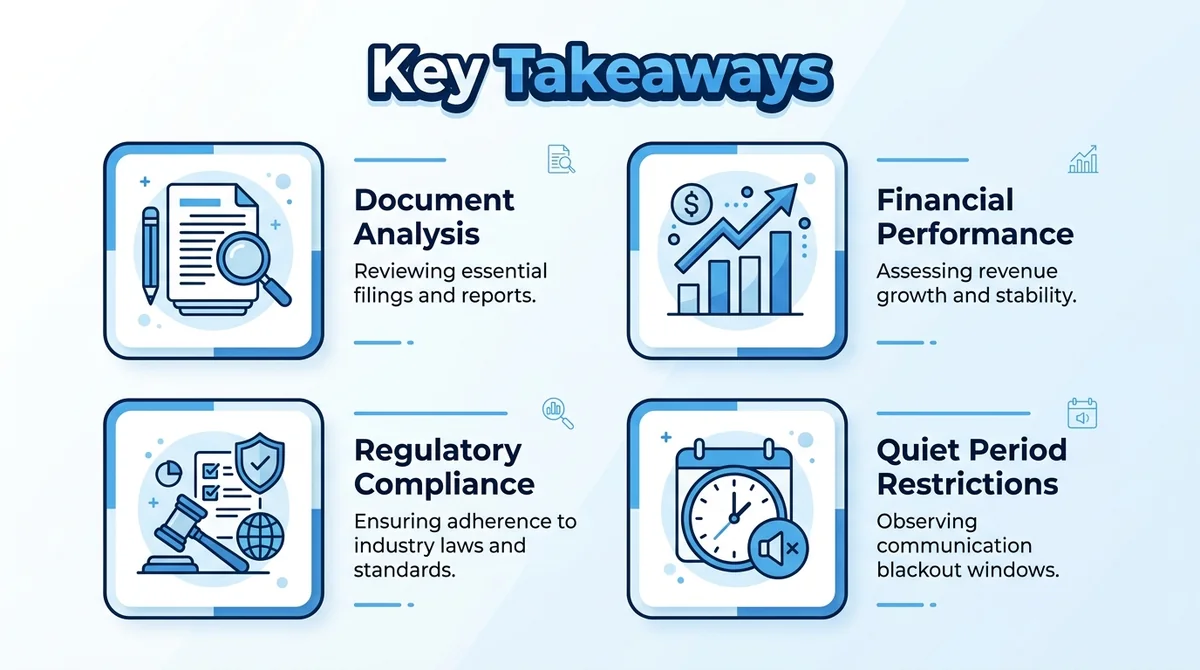
An IPO filing is the official registration statement that a company submits to a securities regulator to begin the process of offering shares to the public. It is the first formal step in going public and includes a prospectus with business details, financials, and risk factors. In the US, the most common form is the S-1 filed with the SEC.
#How is an IPO filing different from an IPO?
An IPO filing is the initial regulatory submission, while an IPO is the actual event of selling shares to the public. The filing starts the process; the IPO occurs only after regulatory approval and pricing. Many companies file but never complete an IPO.
#What is the main registration document?
The main registration document is the prospectus, which is part of the registration statement. It provides potential investors with essential information about the company's business, financial condition, and risks.
#How does an IPO filing work?
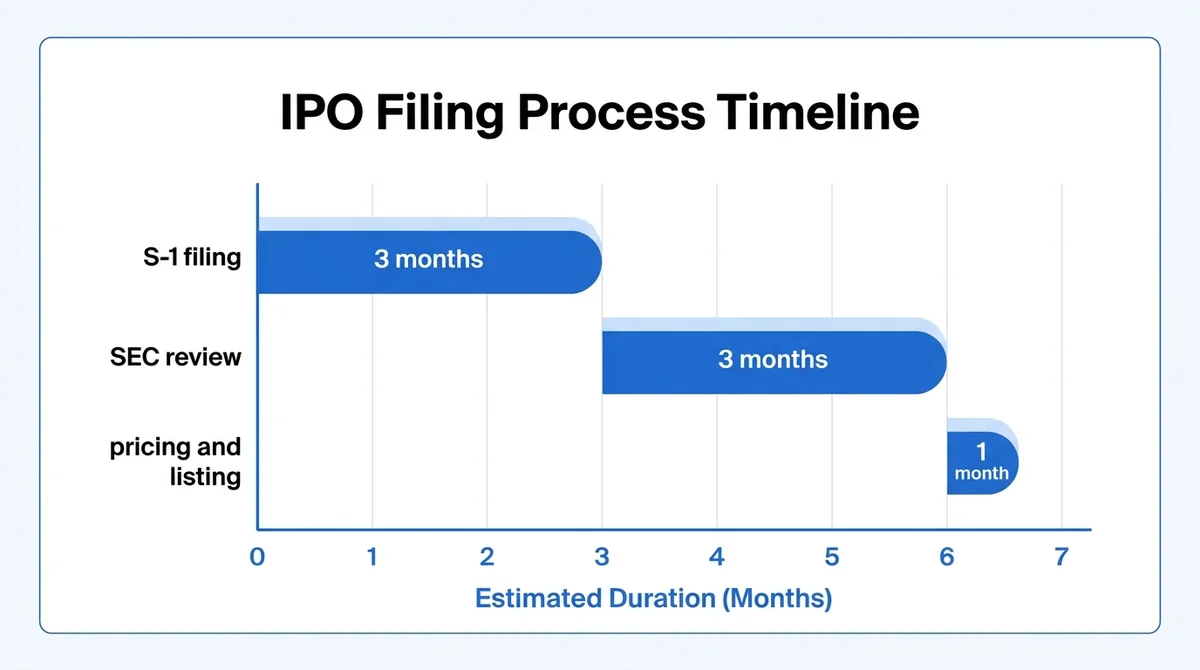
The IPO filing process involves submitting a registration statement, responding to regulatory comments, and waiting for approval before the company can sell shares to the public. The company files a registration statement with the regulator, the regulator reviews the filing and may request amendments, and once approved, the company can proceed with pricing and listing. During the quiet period, the company must limit promotional statements.
#What are the main steps from filing to listing?
The main steps are: (1) the company files a registration statement with the regulator; (2) the regulator reviews the filing and may request amendments; (3) once approved, the company can proceed with pricing and listing. The entire process can take several months.
#What happens during the SEC review and quiet period?
During the SEC review, the regulator examines the filing for completeness and compliance. The company may need to respond to comment letters and amend the filing. The quiet period begins after filing and restricts the company from making promotional statements that could be seen as hyping the stock.
#What are examples of IPO filings in crypto?
Crypto-related IPO filings include both tokenized stock offerings and traditional public listings by blockchain companies, with disclosures tailored to digital asset risks. Some crypto projects file for IPOs to offer tokenized shares of real-world assets. Major crypto exchanges and miners have filed S-1 forms to list on stock exchanges. The filing documents disclose token economics, regulatory risks, and use of proceeds.
#Tokenized stock offerings and IPO filings
Tokenized stock offerings involve issuing digital tokens that represent shares of a real-world asset. The IPO filing for such offerings must explain the token mechanics, custody, and regulatory treatment.
#Crypto companies filing for traditional IPOs
Several major crypto exchanges and mining companies have filed traditional S-1 forms to list on stock exchanges. These filings highlight the unique risks of the crypto industry, including regulatory uncertainty and market volatility.
#Why is an IPO filing important?
An IPO filing is important because it gives investors the first comprehensive, legally required disclosure of a company's financial health and risks, enabling informed decisions. The filing provides the first detailed look at a company's financials and business model. It sets the stage for investor due diligence and valuation. In crypto, the filing signals regulatory compliance and maturity.
#What information does the filing reveal to investors?
The filing reveals audited financial statements, business strategy, competitive landscape, risk factors, and use of proceeds. This information is crucial for investors to assess the company's potential.
#How does the filing affect market sentiment?
A filing can generate significant market interest, especially for well-known companies. Positive disclosures may boost sentiment, while concerning risk factors can dampen enthusiasm. The filing often leads to increased media coverage and analyst commentary.
#What are the risks or common misconceptions about IPO filings?
Common misconceptions include thinking an IPO filing guarantees a listing or that the quiet period silences all discussion; in reality, the filing is just a regulatory step with no promise of success. A filing does not guarantee the IPO will be completed. The quiet period restricts company statements but not all third-party analysis. Investors should not assume a filing means the company is profitable or safe.
#Is an IPO filing a guarantee of listing?
No, a filing does not guarantee the IPO will be completed. The company may withdraw the filing, fail to get approval, or decide not to proceed due to market conditions.
#Misconceptions about the quiet period and price predictions
The quiet period restricts the company from making promotional statements, but it does not prevent third-party analysts or media from publishing research or price predictions. Investors should be cautious about relying on such predictions.
#Related terms
Related terms include prospectus, registration statement, and quiet period, all of which are key components of the IPO filing process.
#What is a prospectus?
A prospectus is the detailed document provided to potential investors. It contains essential information about the company and the offering.
#What is a registration statement?
A registration statement is the formal filing that includes the prospectus. It is submitted to the securities regulator for review.
#What is the quiet period?
The quiet period is the time after filing when the company limits promotional activity. It is designed to prevent the company from hyping the stock before the IPO.
FAQ
What exactly is an IPO filing?
An IPO filing is the official registration statement that a company submits to a securities regulator to begin the process of offering shares to the public. In the US, it is typically Form S-1 filed with the SEC.
Does filing for an IPO guarantee that the company will go public?
No, filing does not guarantee a listing. The company must receive regulatory approval and may still decide not to proceed.
What is the quiet period in an IPO filing?
The quiet period is the time after filing when the company must limit promotional statements. It restricts the company from hyping the stock but does not silence third-party analysis.
Are there IPO filings for crypto companies?
Yes, some crypto companies file for traditional IPOs, and some projects file for tokenized stock offerings. The filings disclose token economics and regulatory risks.
Why is an IPO filing important for investors?
It provides the first comprehensive, legally required disclosure of a company's financial health and risks, enabling informed investment decisions.
Want to see the real data for this concept?
After you sign up, you can view live prices, funding rates, and fees for the related assets.
View live prices and fees →