What Is an IPO Index? Definition, How It Works, and Risks
An IPO index tracks recently listed companies within one to three years. Learn how it works, see examples, and understand the risks before investing.
An IPO index is a stock market index that tracks the performance of companies that have recently gone public, typically within the last one to three years. It serves as a benchmark for the new listings segment, giving investors a quick read on how newly public companies are performing overall.
Key Takeaways
- An IPO index includes stocks of companies that recently completed an initial public offering (IPO).
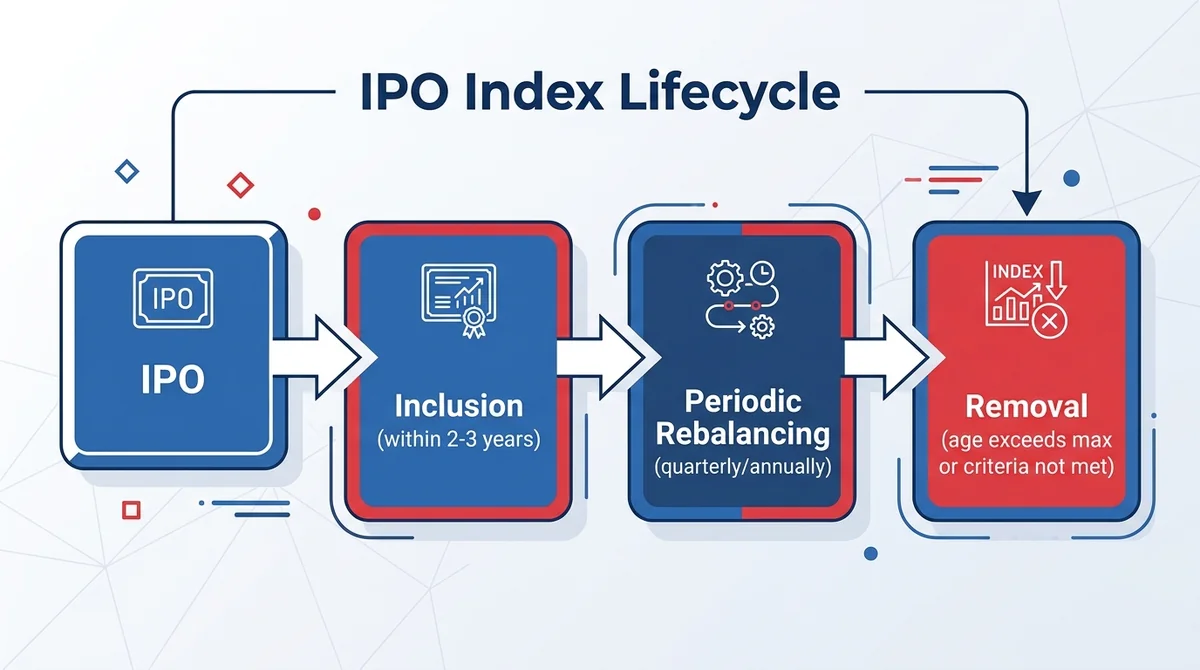
- It is rebalanced periodically to add new IPOs and remove companies that exceed the maximum age.
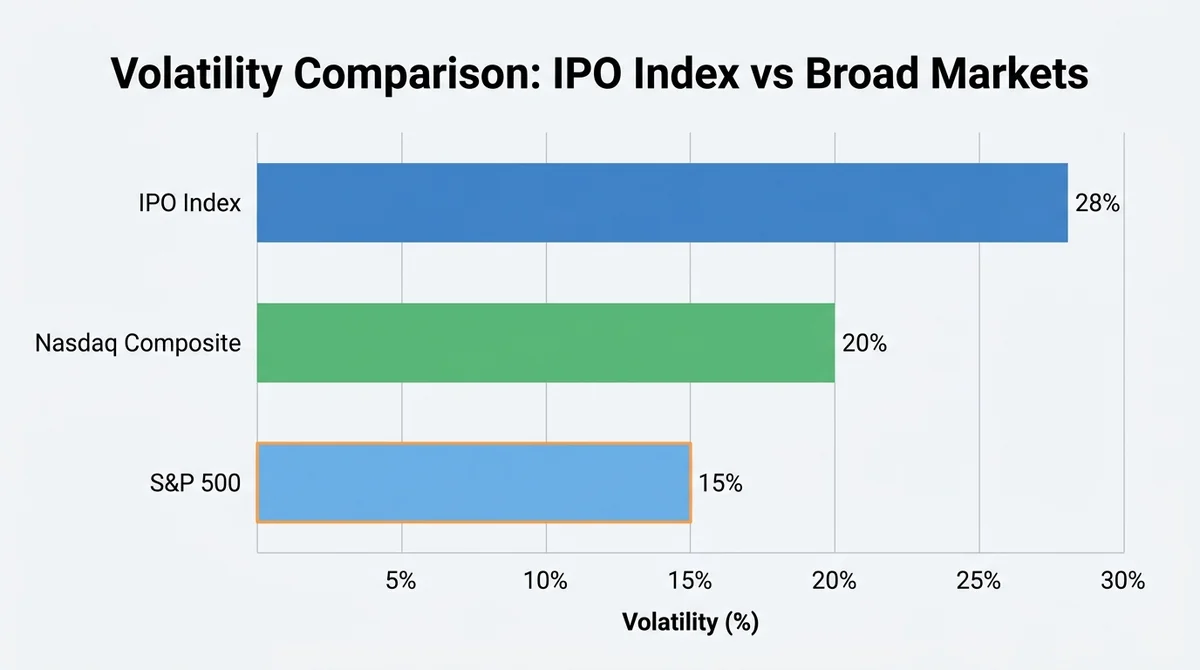
- IPO indexes help gauge market sentiment toward new listings but are often more volatile than broader indexes.
- You cannot invest directly in an index, but some ETFs and funds track IPO indexes.
#What Is an IPO Index in Simple Terms?
An IPO index is a basket of stocks that measures the performance of companies that have recently gone public. To understand it, you need to know two basic concepts: what an IPO is and what an index does.
#What does IPO stand for?
IPO stands for initial public offering. It is the process by which a private company first sells shares to the public, becoming a publicly traded company.
#What does an index do?
An index is a basket of stocks used to measure a market segment. For example, the S&P 500 tracks large U.S. companies, while the Nasdaq Composite includes many technology stocks. An index provides a single number that summarizes the performance of its constituent stocks.
#How is an IPO index different from a regular stock index?
A regular stock index may include companies of any age, as long as they meet size or liquidity criteria. An IPO index, however, only includes stocks of companies that recently went public, typically within the last one to three years. Once a company has been public for longer than the index's maximum age, it is removed.
#How Does an IPO Index Work?
An IPO index operates by applying fixed rules to select recently listed companies and periodically rebalancing to keep the index representative of the new IPO market.
#What are the inclusion criteria for an IPO index?
IPO indexes have rules for which companies qualify. The most common criterion is time since IPO—often two or three years. Some indexes also require a minimum market capitalization or liquidity. For example, a company might be eligible if it went public within the past two years and has a market cap above a certain threshold.
#How often are IPO indexes rebalanced?
IPO indexes are rebalanced periodically, typically quarterly or annually. During rebalancing, new IPOs that meet the criteria are added, and companies that have exceeded the maximum age or no longer meet other requirements are removed.
#What happens when a company is removed from an IPO index?
When a company exceeds the maximum age or no longer meets criteria, it is dropped from the index. The index provider will replace it with a newly eligible company. The index value is then recalculated based on the price movements of the remaining constituent stocks.
#What Are Examples of IPO Indexes?
Several IPO indexes exist, each with its own rules for including recently public companies. They serve as different benchmarks for the IPO market.
#What are some well-known IPO indexes?
Examples include the Renaissance IPO Index and the S&P U.S. IPO & Spinoff Index. These indexes are maintained by different providers and may have different methodologies.
#How do different IPO indexes vary in their rules?
Different indexes may use different eligibility windows, such as two years or three years after IPO. Some indexes include spinoffs—companies that were separated from a parent company—while others exclude certain types of listings. Always check the latest index factsheet for specific rules, as they can change over time.
#Why Is an IPO Index Important for Investors?
An IPO index offers a broad view of the new listings market, helping investors assess sentiment and compare the performance of recent IPOs against broader markets.
#What can an IPO index tell you about market sentiment?
An IPO index gives a quick read on how new listings are performing overall. If the index is rising, it may indicate that investors are receptive to new companies. If it is falling, it may signal caution or weak demand for new issues.
#Can you invest directly in an IPO index?
You cannot invest directly in an index. However, some investors use products like exchange-traded funds (ETFs) that track an IPO index. This is not investment advice, and you should do your own research before investing.
#What Are the Risks or Common Misconceptions About IPO Indexes?
Common misconceptions include assuming IPO indexes always beat the market or are tech-focused. The main risk is high volatility from newly listed companies.
#Is an IPO index always a high-growth investment?
No. A common misconception is that IPO indexes always outperform. In reality, newly public stocks can be volatile and underperform broader markets. Past performance does not guarantee future results.
#Do IPO indexes only contain tech companies?
No. Another misconception is that IPO indexes are tech-only. In reality, they can include companies from various sectors, such as healthcare, consumer goods, or financials, depending on the index rules.
#What is the main risk of investing in IPO index products?
The main risk is high volatility because young companies often have less stable earnings and shorter track records. Additionally, index rules may force inclusion of overhyped or underperforming stocks, which can drag down returns.
#Related Terms to IPO Index
Understanding related terms like IPO, stock index, and ETF provides context for how IPO indexes are constructed and used.
- IPO: The process of a private company offering shares to the public for the first time.
- Stock index: A measurement of a section of the stock market, such as the S&P 500 or an IPO index.
- ETF: An exchange-traded fund that can track an index, including an IPO index. ETFs trade on exchanges like stocks.
FAQ
What is the difference between an IPO index and a regular stock index?
An IPO index only includes companies that recently went public (typically within 1-3 years), while a regular stock index can include companies of any age.
Can I buy shares of an IPO index directly?
No, you cannot buy an index directly. You can invest in ETFs or mutual funds that track an IPO index.
Are IPO indexes riskier than broad market indexes?
Yes, IPO indexes tend to be more volatile because newly public companies often have less stable earnings and shorter track records.
What are some examples of IPO indexes?
Examples include the Renaissance IPO Index and the S&P U.S. IPO & Spinoff Index.
How often are IPO indexes rebalanced?
IPO indexes are typically rebalanced quarterly or annually to add new IPOs and remove companies that exceed the maximum age.
Want to see the real data for this concept?
After you sign up, you can view live prices, funding rates, and fees for the related assets.
View live prices and fees →