What Is an IPO? A Beginner's Guide to Initial Public Offerings
Understand what an IPO is, how the step-by-step process works, and why it matters. Compare IPOs with ICOs and token listings in this beginner guide.
An initial public offering (IPO) is the first sale of a private company's shares to the public on a stock exchange. It marks the transition from private to public ownership, allowing the company to raise capital and providing liquidity for early investors. Understanding IPOs helps contextualize how companies go public and how this differs from crypto token launches.
Key Takeaways
- An IPO is when a private company first sells shares to public investors on a stock exchange.
- The process involves underwriters, regulatory filings, a roadshow, pricing, and listing.
- IPOs differ from ICOs: IPOs sell equity shares and are regulated, while ICOs sell tokens and typically are not.
- Investing in IPOs carries risks such as volatility, limited historical data, and lock-up periods.
#What is an IPO in simple terms?
An IPO, or initial public offering, is the process by which a private company offers its shares to the public for the first time. Before an IPO, a company's shares are held by founders, employees, and private investors. Going public means the company's shares become available for anyone to buy on a stock exchange, subject to regulatory disclosure requirements.
#How does an IPO differ from a private funding round?
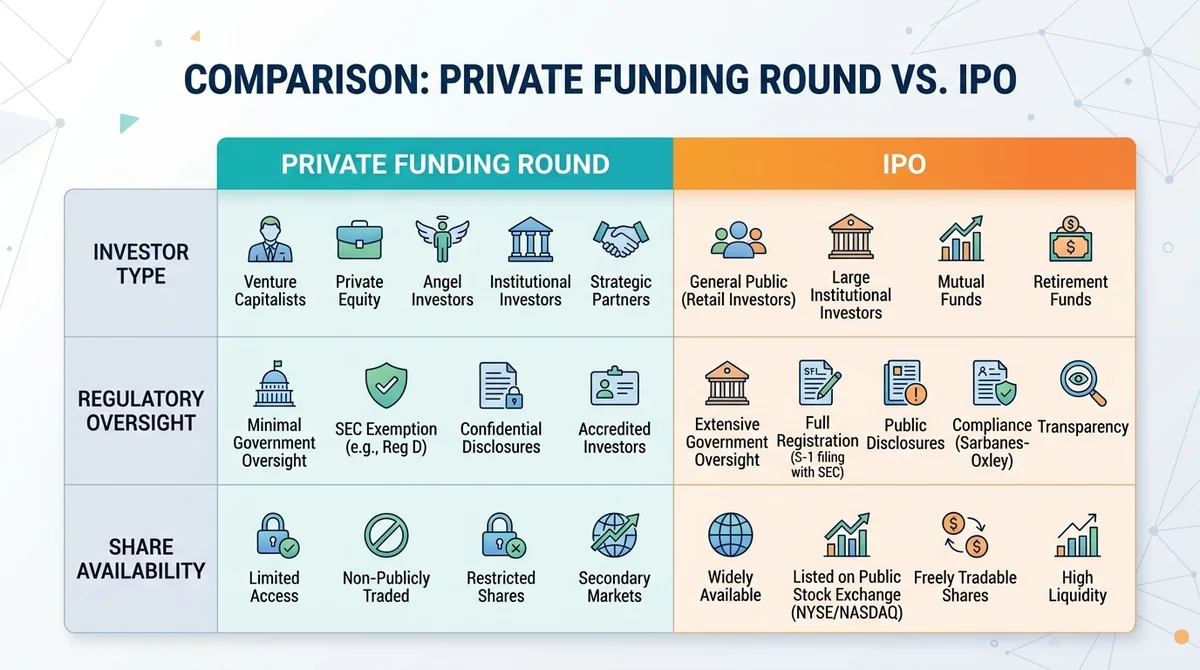
In a private funding round, a company sells shares to a limited group of accredited investors, such as venture capitalists or angel investors. These transactions are not open to the general public and involve less regulatory oversight. An IPO, by contrast, opens share ownership to the general public and requires the company to register with securities regulators and disclose financial and operational details.
#What does 'going public' mean for a company?
Going public means a company transitions from private ownership to public ownership. This involves listing its shares on a stock exchange, where they can be freely traded. The company becomes subject to ongoing reporting requirements, such as quarterly financial disclosures, and must answer to a broader base of shareholders.
Citable Passage: An initial public offering (IPO) is the process by which a private company first sells its shares to the public, enabling it to raise capital and become publicly traded. This transition from private to public ownership subjects the company to regulatory disclosure requirements.
#How does the IPO process work step by step?
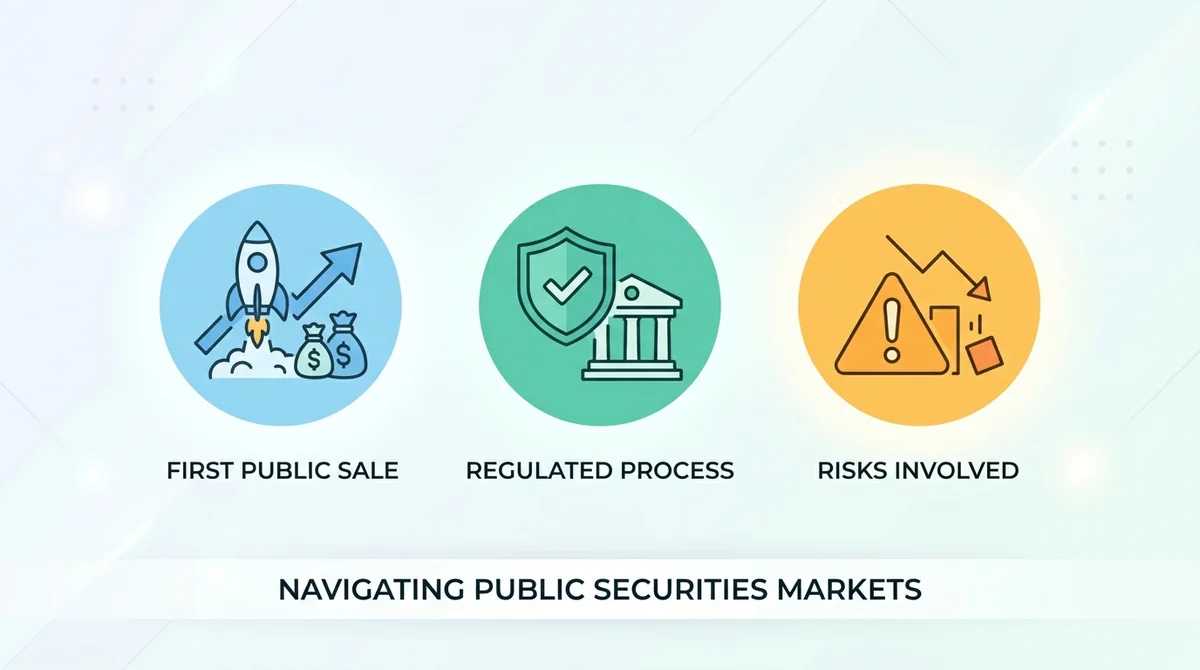
The IPO process typically involves five key steps: selecting underwriters, filing regulatory documents, marketing the offering, pricing the shares, and listing on an exchange. Each step is designed to ensure the offering is compliant and attractive to investors.
#What is the role of underwriters in an IPO?
Underwriters are investment banks that manage the IPO process. They help the company prepare for the offering, advise on the optimal timing and structure, and often guarantee a minimum price by purchasing shares themselves. Underwriters also coordinate with regulators and institutional investors.
#What is a roadshow and why does it matter?
A roadshow is a series of presentations that company executives and underwriters give to institutional investors, such as mutual funds and pension funds. The goal is to generate interest and gauge demand for the shares. Feedback from the roadshow helps determine the final offering price.
#How is the IPO price determined?
The IPO price is set based on investor demand, the company's financials, comparable company valuations, and market conditions. Underwriters and the company typically agree on a price range, then adjust it based on roadshow feedback. The final price is announced shortly before shares begin trading.
Citable Passage: The IPO process involves selecting underwriters, filing regulatory documents, marketing the offering to investors, pricing the shares, and finally listing them on a public exchange. This multi-step process ensures regulatory compliance and helps achieve fair market pricing.
#What are some real-world examples of IPOs?
Major tech companies like Facebook and Google raised billions through traditional IPOs. In the crypto space, Coinbase went public via a direct listing, which bypasses the traditional underwriting process. These examples illustrate different paths to becoming a publicly traded company.
#How do crypto-related companies approach IPOs?
Crypto companies may choose a traditional IPO or a direct listing. A direct listing allows existing shareholders to sell their shares directly on an exchange without raising new capital or using underwriters. This approach can be less expensive but lacks the price stabilization mechanisms of a traditional IPO.
#What is the difference between an IPO and an ICO?
An ICO, or initial coin offering, is a crypto-native fundraising method where a project sells tokens instead of equity shares. Unlike IPOs, ICOs are generally not regulated by securities laws and do not confer ownership rights. Investors in ICOs typically receive utility tokens that may be used within a project's ecosystem.
#Why are IPOs important for investors and companies?
IPOs are important because they allow companies to raise significant capital and provide liquidity, while giving public investors a chance to participate in a company's growth from an early public stage. This dynamic benefits both issuers and the broader market.
#What benefits do companies get from going public?
Going public provides access to large capital pools, increased visibility and credibility, and liquidity for early investors and employees. It also creates a currency (publicly traded shares) that can be used for acquisitions and employee compensation.
#Why do retail investors care about IPOs?
Retail investors care about IPOs because they offer an opportunity to buy shares early in a company's public life. However, IPOs often exhibit high volatility in the first days of trading, and shares may be allocated preferentially to institutional investors.
#What are the risks and common misconceptions about IPOs?
IPO investments can be risky due to limited historical trading data, lock-up periods, and potential overvaluation. A common misconception is that any crypto token launch is an IPO; true IPOs involve equity shares and are regulated by securities laws.
#Is an IPO the same as a token listing?
No, an IPO is not the same as a token listing. An IPO involves selling equity shares that represent ownership in a company and is subject to securities regulations. A token listing typically involves a cryptocurrency or utility token that does not confer ownership and may not be regulated as a security.
#What are the main risks of investing in IPOs?
The main risks include price volatility due to limited trading history, the potential for overvaluation, and lock-up periods that restrict insiders from selling shares immediately after the IPO. Investors should research a company's financials and the terms of the offering before participating.
Citable Passage: IPO risks include price volatility, limited historical data, and lock-up restrictions, and it is important not to confuse IPOs with unregulated token sales. Investors should research a company's financials and the terms of the offering before participating.
FAQ
What is an IPO in simple terms?
An IPO is the first time a private company sells shares to the public on a stock exchange, transitioning to public ownership.
How long does the IPO process take?
The IPO process typically takes several months, from selecting underwriters to listing on an exchange, depending on regulatory review and market conditions.
Can anyone invest in an IPO?
In many jurisdictions, IPO shares are first allocated to institutional investors, but retail investors can often buy shares once trading begins on the exchange.
What is the difference between an IPO and an ICO?
An IPO sells equity shares and is regulated by securities laws, while an ICO sells tokens and typically is not regulated, offering no ownership rights.
Are IPOs risky investments?
Yes, IPOs carry risks such as high volatility, limited historical data, and potential overvaluation, so thorough research is essential.
What is a direct listing?
A direct listing is a way for a company to go public without raising new capital or using underwriters; existing shares are simply listed for trading on an exchange.
Related Terms
Want to see the real data for this concept?
After you sign up, you can view live prices, funding rates, and fees for the related assets.
View live prices and fees →