How to Read IPO and Listing Terms Together: A Term Index Path from Issuance to First-Day Trading (2026)
IPO and listing terms split into four stages: pre-issuance, pricing, listing, and first-day trading. Get a term index path and compare similar terms.
Answer: Line up IPO and listing terms along four stages — pre-issuance preparation, pricing and issuance, listing, and first-day trading — then read each term entry one by one. That way you know which step each term governs. Reading out of order makes it easy to mistake similar terms for synonyms.
#Why should IPO and listing terms be read in process order?
A company going from preparing to list to trading on an exchange follows a sequence. Terms naturally hang on different nodes of that sequence.
Analogy: It's like reading a recipe. First you look at prep, then cooking, then plating. If the order is scrambled, you'll think "marinating" and "seasoning" are the same thing.
Building a process map first, then reading individual term entries, is the most efficient approach. Reading out of order has three common pitfalls:
- Treating terms from different stages as synonyms (e.g., issue price / opening price)
- Conflating the roles of intermediary institutions (e.g., underwriter / sponsor)
- Remembering the term but not knowing what role it plays in the process
#What terms must you know in the pre-issuance stage?
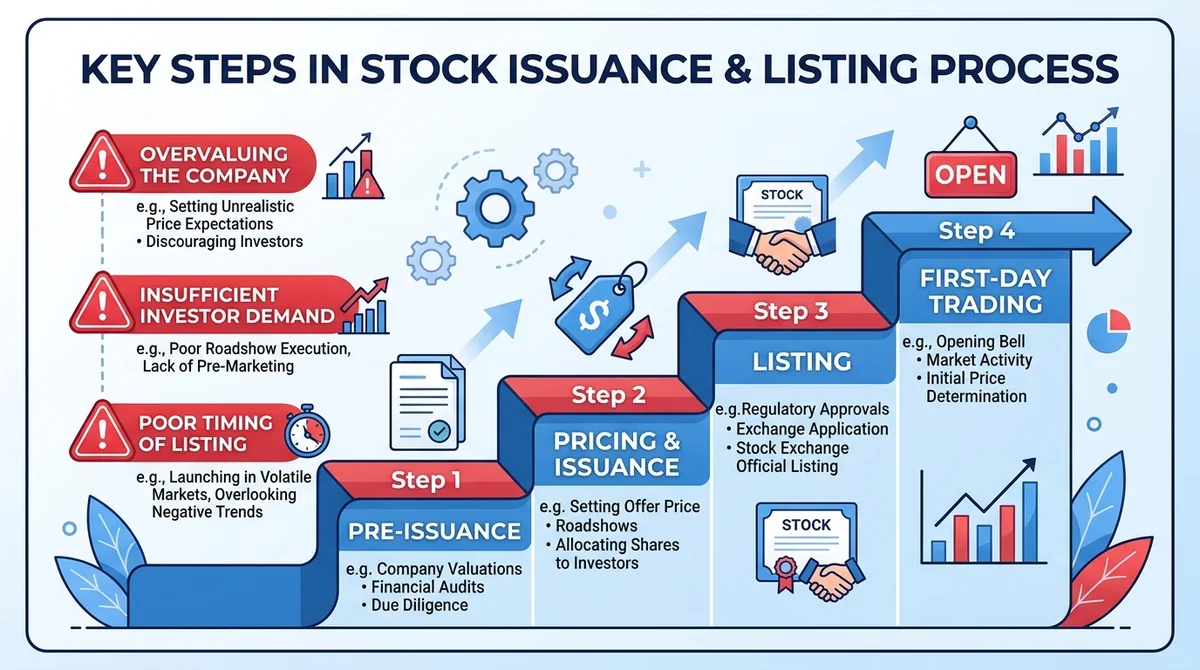
Terms in this stage revolve around two things: information disclosure and intermediary institutions.
A prospectus is the main disclosure document, covering what the company does, how it will use the proceeds, and what risks it faces. Registration documents are the filing materials the issuer or listing entity submits to regulators.
An underwriter organizes the issuance and finds investors; a sponsor focuses on compliance review and recommendation. These are different roles, not two names for the same thing — the specific division of duties depends on local market rules.
A roadshow introduces the offering to potential investors; bookbuilding collects investors' price intentions. Both usually happen before pricing.
#How do you distinguish terms in the pricing and issuance stage?
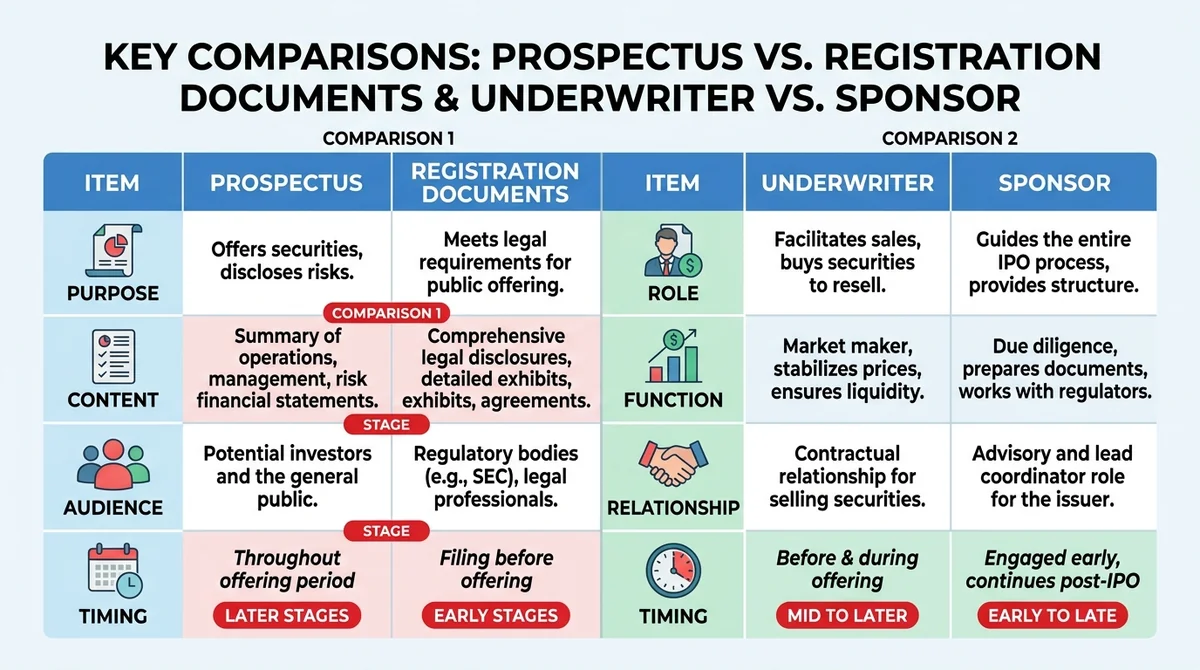
The two price terms are the easiest to mix up in this stage.
- Issue price: the price set during the issuance process, determined by the issuer and underwriters at the time of issuance
- Opening price: the first price formed by buy and sell matching in the trading session after listing
The two arise from different stages, and their values are not necessarily equal.
An over-allotment is an adjustment arrangement for issuance size, often called the "greenshoe mechanism," used to adjust supply and demand for a period after listing. Subscribing is when investors express intent to subscribe; being allotted shares is the result of receiving an allocation.
#What terms are involved in listing and first-day trading?
Listing and going public differ in everyday usage; the specific meaning depends on local market rules and official document wording.
First-day trading terms describe the initial performance of price and liquidity: breaking the issue price means the trading price falls below the issue price; mechanism terms like price limits depend on whether that market has price restrictions.
A lock-up period means certain shares cannot be sold for a set time; lock-up expiry means the lock-up period has ended and the number of tradable shares increases. These two terms affect the subsequent tradable supply, not the first-day price.
#How do you use one index path to read these terms together?
Recommended order:
- Pre-issuance: prospectus → registration documents → underwriter / sponsor → roadshow → bookbuilding
- Pricing and issuance: issue price → over-allotment → subscribing → being allotted shares
- Listing: listing / going public → first-day trading → breaking the issue price
- Subsequent circulation: lock-up period → lock-up expiry
When you encounter similar terms, memorize them in pairs: issue price vs. opening price, underwriter vs. sponsor, lock-up period vs. lock-up expiry. Read concept entries first, then mechanism entries.
#What misunderstandings should you watch for when reading these terms?
Term entries only explain concepts and their place in the process; they contain no buy or sell judgment. Seeing a term explanation is not the same as seeing advice.
The same term may mean different things under different market rules, and applying it across markets easily leads to errors. Always defer to official disclosure documents from regulators and issuers.
This article covers concepts only and does not constitute investment advice.
To brush up on foundational concepts, start with MSX Learn's IPO Explained: What Is an Initial Public Offering? and IPO Lock-Up Period: Definition, Mechanism, and Risks.
FAQ
In what order should IPO-related terms be read?
Read them in four stages of the issuance process: pre-issuance preparation, pricing and issuance, listing, and first-day trading. Build a process map first, then read individual term entries so you know which step each term governs and avoid mistaking similar terms for synonyms.
Are the issue price and the opening price the same thing?
No. The issue price is determined by the issuer and underwriters during the issuance stage; the opening price is the first price formed by buy and sell matching in the trading session after listing. They arise from different stages, and their values are not necessarily equal.
What is the difference between an underwriter and a sponsor?
They are different roles in the pre-issuance stage: an underwriter mainly organizes the issuance and finds investors; a sponsor focuses on compliance review and recommendation. Their duties are not interchangeable, and the specific division depends on local market rules.
Which stage do the lock-up period and lock-up expiry belong to?
They belong to the circulation stage after listing. A lock-up period means certain shares cannot be sold for a set time; lock-up expiry means the lock-up period has ended and the number of tradable shares increases. They affect subsequent tradable supply, not the first-day price.
Does reading IPO term entries equal investment advice?
No. Term entries only explain concepts and their place in the process; they contain no buy or sell judgment. The same term may mean different things under different market rules, so always defer to official disclosure documents from regulators and issuers.
Related Terms
Want to see the real data for this concept?
After you sign up, you can view live prices, funding rates, and fees for the related assets.
View live prices and fees →