Can't Find a Complete Explanation of IPO Lockup Period? The Glossary Index Gap and How to Look It Up Correctly (2026)
An IPO lockup period bars pre-IPO shareholders and insiders from selling shares for a set time. Glossary entries often give only one line, missing who it applies to, length, and expiry impact.
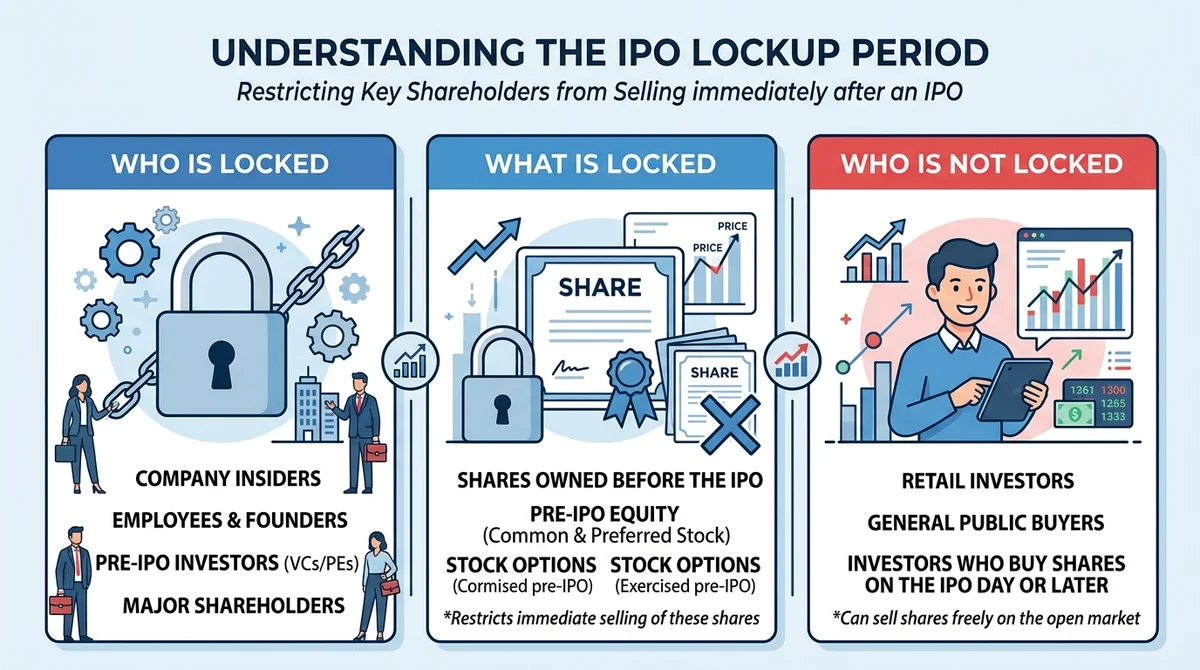
Answer: An IPO lockup period is an arrangement under which, after a company goes public, existing shareholders and insiders may not sell their holdings during an agreed period. Its common purpose is to reduce the impact of concentrated selling on the share price in the early days of trading.
#What does IPO lockup period mean?
Who is locked: pre-IPO shareholders and company insiders, not ordinary retail investors who won shares in the IPO subscription.
What is locked: during the period, holdings may not be sold or transferred.
Chinese translation: commonly translated as 锁定期, also called 禁售期; the English term is lockup period.
An analogy: it is like a ban on reselling a newly delivered home for a period, preventing a rush of concentrated selling right after handover from disrupting prices.
#Why can't the glossary index find a complete explanation?
Glossary indexes mostly include only a one-sentence definition — a short-form entry.
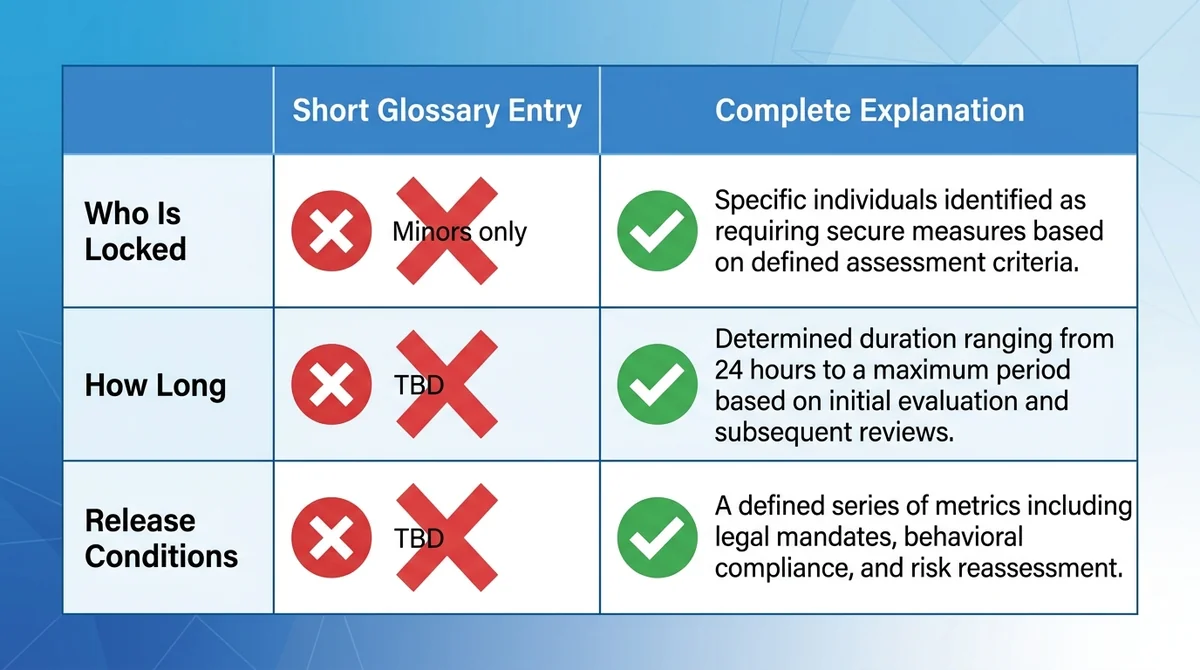
A one-sentence definition usually lacks three things: who it applies to, how long the period is, and the impact after expiry.
Rule differences across markets are not included either, so readers feel the explanation is incomplete.
To judge whether an explanation is complete, check three elements:
- Who is locked
- For how long
- Under what conditions it is released
Only when all three are present is it a usable explanation.
#How long is a lockup period generally? What determines it?
The period is set in the offering documents, usually written in the prospectus; it is not a uniform fixed value.
Conventions differ across markets and boards, and different deals in the same market may also differ. This article does not cite specific numbers of days; please refer to the terms in the specific offering documents (unverified: this article does not give a uniform figure for common periods across markets).
In special cases it may be released early or extended, depending on the agreed terms.
#What does lockup expiry mean for the market?
Expiry only means the selling restriction is lifted and the pool of potentially sellable shares grows.
Whether shareholders sell, and how much, depends on their own intentions and is uncertain.
So expiry does not mean the share price will necessarily fall; changes in supply and demand should be viewed alongside other factors.
⚠️ This article only explains concepts and does not constitute investment advice.
#Where should you look to understand lockup periods?
Check the prospectus and listing announcements first, focusing on the share capital structure and lockup undertaking sections.
Then verify with the three elements — who it applies to, the period, and release conditions — to confirm whether the explanation is complete.
This article only explains concepts; to systematically build up basic terminology, see the glossary section of MSX Learn.
FAQ
What does IPO lockup period mean?
An IPO lockup period is an arrangement under which, after a company goes public, pre-IPO shareholders and company insiders may not sell or transfer their holdings during an agreed period. Its common purpose is to reduce the impact of concentrated selling on the share price in the early days of trading; in Chinese it is also commonly translated as 禁售期.
Are lockup period and 禁售期 the same concept?
They are different translations of the same concept. The English term is lockup period, and in Chinese it can be translated as either 锁定期 or 禁售期; both refer to the arrangement under which original shareholders may not sell their holdings for a period after listing.
Why is the lockup period explanation in glossary indexes incomplete?
Glossary indexes are mostly short-form entries that usually give only a one-sentence definition, lacking who it applies to, how long the period is, and the impact at expiry, and they do not reflect rule differences across markets — so it reads like it was left unfinished.
Will the share price definitely fall after the lockup period expires?
Not necessarily. Expiry only means the selling restriction is lifted and the pool of potentially sellable shares grows, but whether shareholders sell and how much is uncertain and should be judged alongside the market environment and company fundamentals at the time. This article does not constitute investment advice.
What documents should I check for lockup periods?
Check the share capital structure and lockup undertaking sections of the prospectus and listing announcements first, then verify with the three elements — who it applies to, the period, and release conditions — to judge whether the explanation you found is complete.
Related Terms
Want to see the real data for this concept?
After you sign up, you can view live prices, funding rates, and fees for the related assets.
View live prices and fees →