What Is an IPO Prospectus?
Understand what an IPO prospectus is, how it works in traditional finance and crypto tokenized equity offerings, and why it matters for investors.
#What Is an IPO Prospectus?
An IPO prospectus is a formal legal document that a company files with regulators before offering securities to the public. It discloses essential information about the business, its financials, and the risks involved, helping investors make informed decisions. In crypto, the term is sometimes used for documents related to tokenized stocks, security token offerings (STOs), or pre-IPO token sales, but these may not carry the same legal weight.
#Key Takeaways
- An IPO prospectus is a regulated disclosure document required before a public securities offering.
- In crypto, "prospectus" may refer to offering documents for tokenized equity or security tokens, which often differ from traditional filings.
- A prospectus is not the same as a whitepaper, which is typically a technical or marketing document without legal disclosure requirements.
- For crypto investors, a prospectus-like document can clarify whether you are buying equity, tokens, or something else.
#What Is an IPO Prospectus in Simple Terms?
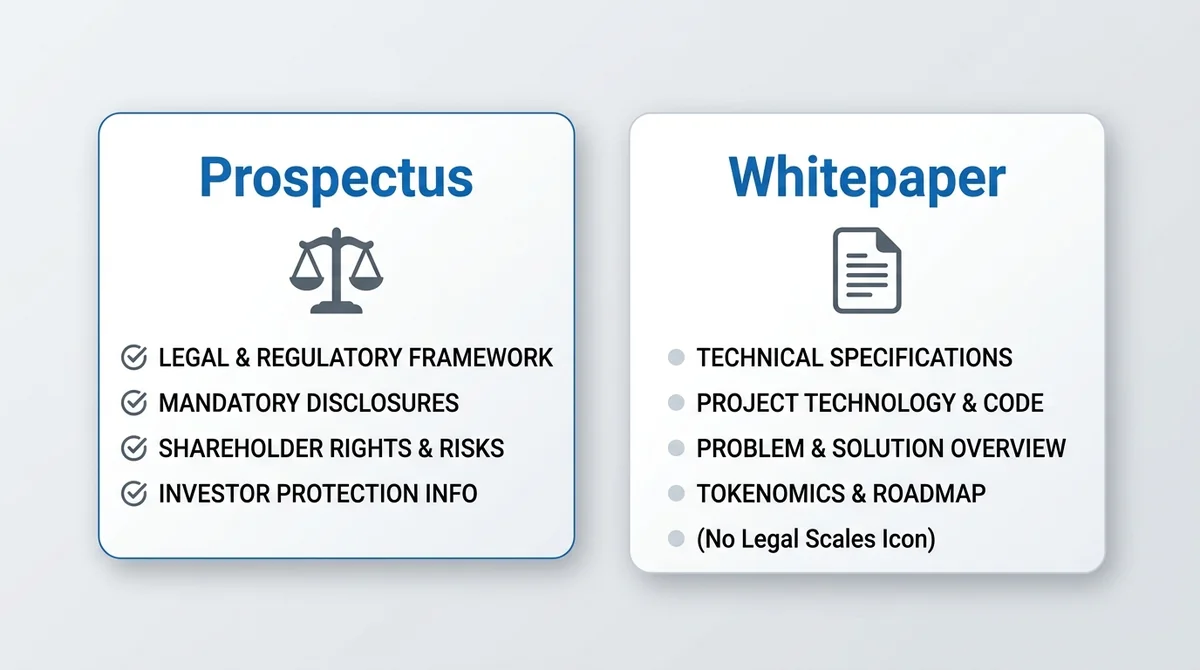
An IPO prospectus is a detailed disclosure document that companies must publish before they can sell shares to the public. Regulators like the SEC require it to ensure that investors have access to accurate and complete information about the company's business, financial condition, and risks. The document is often hundreds of pages long and includes sections on the company's business model, management team, financial statements, and the intended use of the funds raised.
In the crypto world, the term "prospectus" is sometimes loosely applied to documents for tokenized stocks, security token offerings (STOs), or pre-IPO token sales. These documents may mimic the structure of a traditional prospectus, but they are often not filed with a securities regulator and may not provide the same level of legal protection. For example, a project offering tokenized shares of a company might publish a "prospectus" that outlines the token economics and risks, but this document is not a substitute for a formal SEC filing.
It is important to distinguish a prospectus from a whitepaper. A whitepaper is usually a technical or marketing document that explains how a blockchain project works, its token distribution, and its roadmap. Whitepapers are not legally required and do not follow standardized disclosure rules. A prospectus, on the other hand, is a regulated document with specific legal requirements.
#How Does an IPO Prospectus Work?
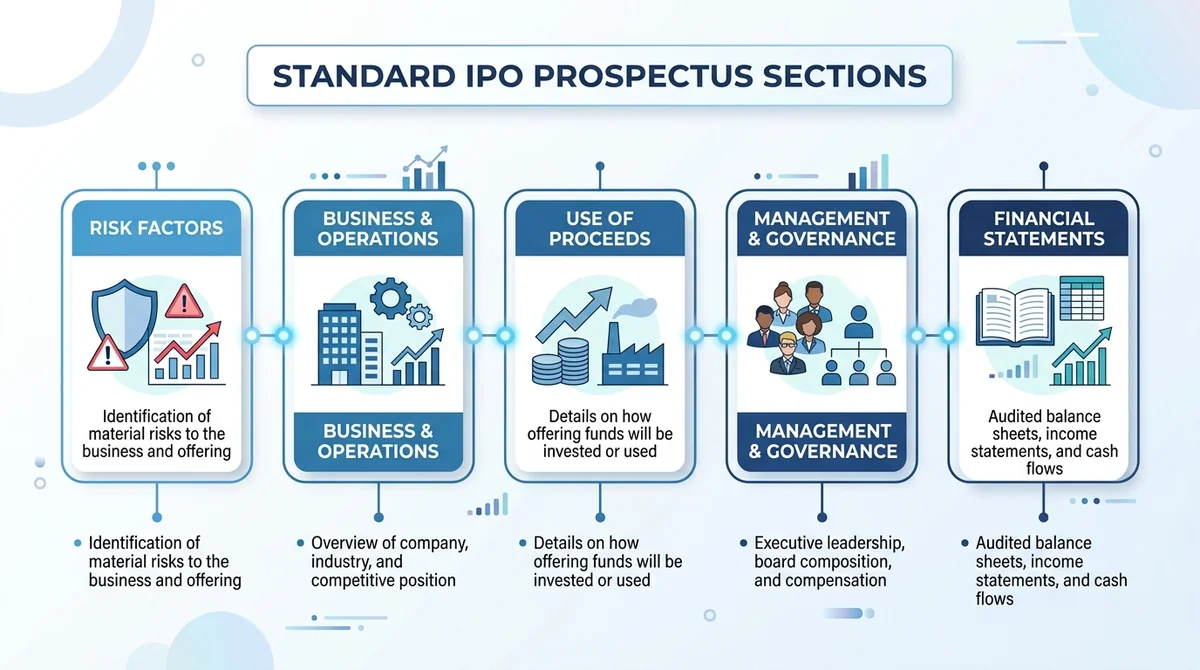
A traditional IPO prospectus is filed with the relevant securities regulator, such as the SEC in the United States. The regulator reviews the document to ensure it meets disclosure standards before the offering can proceed. The prospectus is then made available to potential investors, who can use it to evaluate the investment.
Standard sections of a traditional prospectus include:
- Business description: An overview of the company's operations, products, and competitive landscape.
- Risk factors: A detailed list of risks that could affect the company's performance and the investment.
- Financial statements: Audited financial data, including income statements, balance sheets, and cash flow statements.
- Management discussion and analysis (MD&A): Management's perspective on the company's financial condition and results.
- Use of proceeds: How the company plans to use the money raised from the IPO.
In crypto or tokenized equity offerings, the process may be different. Some projects issue security tokens that represent ownership in a company or asset. These offerings may require a prospectus-like document, but the regulatory framework is often evolving and varies by jurisdiction. For example, a tokenized stock platform might publish an offering document that describes the token's rights, the underlying asset, and the risks, but this document may not be reviewed by a traditional securities regulator.
#IPO Prospectus Examples in Traditional Finance and Crypto
Traditional IPO prospectuses are standardized regulatory filings. For example, when a well-known company like Airbnb or Coinbase went public, they filed detailed prospectuses with the SEC that included all the required sections. These documents are publicly available on the SEC's EDGAR database and serve as a model for what a comprehensive prospectus looks like.
In crypto, examples of prospectus-like documents include those published by security token offerings (STOs) or tokenized stock platforms. For instance, a platform that tokenizes shares of pre-IPO companies might publish an offering document that outlines the token's structure, the underlying equity, and the risks. However, these documents vary widely in legal status and completeness. Some may be thorough and transparent, while others may be vague or incomplete.
It is important to note that examples are illustrative only and not investment recommendations. Always conduct your own research and consult with a financial advisor before making any investment decisions.
#Why Is an IPO Prospectus Important for Crypto Investors?
For crypto investors, an IPO prospectus—or its equivalent—is crucial for understanding exactly what is being offered and the associated risks. In traditional finance, the prospectus helps investors understand the business model, risks, and financial health of the company. In crypto, where tokenized equity and pre-IPO tokens are becoming more common, a prospectus-like document can clarify whether you are buying equity, tokens, or something else.
A missing or vague prospectus may be a red flag. If a crypto project claims to offer tokenized equity but does not provide a clear, detailed document explaining the rights and risks, it could indicate a lack of transparency or even a scam. Investors should always demand a comprehensive offering document before committing funds.
#Risks and Common Misconceptions About IPO Prospectuses in Crypto
One common misconception is that a crypto whitepaper serves the same function as an IPO prospectus. In reality, whitepapers are often technical or promotional and lack the legal disclosure requirements of a prospectus. A whitepaper may explain how a blockchain works, but it does not provide audited financial statements or a detailed risk analysis.
Another risk is unregulated or incomplete offering documents. Some crypto "prospectuses" are not filed with any regulator and may omit critical risk information. This can leave investors exposed to fraud or unexpected losses. Additionally, there is a risk of confusing token sales with equity ownership. Buying a token does not necessarily mean owning shares of the company. Tokens may represent utility, access rights, or other non-equity interests.
To protect yourself, always verify whether a document is a regulated prospectus or just a marketing whitepaper. Look for audited financials, clear risk disclosures, and information about regulatory compliance. If the document is vague or missing key sections, proceed with caution.
FAQ
What is the difference between an IPO prospectus and a whitepaper?
An IPO prospectus is a regulated legal document with required disclosures, while a whitepaper is typically a technical or marketing document without legal requirements.
Are crypto prospectuses legally binding?
Not always. Many crypto offering documents are not filed with regulators and may not carry the same legal weight as traditional IPO prospectuses.
Why should crypto investors read a prospectus?
A prospectus helps investors understand the business model, risks, and whether they are buying equity, tokens, or something else, enabling informed decisions.
What are the key sections of an IPO prospectus?
Typical sections include business description, risk factors, financial statements, management discussion, and use of proceeds.
Is buying a token the same as buying equity?
No. Tokens may represent utility, access rights, or other interests, and do not necessarily confer ownership shares in a company.
Want to see the real data for this concept?
After you sign up, you can view live prices, funding rates, and fees for the related assets.
View live prices and fees →