What Is the IPO Stage? A Beginner's Guide to the Initial Public Offering Process
Learn what the IPO stage means, how it works, and why the pre-IPO stage matters. Understand key steps, timelines, and risks before going public.
#What Is the IPO Stage? A Beginner's Guide to the Initial Public Offering Process
The IPO stage is the structured process a private company goes through to become a publicly traded entity by offering its shares to public investors on a stock exchange. It is not a single event but a series of activities that start long before the actual launch and continue after. Key Takeaways:
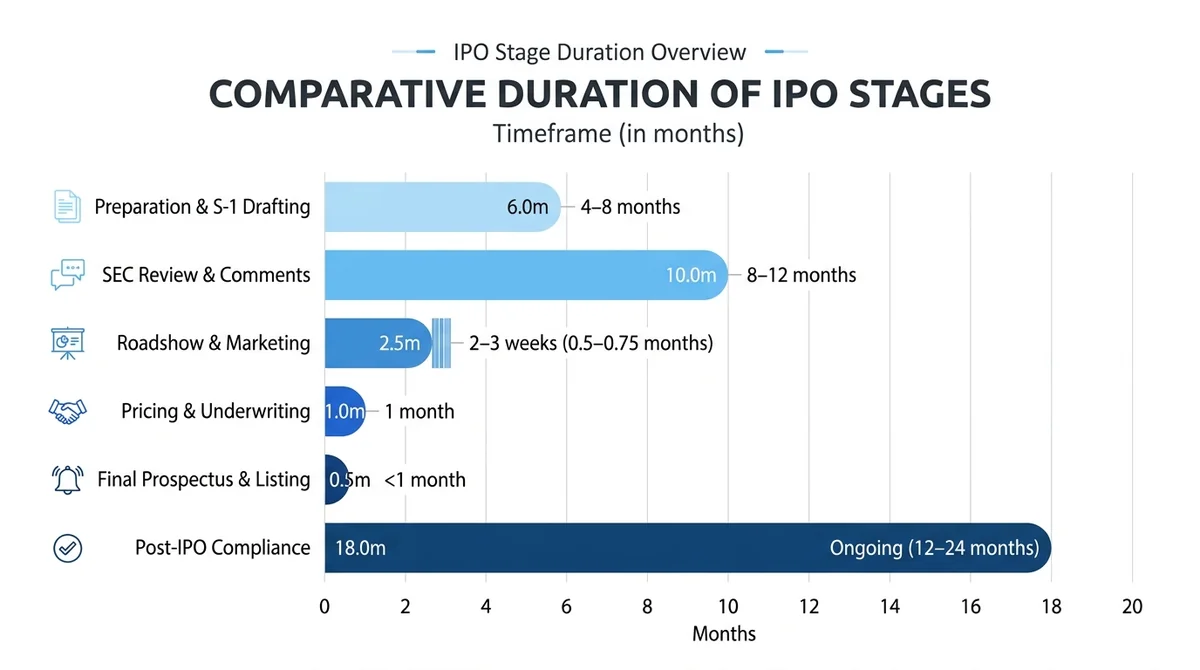
- The IPO stage typically begins 12–24 months before the target listing date.
- Pre-IPO preparation involves self-evaluation, financial controls, and assembling a cross-functional team.
- Nearly 17% of US IPO attempts since 1997 have been withdrawn, highlighting the importance of readiness.
- Going public is not a one-time event; it requires ongoing transparency and accountability.
#What Is the IPO Stage in Simple Terms?
The IPO stage is the period when a private company offers its shares to public investors for the first time and becomes listed on a stock exchange. It is not a single event but a series of activities that start long before the actual launch and continue after. This stage marks the transition from private ownership to public trading, allowing the company to raise significant external funds.
#What does IPO stage mean?
An initial public offering (IPO) stage refers to the entire lifecycle of taking a company public, from initial preparation to post-listing operations. During this stage, the company must meet regulatory requirements, prepare financial documentation, and build the infrastructure expected by public investors.
#How is the IPO stage different from the pre-IPO stage?
The pre-IPO stage is the initial phase of the IPO process, where the company prepares internally for going public. The broader IPO stage includes the pre-IPO phase, the actual offering, and the ongoing obligations of being a public entity.
#How Does the IPO Stage Work?
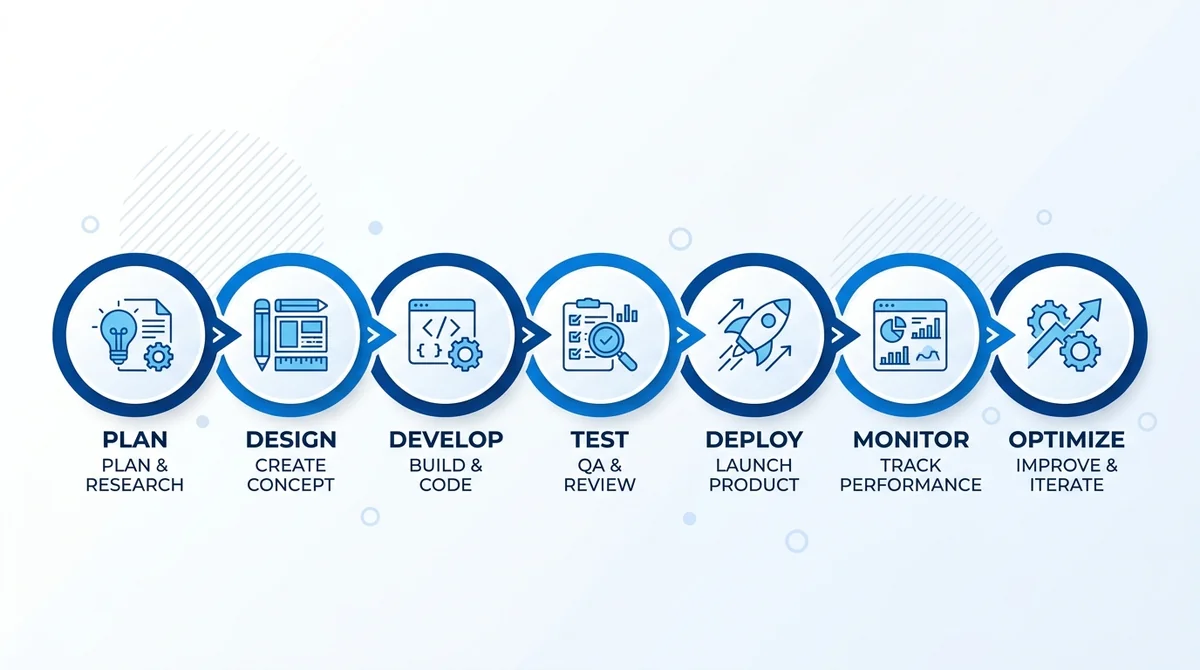
The IPO process commonly begins 12 to 24 months before the target listing date. A cross-functional IPO team, including external specialists, works collaboratively and in parallel to keep everything on track. The process progresses from an initial readiness assessment through to operating as a public entity.
#What are the main steps in the IPO process?
A typical IPO process involves seven key steps:
- Initial readiness assessment
- Pre-IPO transformation (self-evaluation, analyzing options, strengthening internal structure, assembling team)
- Financial preparation and audit-ready controls
- Filing regulatory documents
- Marketing and roadshow
- Pricing and allocation
- Operating as a public entity
#What is the pre-IPO transformation stage?
The pre-IPO transformation stage involves self-evaluation, analyzing options like direct listing or SPAC, strengthening internal structure, and assembling an IPO team. Companies often seek consultation from professional consulting firms to navigate the regulatory environment.
#How long does the IPO stage take?
The timeline alone is daunting, often beginning 12 to 24 months in advance. This extended period allows companies to build rigorous controls and capabilities required of a public company.
#What Is the Pre-IPO Stage and Why Does It Matter?
The pre-IPO stage is a period of strategic planning, financial preparations, and cautious execution for startups. Companies focus on scaling, gaining market dominance, and building a reputation before going public. This stage is crucial for startups in their lifecycle, leading up to their initial public offering.
#What happens during the pre-IPO stage?
During the pre-IPO stage, a private company undergoes a reorganization process called the pre-IPO transformation stage. The corporation should choose executives with experience in maximizing shareholder value, as that is the primary goal of public companies.
#Why do startups need a pre-IPO stage?
Pre-IPO enables founders, workers with vested stock options, and early investors to realize their shares' value through liquidity and potential secondary transactions. It also allows companies to raise funds through private finance rounds, increasing investment in operations, growth, and research.
#What are the key challenges in the pre-IPO stage?
Key challenges include due diligence requirements and the need to operate with the stringency of a public entity. Companies must have bulletproof financial controls, audit-ready processes, and systems that can scale seamlessly through rapid growth.
#What Are the Key Steps in the IPO Process?
The seven-step sequence progresses from an initial readiness assessment through to operating as a public entity. Each step builds on the previous one, requiring careful coordination and robust systems.
#What is the first step in the IPO process?
The first step is an initial readiness assessment, where the company evaluates its financial health, business model, growth prospects, and market competition. Certified independent consultants often help with the valuation process through industry-standard metrics.
#How do companies prepare financial documentation for an IPO?
Companies need bulletproof financial controls, audit-ready processes, and systems that can scale seamlessly through rapid growth. ERP systems that unify and integrate companywide financial and operational data systems are essential for investor communication.
#What happens after the IPO is launched?
Operating as a public entity requires an ongoing commitment to transparency and accountability. This includes regular financial reporting, investor relations, and compliance with securities regulations.
#What Are Common Risks or Misconceptions About the IPO Stage?
Nearly 17% of US IPO attempts since 1997 have been withdrawn. Going public is not a one-time event; it requires ongoing commitment to transparency and accountability. Some companies may choose alternatives like direct listing or SPAC instead of a traditional IPO.
#Why do some IPO attempts fail?
The process requires significant capital and preparation, and not all companies are ready for the rigours of public markets. Withdrawal can result from market conditions, regulatory issues, or inadequate financial readiness.
#Is going public a one-time event?
No, going public is not a one-time event. Operating as a public entity requires an ongoing commitment to transparency and accountability, including continuous financial reporting and compliance.
#Do all companies go through the same IPO stage?
Not all companies follow the traditional IPO path. Some may opt for a direct listing, where no new shares are issued, or operate as a Special Purpose Acquisition Company (SPAC), which goes through the IPO process to facilitate a merger or acquisition.
#Related Terms to Know Alongside the IPO Stage
Understanding related concepts helps clarify the different paths and liquidity options within the broader IPO stage.
#What is the difference between IPO and direct listing?
Direct listing is an alternative to issuing new shares in an IPO process. In a direct listing, existing shareholders sell their shares directly to the public without underwriters or a lock-up period.
#What is a SPAC in relation to the IPO stage?
A Special Purpose Acquisition Company (SPAC) goes through the IPO process to facilitate a merger or acquisition. It raises capital through an IPO with the sole purpose of acquiring an existing private company.
#What are secondary transactions in the pre-IPO stage?
Secondary transactions allow pre-IPO shareholders to sell their stakes before the public offering. This provides early liquidity for founders, employees, and early investors.
For more on IPO-related topics, see our guides on IPO due diligence and IPO lockup period.
FAQ
What is the IPO stage in simple terms?
The IPO stage is the period when a private company offers its shares to public investors for the first time and becomes listed on a stock exchange. It includes all activities from preparation to post-listing operations.
How long does the IPO stage take?
The IPO process commonly begins 12 to 24 months before the target listing date, though the exact timeline varies by company and market conditions.
What is the pre-IPO stage?
The pre-IPO stage is the initial phase of the IPO process, where a company prepares internally for going public, including self-evaluation, financial preparation, and assembling an IPO team.
Why do some IPO attempts fail?
Nearly 17% of US IPO attempts since 1997 have been withdrawn due to factors like market conditions, regulatory issues, or inadequate financial readiness.
Is going public a one-time event?
No, going public is not a one-time event. It requires an ongoing commitment to transparency and accountability as a public entity.
What is the difference between IPO and direct listing?
In an IPO, a company issues new shares to raise capital, while in a direct listing, existing shareholders sell their shares directly to the public without underwriters.
Want to see the real data for this concept?
After you sign up, you can view live prices, funding rates, and fees for the related assets.
View live prices and fees →