What Is an SEC IPO? Definition, Process, and Risks
An SEC IPO is a first public stock sale registered with the SEC, which reviews disclosures but does not approve investments. Learn the process and risks.
#What Is an SEC IPO?
An SEC IPO is an initial public offering that has been registered with the U.S. Securities and Exchange Commission. The SEC reviews the registration statement to ensure adequate disclosure of financial and business information, but it does not endorse or approve the investment. This article explains how SEC IPOs work, why registration matters, and the key risks.
#Key Takeaways
- An SEC IPO is a company's first public sale of shares registered with the SEC.
- The SEC's role is to protect investors through mandatory disclosure, not to approve investments.
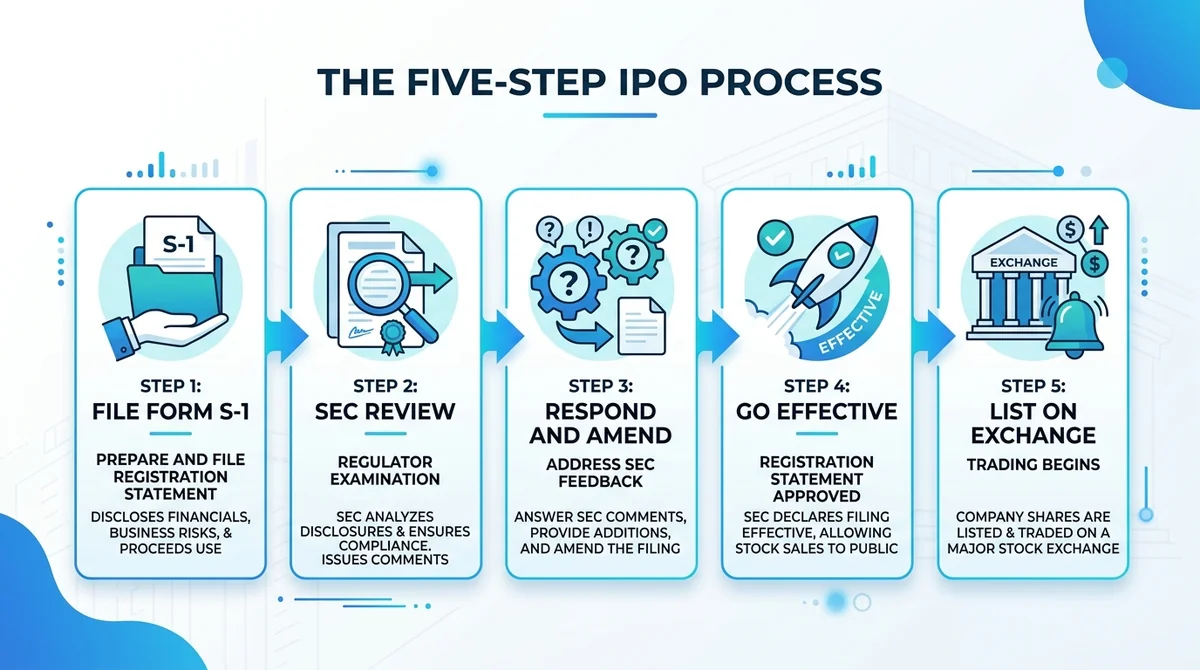
- The IPO process involves filing Form S-1, responding to SEC comments, and obtaining effectiveness.
- SEC registration does not guarantee investment safety; IPOs carry inherent risks.
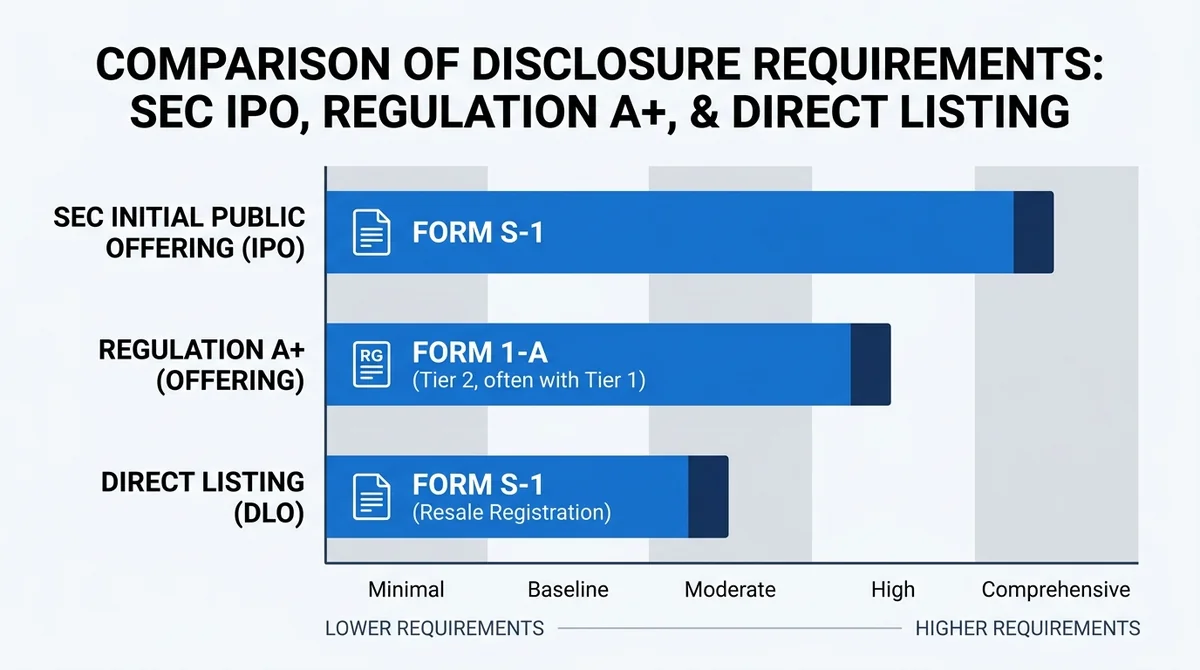
- Different IPO types, like Regulation A+ and direct listings, have different SEC requirements.
#What Is an SEC IPO?
#Definition of an SEC IPO
An SEC IPO is a company's first public sale of shares that is registered with the U.S. Securities and Exchange Commission. The term "SEC IPO" refers to the regulatory framework rather than a separate type of offering. When a company decides to go public, it must file a registration statement with the SEC unless an exemption applies. This registration statement includes detailed information about the company's business, financial condition, management, and the securities being offered. The SEC's role is to protect investors by requiring disclosure of financial and business information. Importantly, an SEC IPO is not an endorsement of the company; the SEC does not evaluate the merits of the investment.
In the context of digital assets, some token offerings may be subject to SEC registration if they are deemed securities. However, the core concept remains the same: a registered offering provides transparency through mandated disclosures.
#SEC vs. Other IPO Regulators
The SEC is the primary regulator for securities offerings in the United States. Unlike some international regulators, the SEC focuses on disclosure rather than merit review. For example, the SEC does not approve or disapprove of a company's business model or investment potential; it only ensures that investors have access to material information. Other regulators, such as the Financial Conduct Authority (FCA) in the UK, have similar disclosure-based approaches but with different procedural requirements. In the crypto space, the SEC's jurisdiction is still evolving, particularly for token offerings that may be classified as securities.
#How Does an SEC IPO Work?
#Filing a Registration Statement
The SEC IPO process begins with the company filing a registration statement, typically on Form S-1. This form requires comprehensive disclosure, including financial statements audited by an independent accounting firm, a description of the business, risk factors, and details about the offering. The registration statement is publicly available through the SEC's EDGAR database, allowing investors to review the information before the offering.
#SEC Review and Comment Process
After filing, the SEC staff reviews the registration statement and may issue comments requiring additional disclosure or clarification. The company must respond to these comments and amend the filing as necessary. This back-and-forth process can take several months. The SEC's goal is to ensure that the disclosure is complete and not misleading, not to pass judgment on the investment.
#Going Effective and Selling Shares
Once the SEC is satisfied with the disclosure, the registration statement becomes effective. At that point, the company can sell shares to investors, typically through an underwriting syndicate. The shares are then listed on a national stock exchange, such as the NYSE or Nasdaq, and trading begins. The company receives the proceeds from the sale, minus underwriting fees.
#SEC IPO Example
#Traditional Company IPO
A traditional SEC IPO example is a company that files a Form S-1, undergoes SEC review, and then lists its shares on a national exchange. For instance, a technology startup might register with the SEC, disclose its financials, and sell shares to the public. The SEC's review ensures that investors have access to the same information as institutional investors.
#Crypto-Related IPO or Token Offering
In the crypto space, an SEC IPO example could involve a token offering that is registered as a security. If a blockchain project's tokens meet the definition of a security under the Howey Test, the issuer may need to file a registration statement with the SEC. However, many token offerings have not been registered, leading to enforcement actions. The SEC has brought cases against issuers for conducting unregistered securities offerings. This highlights the importance of understanding whether a crypto asset falls under SEC jurisdiction.
#Why Is SEC IPO Registration Important?
#Investor Protection
SEC IPO registration is important because it provides investor protection through mandatory disclosure. Investors receive detailed information about the company's financial condition, business operations, and risk factors. This allows them to make informed investment decisions. Without such disclosure, investors would be at a significant information disadvantage.
#Market Transparency
The SEC's disclosure requirements promote transparency and trust in public markets. By making registration statements publicly available, the SEC levels the playing field between institutional and retail investors. This transparency is a cornerstone of the U.S. capital markets.
#Legal Compliance
Failure to register an offering that is required to be registered can lead to enforcement actions by the SEC, including fines and injunctions. Companies that comply with SEC registration avoid legal risks and gain credibility with investors. In the crypto space, regulatory uncertainty means that issuers must carefully assess whether their token offerings require registration.
#Risks and Common Misconceptions About SEC IPOs
#SEC Approval Misconception
A common misconception is that SEC registration means the SEC approves the investment. In reality, the SEC does not approve or endorse any securities offering. The SEC's review is limited to ensuring adequate disclosure. Investors should not interpret SEC registration as a seal of approval.
#Investment Risk
IPOs can be volatile and risky. The stock price may fluctuate significantly after the offering, and there is no guarantee of returns. Investors should carefully review the risk factors disclosed in the registration statement before investing.
#Crypto-Specific Risks
In crypto, the regulatory status of many tokens is unclear. Even if a token offering is registered with the SEC, the underlying technology and market may pose additional risks. Investors should be aware that SEC registration does not eliminate the risks associated with digital assets.
#SEC IPO vs. Other IPO Types
#Regulation A+ Offerings
Regulation A+ allows smaller companies to raise capital with lighter registration requirements. Under Regulation A+, companies can offer up to $75 million in securities in a 12-month period, subject to less stringent disclosure than a traditional IPO. This can be a faster and cheaper alternative for small businesses.
#Direct Listings
A direct listing allows a company to go public without issuing new shares or using underwriters. Instead, existing shareholders sell their shares directly to the public. The SEC still requires a registration statement, but the process differs from a traditional IPO in that no new capital is raised.
#SPAC IPOs
A SPAC (Special Purpose Acquisition Company) IPO involves a shell company that raises capital through an IPO to acquire a private company. The SEC registration process for a SPAC IPO is similar to a traditional IPO, but the subsequent merger (de-SPAC) has its own regulatory requirements. SPACs have become popular as an alternative route to going public.
FAQ
Does SEC registration guarantee a good investment?
No. SEC registration only ensures that the company has disclosed material information; it does not guarantee the investment's performance or safety.
What is Form S-1?
Form S-1 is the registration statement that companies file with the SEC before an IPO. It contains detailed financial and business information.
How long does the SEC IPO process take?
The process typically takes several months, depending on the SEC's review and the company's responsiveness to comments.
Are all crypto token offerings required to be registered with the SEC?
Not all. Only token offerings that meet the definition of a security under U.S. law are required to be registered. The determination depends on the specific facts and circumstances.
What is the difference between an SEC IPO and a direct listing?
An SEC IPO involves issuing new shares and raising capital, while a direct listing involves existing shareholders selling their shares without new capital raised. Both require SEC registration.
Want to see the real data for this concept?
After you sign up, you can view live prices, funding rates, and fees for the related assets.
View live prices and fees →