Single-Sig vs Multisig vs Custodial Wallets: Key Differences (2026)
A single-sig wallet is controlled by one private key, a multisig wallet needs a threshold of keys to send funds, and a custodial wallet has a third party hold the keys.
A What is a single signature wallet controls all assets with one private key, a multisig wallet requires several private keys to approve a transfer, and a custodial wallet has a third party hold your private keys for you. The most fundamental difference among the three is who holds the private key.
#What Are Single-Sig, Multisig, and Custodial Wallets?
What is a single signature wallet: One private key controls all assets. Whoever holds the private key can move the assets.
Multisig wallet: A threshold is set in advance, such as 2/3, so a transfer requires authorization from at least 2 private keys.
Custodial wallet: The private key is held by the platform, and you access assets by logging into an account.
Analogy: a single-sig wallet is like one person holding one house key; a multisig wallet is like a bank safe deposit box that needs two keys turned at the same time; a custodial wallet is like handing your key to the property manager and asking them to open the door for you.
#What Are the Differences Between Single-Sig, Multisig, and Custodial Wallets?
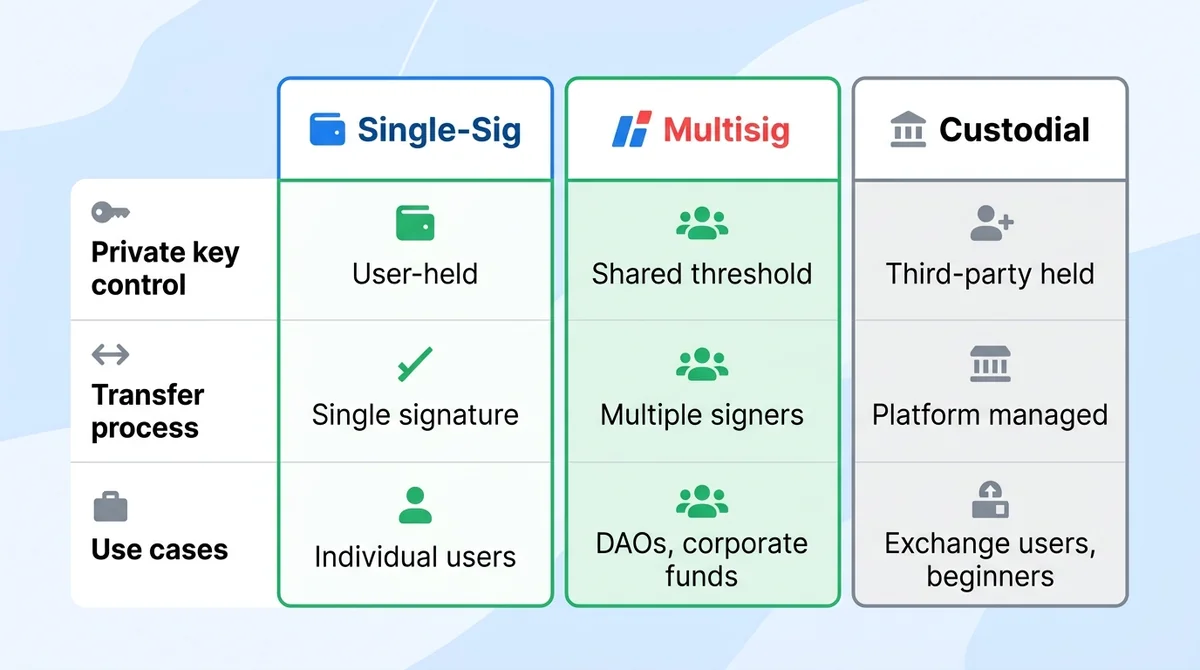
| Dimension | Single-sig wallet | Multisig wallet | Custodial wallet |
|---|---|---|---|
| Private key control | One person | Multiple people | Third-party platform |
| Transfer process | Sign directly | Threshold required | Operate through the platform |
| Use cases | Personal, small amounts | Teams, large amounts | Users seeking convenience |
Single-sig and multisig wallets are both What is a non-custodial wallet — the private key is in your own hands, and so is the responsibility. A custodial wallet hands that responsibility to the platform.
#How Does a Multisig Wallet Work?
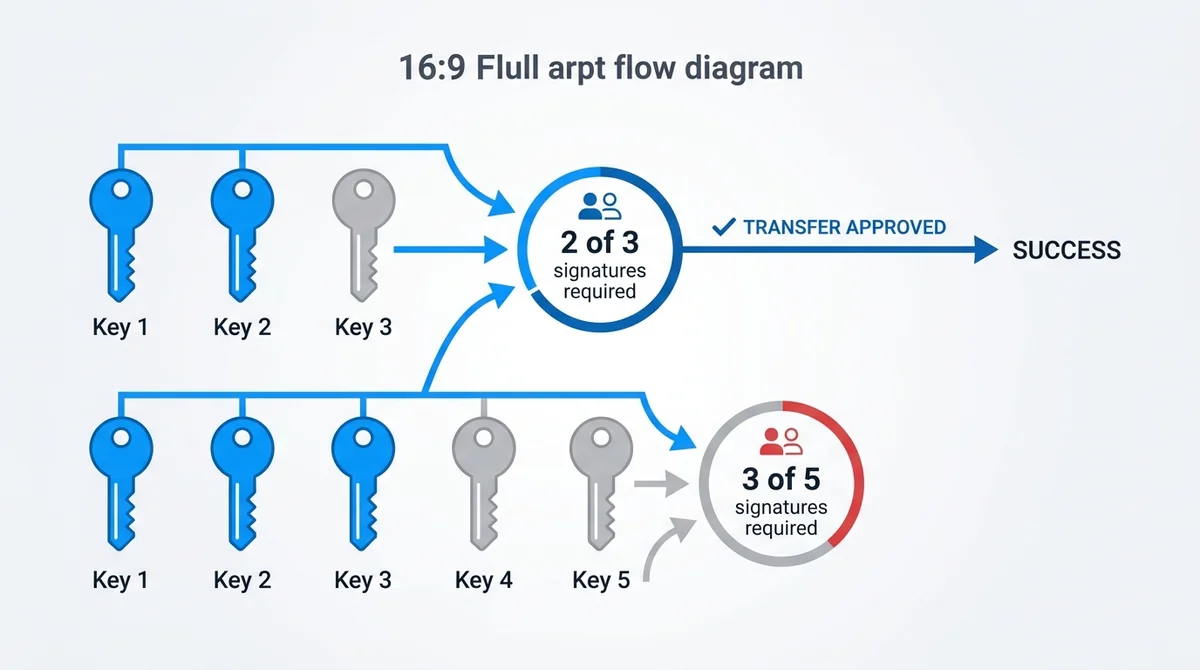
Threshold refers to the minimum number of private keys required for a transfer. Common forms are 2/3 and 3/5.
- 2/3: any 2 of 3 private keys can sign to send funds
- 3/5: 3 of 5 private keys must sign
Multisig wallets suit team treasuries, shared family management, and distributed custody of large assets. If a single private key leaks, the assets still cannot be moved directly.
#What Is the Key Difference Between Custodial and Non-Custodial Wallets?
- Custodial wallet: The private key is held by the platform, and users depend on the platform's security and operational capabilities.
- What is a non-custodial wallet: The private key is held by the user, who bears the responsibility; single-sig and multisig wallets both fall into the non-custodial category.
#What Risks Should You Watch for When Choosing a Wallet Type?
- Single-sig: If the private key is lost or leaked, you lose control of the assets, and recovery is usually impossible
- Multisig: Keep each private key stored separately to avoid losing them all at once
- Custody fee: This depends on the platform's security and operations; if the platform has problems, users are affected too
⚠️ The above only explains mechanics and is not investment advice. Digital assets carry risk; start with small amounts and back up your recovery information properly.
To learn more about the principles of self-custody, see MSX Learn's "What Is a Non-Custodial Wallet? A 2026 Guide to Private Keys, Seed Phrases, and hot and cold wallets."
This article covers concepts only; when you are ready to try it out, see the live tools on the main MSX site.
FAQ
What is the core difference between a single-sig wallet and a multisig wallet?
A single-sig wallet is controlled by one private key, and a transfer requires only one signature; a multisig wallet sets a threshold and requires multiple private keys to authorize a transfer together, preventing a single point of failure.
What does the threshold mean in a multisig wallet?
The threshold is the minimum number of private keys required to transfer assets. For example, a 2/3 multisig means any 2 of 3 private keys can sign to send funds; another common form is 3/5.
How does a custodial wallet differ from a non-custodial wallet?
In a custodial wallet, the private key is held by a third-party platform, and users access assets through an account; in a non-custodial wallet, the private key is held by the user, who bears the responsibility. Single-sig and multisig wallets are both non-custodial.
What happens if the private key of a single-sig wallet is lost?
If the private key is lost, the user loses control of the wallet's assets, and recovery is usually impossible. Backing up recovery information is therefore the most important step in using a single-sig wallet.
What scenarios suit a multisig wallet?
Multisig wallets suit team treasuries, shared family management, and distributed custody of large assets, reducing the risk from a single private key being leaked or lost.
Related Terms
Want to see the real data for this concept?
After you sign up, you can view live prices, funding rates, and fees for the related assets.
View live prices and fees →