What Is a Private Key? Private Keys, Public Keys, and Addresses in Cryptocurrency Cryptography
A private key controls your crypto assets. Learn how private keys, public keys, and addresses work, and how to protect them. Not investment advice.
A private key is the secret string that controls your crypto assets. Whoever holds it can access the corresponding assets. This article is for educational purposes only and does not constitute investment advice; self-custody of private keys requires you to take full security responsibility.
#What Is a Private Key? Why Is It Like a Safe Key?
A private key is not a password: passwords can be reset, but a private key is a randomly generated long string that cannot be recovered if lost. Holding the private key means holding the assets: on-chain transactions do not care who you are; they only recognize private key signatures.
Think of the private key as the key to a safe: the address is the safe's number, and the public key is the lock. The key can unlock and transfer assets, and if you lose the key, the safe cannot be opened.
#Public Keys and Addresses: Derived One-Way from Private Keys
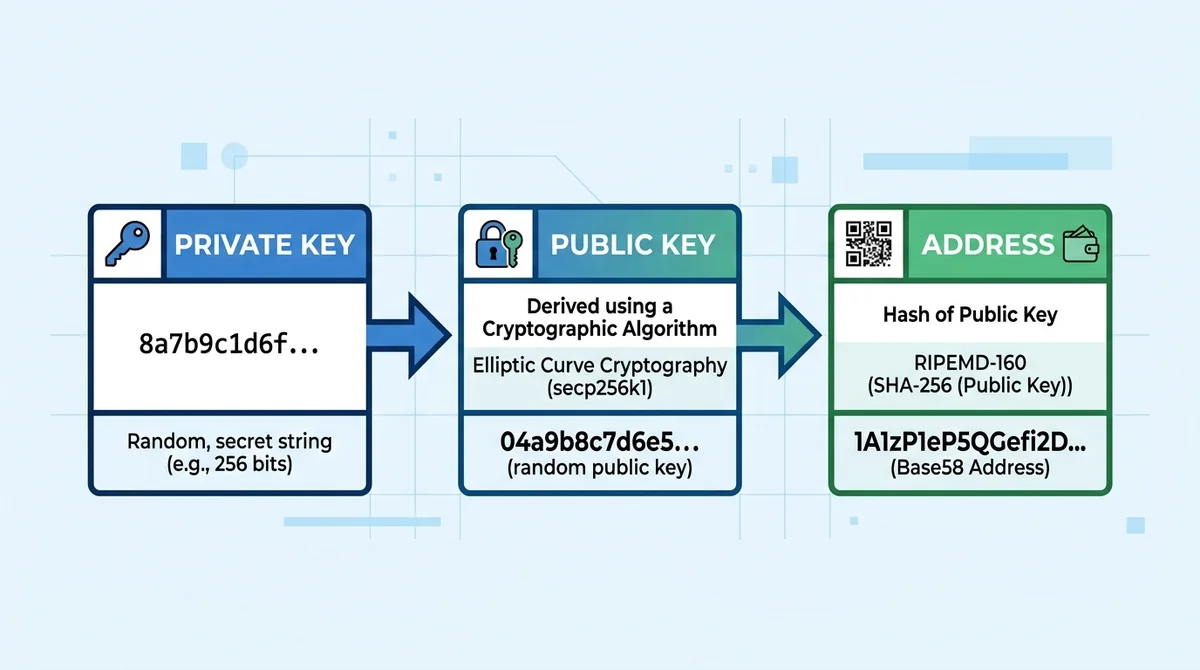
Public keys come from private keys: generated through an irreversible cryptographic algorithm and can be made public. Addresses come from public key hashes: others only need your address to send you crypto, not your public key or private key.
A private key can derive a public key, but neither a public key nor an address can be reverse-engineered to reveal the private key. It's like knowing a safe's number—you can't make a key from it.
#How Do Private Keys Sign Transactions? Why Is Protecting Them Important?
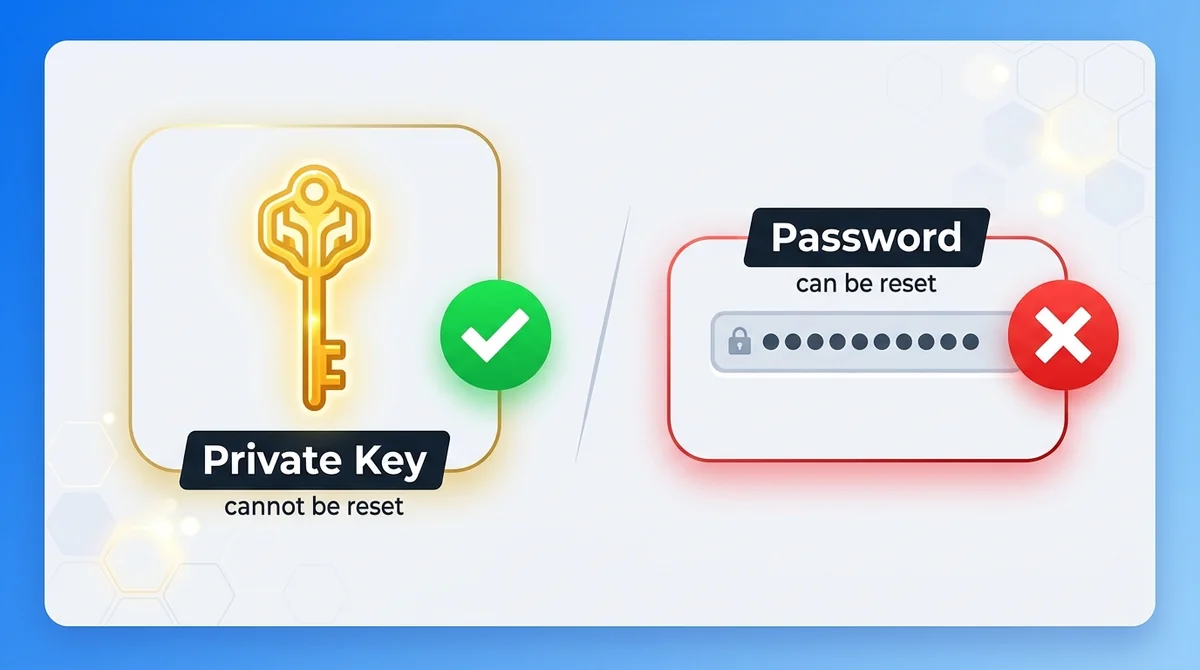
Transaction signing: you sign with your private key, and others verify with your public key. The private key is never exposed in the process. Loss or leakage: losing it means permanently losing your assets; leaking it means someone else can take your assets.
Protection tips: store private keys offline, keep handwritten backups, and don't screenshot them on your phone. Never disclose your private key or seed phrase to anyone.
Common misconception: a seed phrase can derive a private key, but an address cannot be reverse-engineered to reveal a private key. Don't mistake an address for a private key.
FAQ
What is the difference between a private key and an address?
A private key is the secret string used to sign transactions and controls assets; an address is the public receiving code that can be shared with others. A private key can generate a public key and an address, but not the other way around. Protect your private key and never disclose it.
Can a lost private key be recovered?
No. A private key is the only credential, and no central authority can reset it. So you must back it up offline, either handwritten or in a hardware wallet. Losing it means your assets are permanently locked.
Are a seed phrase and a private key the same thing?
No, but a seed phrase can derive a private key. A seed phrase is a group of words designed for easier human recording. Protecting the seed phrase is equivalent to protecting the private key, and it must not be disclosed either.
If someone knows my public key or address, can they compute my private key?
No. The private key to public key process is one-way, and neither the public key nor the address can be reverse-engineered to reveal the private key. This is the core of cryptography. So you can safely share your address to receive funds.
Related Terms
Want to see the real data for this concept?
After you sign up, you can view live prices, funding rates, and fees for the related assets.
View live prices and fees →