Cold Wallet
A cold wallet keeps your private keys offline, far safer than hot wallets. Learn how cold wallets work, types, pros and cons, and secure usage.
#What is a cold wallet?
A cold wallet is a storage tool that keeps your digital asset private keys offline. The private key is the sole credential for controlling your assets. Since a cold wallet never connects to the internet, hackers cannot steal private keys through remote means.
Analogy: A cold wallet is like locking cash in a home safe, while a hot wallet is like a pocket change purse you carry around. The safe is less convenient for quick access, but much harder to steal from.
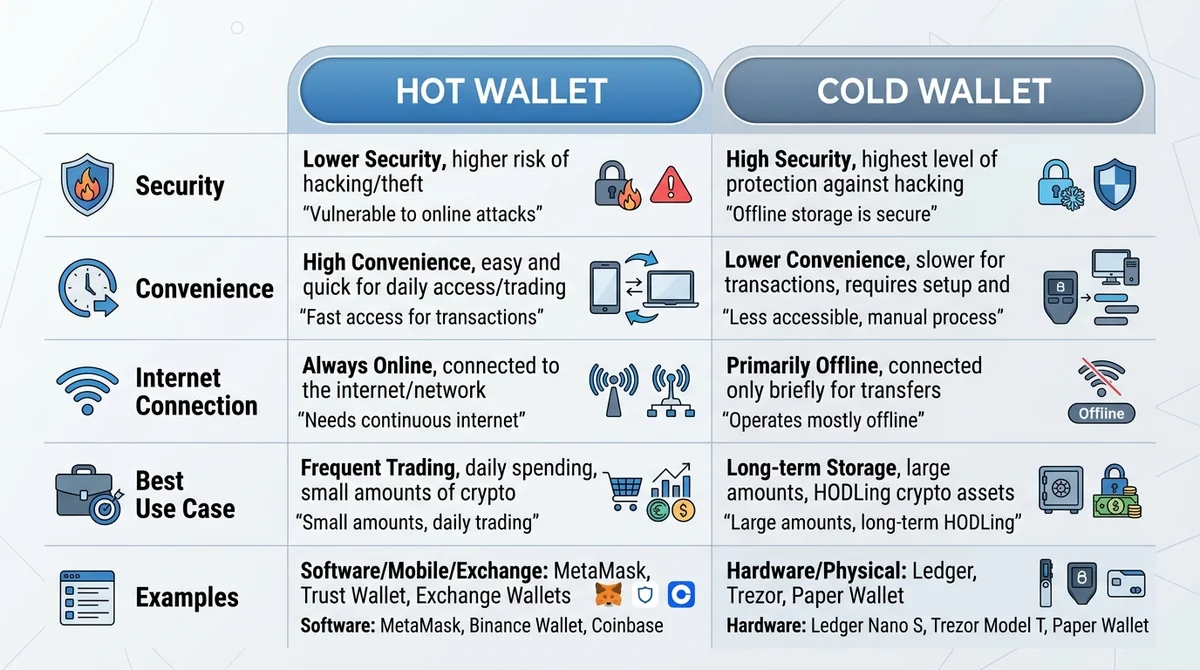
#Hot wallet vs cold wallet: what's the difference?
- Cold wallet: private keys stay offline at all times, high security, suitable for long-term storage.
- Hot wallet: private keys remain in an online environment, convenient to use, but vulnerable to cyberattacks.
#What are the common types of cold wallets?
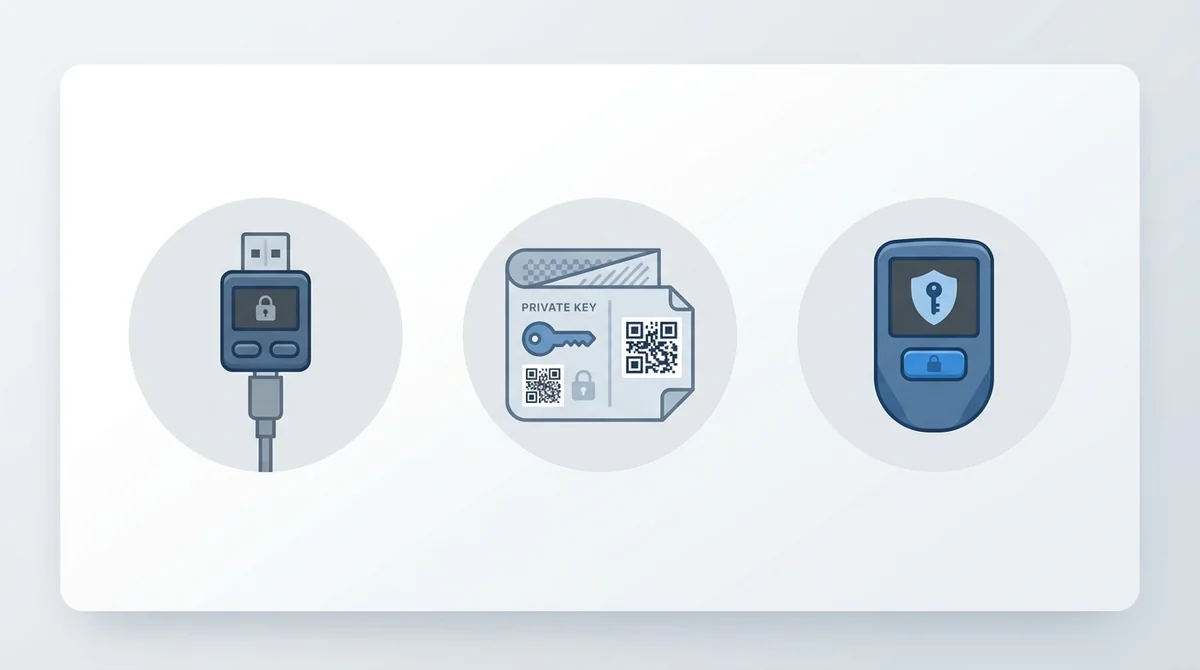
- Hardware wallet: a dedicated physical device, such as Ledger or Trezor.
- Paper wallet: private keys printed or written down on paper. (See: How to create a paper wallet safely)
- Offline device: an old phone or computer disconnected from the network.
#How does a cold wallet protect digital assets?
A cold wallet generates and stores private keys in an offline environment, and transaction signing is also completed offline. After signing, the transaction is broadcast to the blockchain network via an internet-connected device.
Analogy: It's like signing a check in a room with no internet, then taking a photo of the check and sending it to the bank. Because the signing process never touches the network, the check's contents cannot be tampered with midway.
#Why should private keys never be exposed to an online environment?
If a private key ever appears on an internet-connected device, it can be intercepted by trojans or phishing pages. A cold wallet keeps private keys completely isolated from the network, eliminating the possibility of remote attacks at the source.
#How does a cold wallet sign transactions?
- Generate the unsigned transaction on an internet-connected device.
- Transfer the transaction information to the cold wallet.
- The cold wallet completes the signing offline.
- Send the signed transaction back to the internet-connected device and broadcast it.
#Why use a cold wallet?
Hot wallet private keys are stored on internet-connected devices, making them a prime target for hackers. Cold wallets are better suited for holding larger amounts of assets over the long term, significantly reducing the risk of remote theft.
Analogy: A hot wallet is like hiding your door key under the doormat—convenient but risky. A cold wallet is like depositing your key in a bank safe deposit box—more cumbersome but much more secure.
#What are the security risks of hot wallets?
- Phishing websites trick users into voluntarily revealing private keys.
- Malicious programs tamper with copied wallet addresses.
- Centralized exchanges suffer attacks, causing user asset losses.
#Which assets are suitable for storing in a cold wallet?
- Major assets like Bitcoin and Ethereum intended for long-term holding.
- Large amounts of digital assets.
- Assets with low trading frequency.
#What are the advantages and limitations of cold wallets?
Advantages:
- High security level, resistant to remote network attacks.
- Suitable for long-term asset storage.
- Private keys are fully controlled by the user.
Limitations:
- Higher learning curve; transaction steps are relatively complex.
- Risk of device damage or loss.
- Requires extra backup and safekeeping efforts.
#How to use a cold wallet safely?
The core of safe cold wallet usage lies in properly backing up your seed phrase, preventing physical damage and loss, and regularly verifying device usability.
#How to back up a cold wallet?
- Write down the seed phrase immediately when creating the wallet.
- Record the seed phrase on paper or a metal plate.
- Store backups in multiple secure locations.
- Never take photos or upload to the cloud.
#How to prevent physical damage or loss?
- Use fireproof and waterproof metal seed phrase plates.
- Store the hardware wallet in a dry and secure environment.
- Regularly check whether the device can start normally.
#FAQ
#Does a cold wallet need to be connected to the internet?
A cold wallet does not need to be online normally. Only when signing transactions can it connect to an internet-connected device via QR code or data cable, but the private key never leaves the cold wallet.
#What if I lose my cold wallet?
If the cold wallet device is lost, as long as the seed phrase backup still exists, you can recover your assets on a new device. If the seed phrase is also lost, the assets cannot be recovered.
#Which cryptocurrencies do cold wallets support?
Mainstream hardware wallets support Bitcoin, Ethereum, and a large number of ERC-20 tokens. Check the wallet's official list for specific supported coins.
Related reading: Hot Wallet, Backing Up Your Seed Phrase
This article was compiled by MSX Learn.
FAQ
Does a cold wallet need to be connected to the internet?
A cold wallet does not need to be online normally. Only when signing transactions can it connect to an internet-connected device via QR code or data cable, but the private key never leaves the cold wallet.
What if I lose my cold wallet?
If the cold wallet device is lost, as long as the seed phrase backup still exists, you can recover your assets on a new device. If the seed phrase is also lost, the assets cannot be recovered.
Which cryptocurrencies do cold wallets support?
Mainstream hardware wallets support Bitcoin, Ethereum, and a large number of ERC-20 tokens. Check the wallet's official list for specific supported coins.
Want to see the real data for this concept?
After you sign up, you can view live prices, funding rates, and fees for the related assets.
View live prices and fees →