What Is Cross Margin? Understanding Crypto Cross Margin Mode and Shared Account Risk (2026)
Learn what cross margin is in crypto trading, how it differs from isolated margin, key account-sharing risks, and essential risk management rules for beginners.
Cross Margin refers to a margin model where the entire available balance in a trading account is shared as collateral across all open positions. Under cross margin mode, unrealized profits and losses from different positions can offset each other, thereby improving capital efficiency.
#What Is Cross Margin Mode?
In crypto derivatives and futures trading, cross margin mode treats the entire trading account as a unified pool of funds.
Key Characteristics:
- Shared Account Balance: All unused, available funds in the account automatically serve as a collateral buffer for active positions.
- Automatic PnL Offsetting: Unrealized profits from winning positions can directly offset the margin deficits of losing positions.
- Efficient Capital Allocation: Traders do not need to manually transfer or add margin for each individual order on a frequent basis.
To understand the fundamentals of margin, read What Is Margin? Initial Margin vs. Maintenance Margin vs. Available Margin.
#What Is the Difference Between Cross Margin and Isolated Margin?
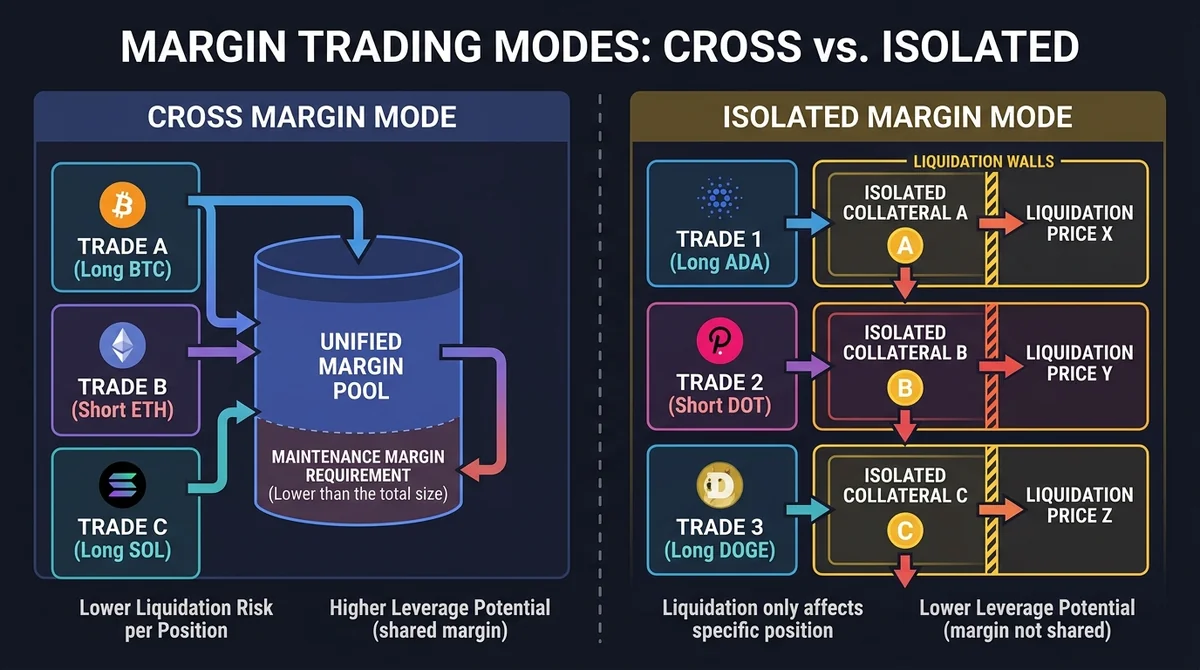
The core difference between cross margin and isolated margin lies in their fund isolation mechanisms and the scope of risk exposure.
- Cross Margin Mode: Capital is completely pooled, and risk is shared across the entire account. If the market moves against a position, the system continuously draws from the account's available balance to maintain the positions until the balance falls below the maintenance margin requirement.
- Isolated Margin Mode: Each position is allocated an independent margin. Even if a position is liquidated, the maximum loss is strictly limited to the individual margin assigned to that specific position, leaving the remaining available balance in the account unaffected.
For detailed calculations, refer to How to Calculate Crypto Futures Margin and Leverage: A Practical Guide to Isolated and Cross Margin (2026).
#What Are the Main Risks of Using Cross Margin Mode?
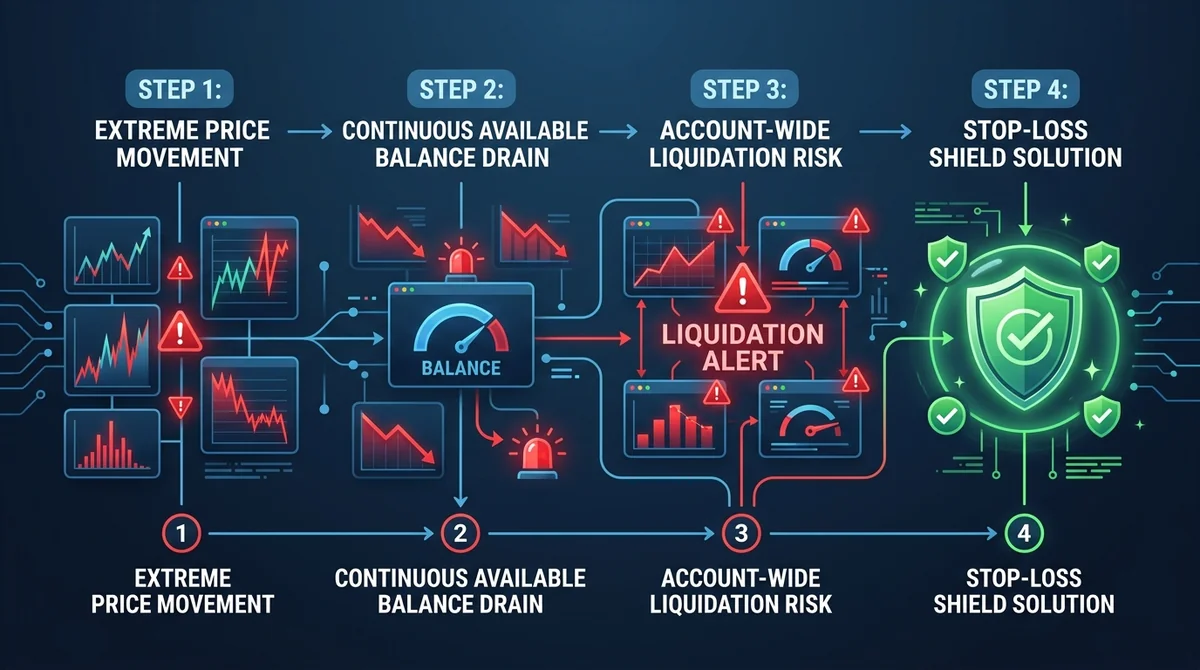
While cross margin reduces the probability of an individual position being liquidated due to short-term price wicks by sharing capital, it introduces significant overall asset exposure risks:
- A Single Loss Affects the Entire Account: If one position faces an extreme one-sided market move without an active stop-loss, its losses will continuously deplete all available balance in the account, potentially leading to the forced liquidation of all positions in the account.
- Overlooking Cumulative Maintenance Margin: When holding multiple cross-margin positions simultaneously, traders often overlook that the total maintenance margin requirement increases with every added position, leading to an overestimation of actual risk tolerance. To learn about liquidation trigger levels, see What Is Liquidation Price? Calculation and Influencing Factors.
#How Should Beginners Choose the Right Margin Mode?
For beginners who are not yet fully familiar with leverage trading and market volatility, following these risk management principles is recommended:
- Prioritize Isolated Margin as a Beginner: Isolated margin strictly caps potential losses on an individual trade to a fixed amount, preventing a single operational mistake from wiping out the entire account balance.
- Always Use Stop-Losses with Cross Margin: If you use cross margin, always set a stop-loss order in advance to define the maximum acceptable loss per trade and stop risk from spilling over into the entire account.
- Control Total Leverage and Position Exposure: Avoid opening too many highly leveraged positions in the same direction simultaneously, and always maintain a healthy defensive reserve of available balance.
Disclaimer: This article is intended solely for educational purposes and basic digital asset knowledge. It does not constitute investment advice, financial advice, or trading recommendations. Cryptocurrency and derivatives trading carry high market risk and the risk of principal loss. Traders should make decisions independently based on their own risk tolerance.
FAQ
What is cross margin?
Cross margin is a margin mode where all available balance in a trading account serves as shared collateral for all open positions. It allows unrealized profits and losses across positions to offset each other, improving capital efficiency while exposing all assets to shared liquidation risk.
Which carries lower risk: cross margin or isolated margin?
Isolated margin offers more controlled risk per trade because the maximum loss is strictly limited to the margin allocated to that position. Cross margin can withstand short-term volatility better for a single position, but if mismanaged, it can result in the loss of all available assets across the entire account.
Should beginners choose cross margin or isolated margin for futures trading?
Beginners are advised to prioritize isolated margin. It helps traders isolate potential risks for each trade to a predetermined amount, preventing extreme market moves on a single position from causing full account liquidation or total loss of capital.
Related Terms
Want to see the real data for this concept?
After you sign up, you can view live prices, funding rates, and fees for the related assets.
View live prices and fees →