Inverse Contract
An inverse contract is a perpetual futures contract that uses cryptocurrency as margin and settles P&L in coins. Learn how it works, its benefits, and risks.
Answer: An inverse contract is a perpetual futures contract that uses cryptocurrency as margin and settles profits and losses in coins. For example, if you open a position with Bitcoin, you earn more Bitcoin when you profit and lose Bitcoin when you lose.
#What Is an Inverse Contract?
An inverse contract is a type of perpetual contract. Perpetual contracts have no expiry date and can be held indefinitely. The defining feature of an inverse contract is that both margin and P&L are denominated in coins, not stablecoins.
Analogy: Think of an inverse contract as "betting with Bitcoin." You stake Bitcoin, winners take Bitcoin, losers pay Bitcoin. The entire process does not involve USD.
#What's the Difference Between Inverse and Linear Contracts?
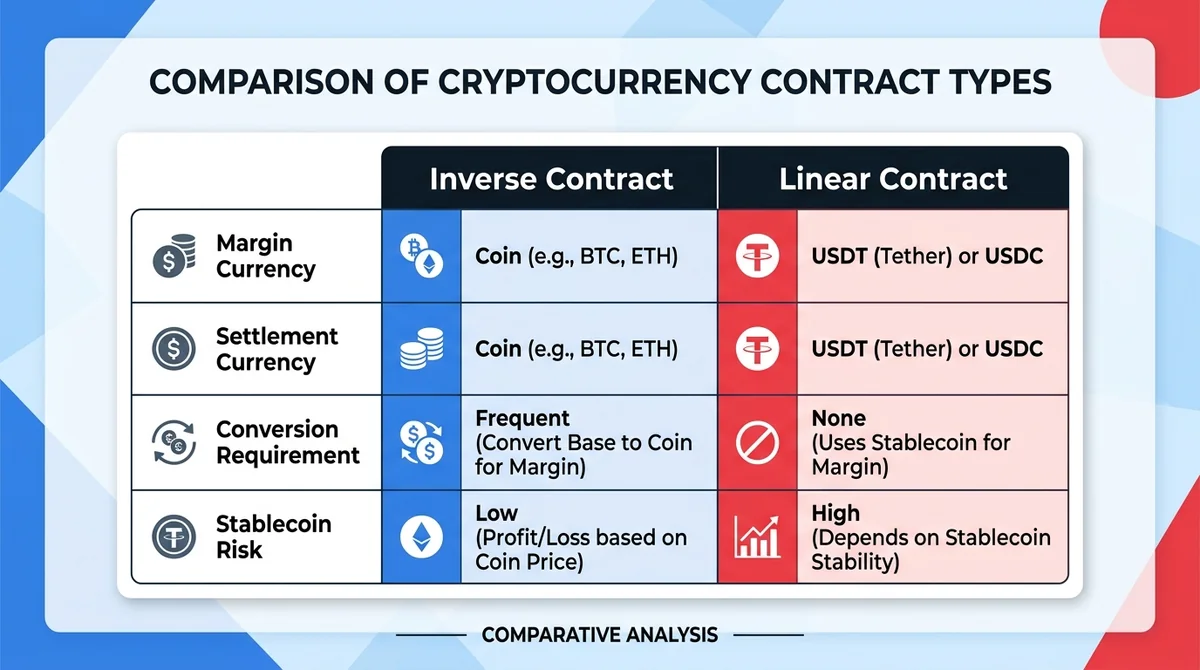
A linear contract (linear contract) uses stablecoins (like USDT) as margin and settles P&L in stablecoins. An inverse contract uses coins as margin and settles P&L in coins.
#Why Is It Called an "Inverse" Contract?
Because the relationship between price and P&L is inverted. When the coin price rises, the coins you hold become more valuable, but your contract position may lose coins. This inverse relationship is where the term "inverse" comes from.
#How Do Inverse Contracts Work?
To open a position, you need to deposit a certain amount of coins as margin. The platform calculates the required margin based on your position size and leverage.
#How Is Margin Calculated?
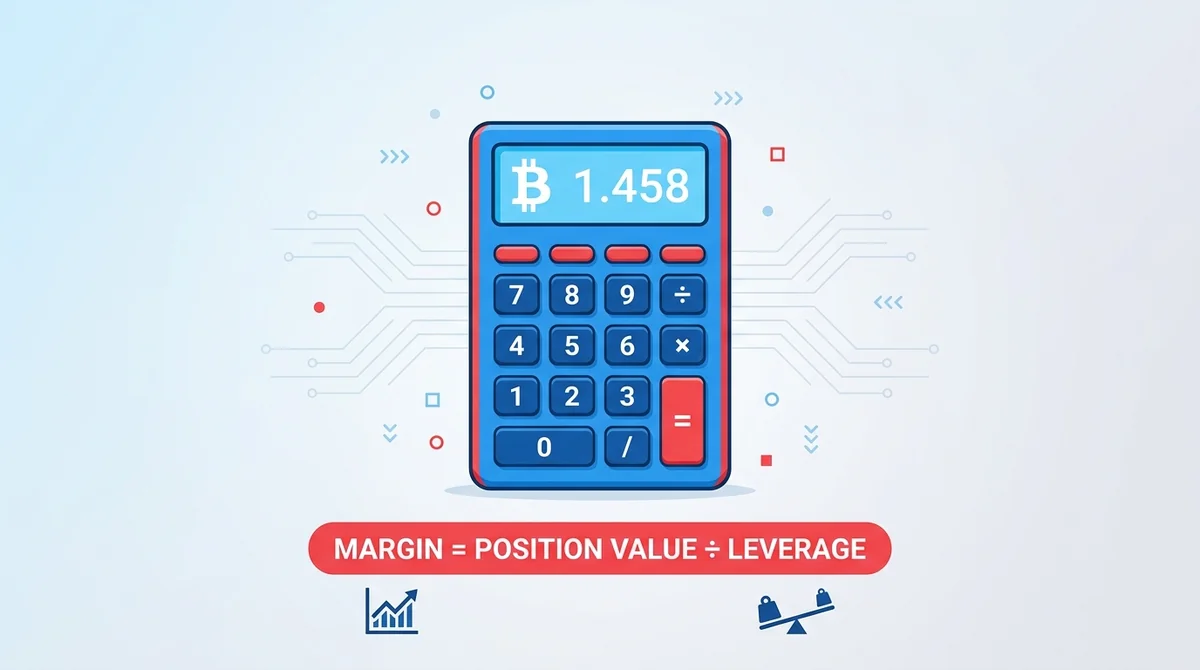
Margin = Position Value ÷ Leverage. Position value is denominated in coins. For example, if you open a position worth 1 BTC with 10x leverage, you need 0.1 BTC as margin.
#How Are Profits and Losses Settled?
When you profit, you receive more coins; when you lose, you lose coins. The P&L formula is: P&L (in coins) = Position Quantity × (1/Entry Price - 1/Exit Price).
#How Is Funding Rate Charged in Inverse Contracts?
The funding rate is a mechanism used by perpetual contracts to anchor the price to the spot market. In inverse contracts, the funding rate is paid in coins. If the rate is positive, longs pay shorts; if negative, shorts pay longs.
#Why Do People Use Inverse Contracts?
If you already hold cryptocurrency, inverse contracts allow you to trade directly without first converting your coins to stablecoins.
#What Are the Benefits for Coin Holders?
Coin holders can use their coins as margin to go long or short. If bullish, going long earns more coins; if bearish, going short can also earn coins.
#What Are the Advantages Compared to Linear Contracts?
- No need to convert to stablecoins, saving the exchange step.
- P&L is calculated in coins, potentially increasing your coin holdings.
- Avoids risks such as stablecoin depegging.
#What Are the Risks of Inverse Contracts?
Risk Warning: Inverse contracts use leverage, which amplifies both profits and losses. Coin price fluctuations affect the value of your margin and may lead to liquidation. This article does not constitute investment advice.
#What Is Leverage Risk?
The higher the leverage, the greater the volatility of your P&L. With 10x leverage, a 1% move in coin price results in a 10% move in your P&L.
#How Does Liquidation Risk Occur?
When losses cause your margin to fall below the maintenance margin requirement, the platform will force-close your position. After liquidation, you may lose most or all of your margin.
#How Does Coin Price Volatility Affect Margin?
Inverse contract margin is denominated in coins. If the coin price drops, the value of your margin (in USD terms) shrinks, making liquidation more likely.
#A Simple Inverse Contract Example
Suppose you use 1 BTC as margin to open a 10x leveraged long position. The current BTC price is $10,000.
#Example of an Inverse Contract with Bitcoin
You open a position worth 10 BTC. If BTC rises to $11,000, you profit approximately 0.909 BTC. If BTC falls to $9,000, you lose approximately 1.111 BTC.
#How to Calculate P&L
P&L (BTC) = Position Quantity × (1/Entry Price - 1/Exit Price) = 10 × (1/10000 - 1/11000) ≈ 0.909 BTC.
#Frequently Asked Questions About Inverse Contracts
Which is better: inverse or linear contracts? There is no absolute answer. If you hold coins, inverse contracts are convenient; if you prefer to think in stablecoin terms, linear contracts are more intuitive.
Are inverse contracts suitable for beginners? Beginners should be cautious. The coin-denominated P&L and leverage mechanics of inverse contracts are relatively complex. It is recommended to practice with a demo account first.
How much margin is required for an inverse contract? Requirements vary by platform. Typically, the minimum margin ratio is between 1% and 5%, depending on platform rules and leverage.
This article covers the concepts only; when you're ready to try, check out the live trading tools on the main MSX site.
FAQ
What is the difference between inverse and linear contracts?
Inverse contracts use cryptocurrency as margin and settlement currency, with P&L calculated in coins; linear contracts use stablecoins (like USDT) as margin and settlement currency, with P&L calculated in stablecoins.
Who are inverse contracts suitable for?
They are suitable for users who already hold cryptocurrency and want to trade contracts directly with coins, avoiding conversion to stablecoins. Beginners should be cautious, as leverage and coin price volatility amplify risks.
How is the funding rate charged in inverse contracts?
The funding rate is paid in coins and is used to anchor the price to the spot market. When the rate is positive, longs pay shorts; when negative, shorts pay longs. The specific rate is calculated by the platform.
What is the liquidation risk in inverse contracts?
When losses cause the margin to fall below the maintenance margin requirement, the platform will force-close the position, and the user may lose most or all of the margin. A drop in coin price increases liquidation risk.
How is P&L calculated in inverse contracts?
P&L (in coins) = Position Quantity × (1/Entry Price - 1/Exit Price). You receive more coins when you profit and lose coins when you lose. The exact formula may vary by platform.
Related Terms
Want to see the real data for this concept?
After you sign up, you can view live prices, funding rates, and fees for the related assets.
View live prices and fees →