What Is an IPO Discount? A Beginner's Guide to Below-Market Issue Pricing (2026)
An IPO discount is the gap between the issue price and the post-listing market price. Learn why new shares are priced at a discount, what moves the size of it, and the break-issue risk.
IPO discount: when the issue price of new shares is lower than the market trading price after listing, that difference is commonly called a discount. It is a price gap created at the issuing and pricing stage — not a promotion, and not a guarantee of profit.
#What does IPO discount mean?
The discount is calculated relative to the post-listing market trading price. When the issue price is set below what the market is willing to pay, a discount appears in between.
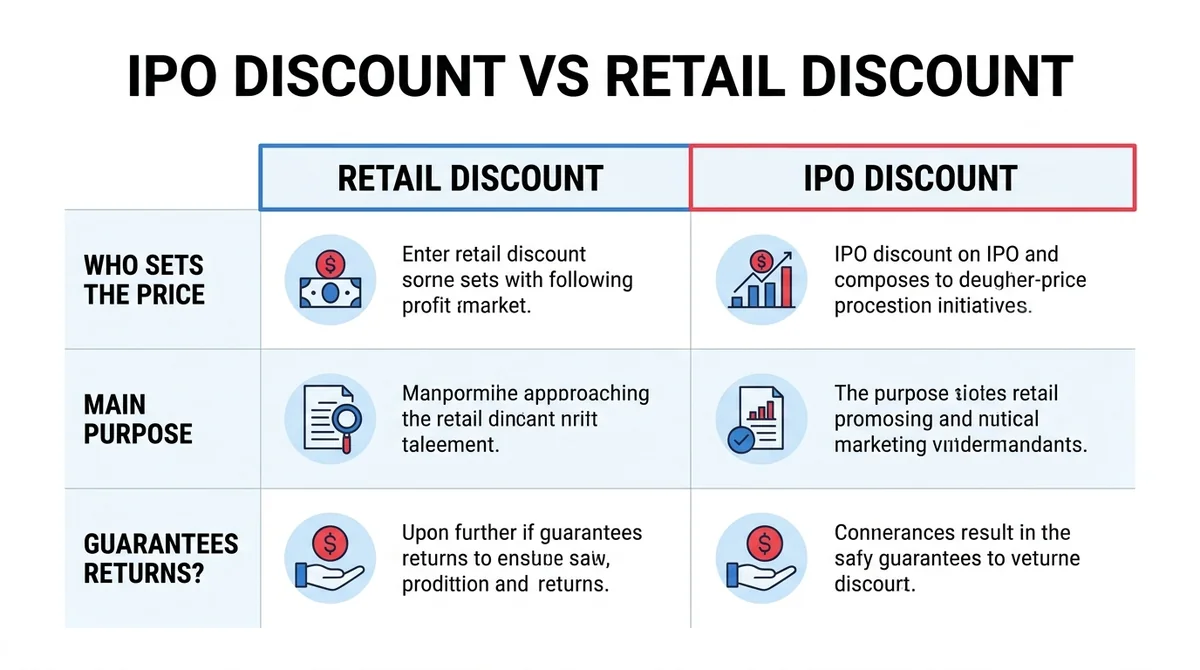
It is not the same as a discount on ordinary goods. Retail discounts are mostly about clearing inventory or promotions; an IPO discount is the issuer and underwriters deliberately pricing lower during the pricing stage. Pricing at a discount is common practice, not an anomaly.
Analogy: like a second-hand home listed deliberately below the seller's mental price to close the deal faster.
#Why are new shares issued at a discount?
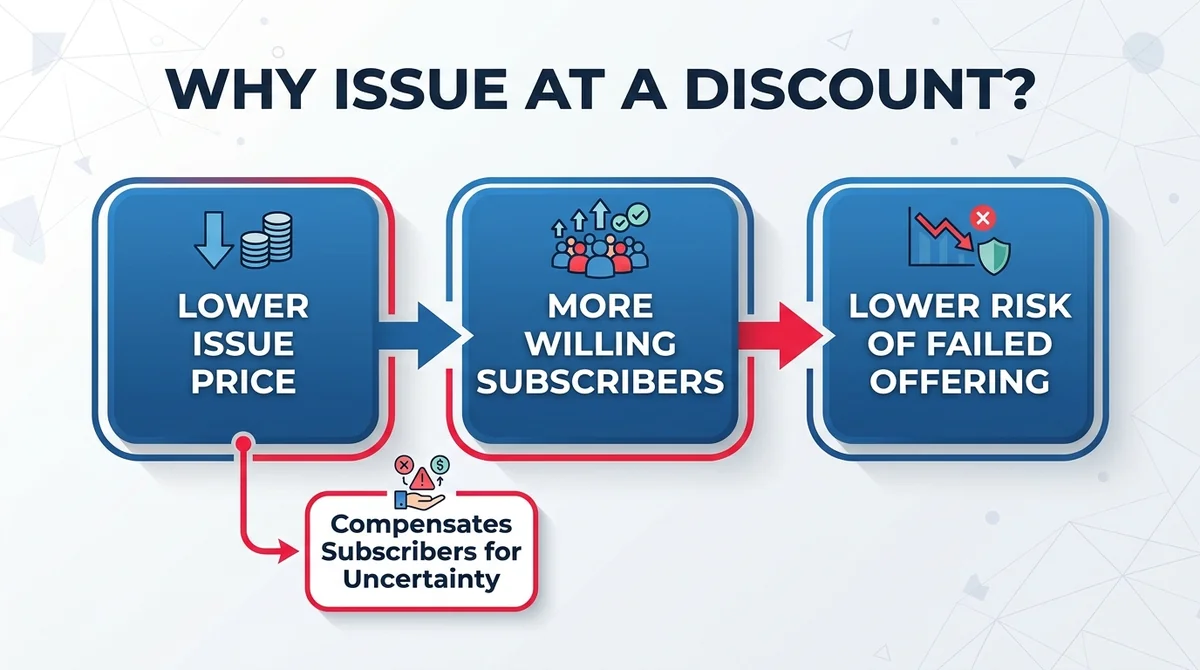
The core purpose is to reduce the risk of a failed offering. With a lower price, there are usually more willing subscribers, making it easier to complete fundraising.
The discount also compensates subscribers. Public information about a new listing is limited beforehand, and buyers bear uncertainty; the discount can be seen as the price paid for that uncertainty.
For the issuer, this is a trade-off between "fundraising size" and "offering success rate."
- Attract sufficient subscriptions
- Reduce the risk of a failed offering
- Compensate subscribers for uncertainty
#What factors affect the size of an IPO discount?
There is no uniform standard for the discount size; it varies by deal. When market sentiment is hot and subscription demand is strong, the discount tends to narrow; when the market is cold, it may widen.
Company fundamentals, industry expectations, offering size, and underwriting arrangements also affect pricing. The larger the deal and the more complex the underwriting arrangements, the more cautious pricing usually is.
Analogy: a concession when supply and demand for capital are out of balance — the weaker the demand, the more the seller needs to concede.
#Does an IPO discount guarantee a profit?
No. The discount is only the price gap between the issue price and the market price; it does not guarantee the price will rise after listing.
After listing, the price is set by market supply and demand, and falling below the issue price (a break-issue) happens too.
Beginners often misread "discount" as "a chance to buy low" — that mistakes a pricing concept for a promise of returns.
#What risks should beginners watch when understanding IPO discounts?
First understand the issuing and pricing process before talking about participating in new share subscriptions. The discount is part of the mechanism, not a guarantee of returns.
New share subscriptions carry break-issue risk, and prices fluctuate. This article only explains concepts; it is not investment advice and does not recommend any specific asset.
To build up the basics first, see the related glossary entries on this site (such as "IPO," "break-issue," and "underwriter").
This article only explains concepts; to learn more about digital asset-related tools, see the product documentation on the main MSX site.
FAQ
What does IPO discount mean?
An IPO discount is the gap between the issue price of new shares and their market trading price after listing. It reflects the difference between issue pricing and market expectations; it is a pricing-stage concept, not a promotional markdown, and it does not mean the price will definitely rise after listing.
Why are new shares issued at a discount?
Mainly to attract sufficient subscriptions, reduce the risk of a failed offering, and compensate subscribers for the uncertainty they bear before the new shares list. The issuer has to weigh fundraising size against offering success rate.
Is the IPO discount size fixed?
No. The discount size varies by deal, with no uniform standard. Market sentiment, subscription demand, company fundamentals, industry expectations, offering size, and underwriting arrangements all affect the final pricing.
Does an IPO discount guarantee a profit?
No. The discount is only the price gap between the issue price and the market price. After listing, the price is set by market supply and demand, and falling below the issue price happens too. A discount does not mean capital protection or guaranteed profit.
What should beginners watch when understanding IPO discounts?
See it as part of the pricing mechanism, not a promise of returns. Before participating in new share subscriptions, learn about the issuing and pricing process and break-issue risk, and note that this article is not investment advice.
Related Terms
Want to see the real data for this concept?
After you sign up, you can view live prices, funding rates, and fees for the related assets.
View live prices and fees →