Why Can't You Find a Complete Explanation of the IPO Discount Term? Glossary Gaps and How to Look It Up Properly (2026)
An IPO discount usually means issue price below post-listing market price—a pricing concept, not a coupon. Learn the meaning, why explanations are scarce, and how to verify it.
IPO discount usually refers to the issue discount: the gap by which the issue price of new shares is set below their post-listing market price. It is a concession made during the pricing process, not a coupon or subsidy handed out by a platform.
#What Is an IPO Discount?
One-line definition: the difference between the issue price and the expected market price.
Analogy: it's like a landlord who needs to rent quickly and lists below the going rate in the same building—the gap is the discount.
It has no necessary connection to the returns after winning an IPO allotment. A discount only describes the relative level of pricing.
- The discount comes from the pricing process, not from a subsidy
- Its size is shaped by issue size, market sentiment, and underwriter pricing
- A discount does not equal realized returns
#Why Can't You Find a Complete Explanation When Searching for "IPO Discount Term"?
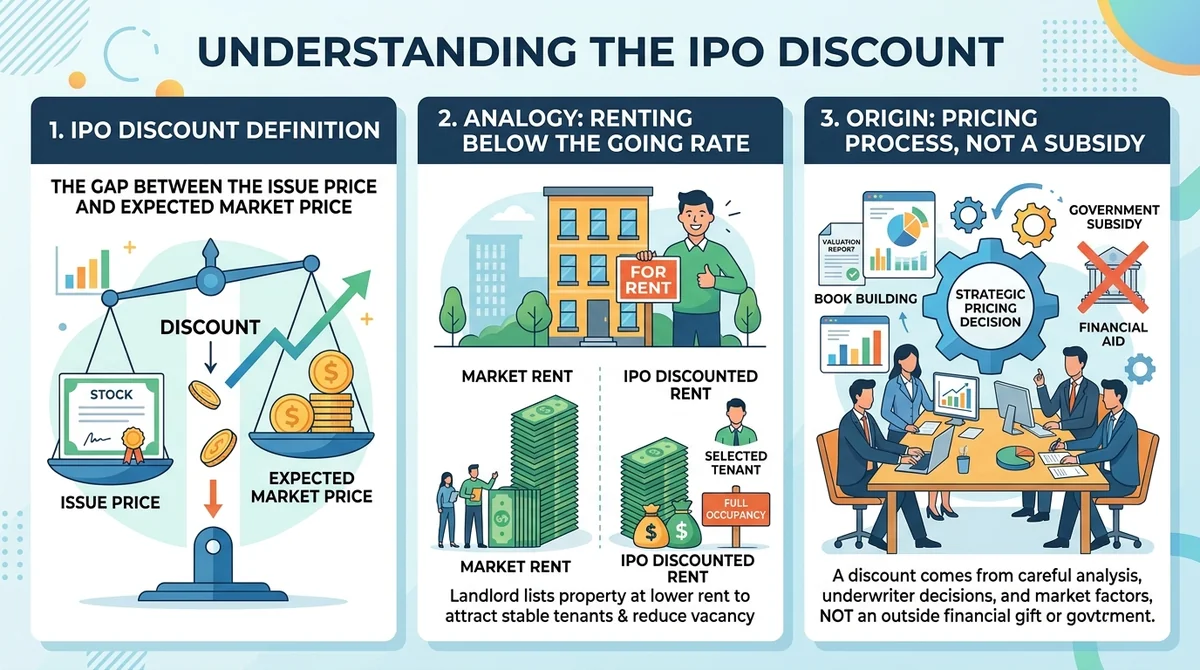
There are two main reasons: inconsistent naming and insufficient glossary coverage.
The same concept goes by many names—issue discount, IPO discount, new-share discount, and more. Glossary-style sites mostly focus on high-frequency basic terms and cover pricing-related words less. Search results are also easily crowded out by unrelated meanings such as e-commerce discounts and broker promotions.
#The Right Way to Look Up Terms Like "IPO Discount"
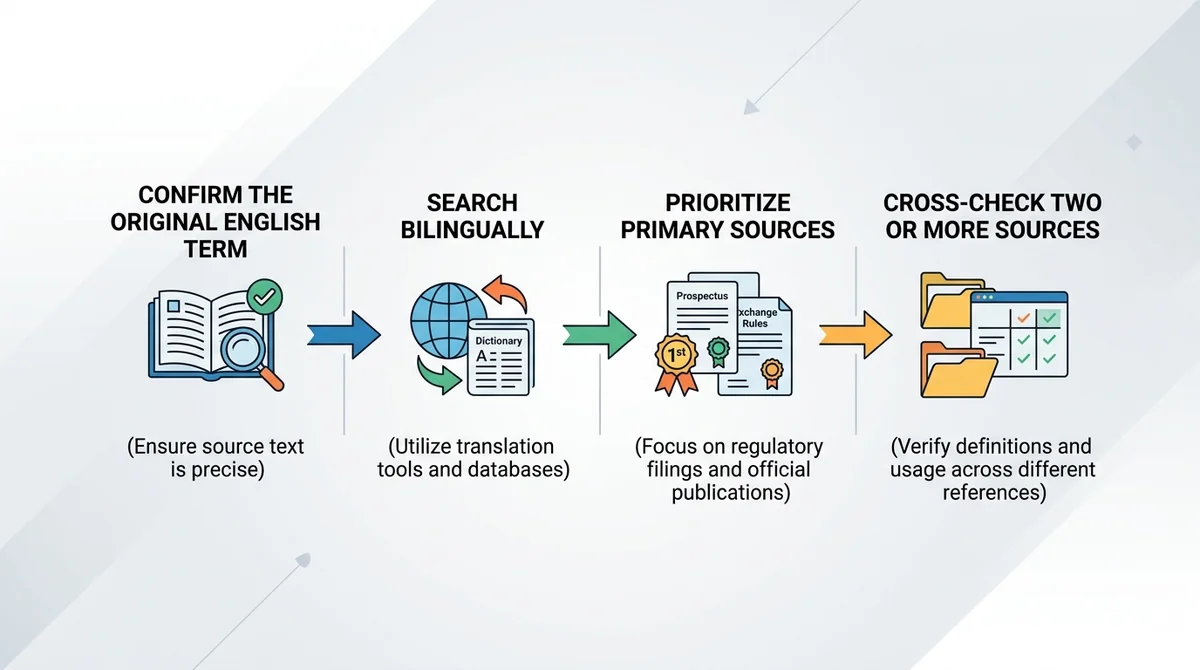
- First confirm the original English term, then search bilingually
- Prioritize primary sources such as prospectuses, exchange rules, and authoritative glossaries
- Cross-check two or more sources; don't rely on a single self-media account
To judge whether an explanation is credible, check whether it states the applicable market and its sources.
#What Fields Should a Usable Issue Discount Glossary Entry Have?
- Chinese name and original English term
- Synonyms, to make alternative searches easier
- A one-line definition
- Applicable market and scenario, to avoid cross-market misuse
- Links to primary sources for verification
#Risks and Misconceptions
A discount is only a relative pricing relationship and is no guarantee of returns.
A stock can still fall below its issue price after listing; a discount does not eliminate market risk. Beginners most often mistake a discount for a platform subsidy or cashback.
⚠️ This article explains concepts only and is not investment advice. Investments in new shares and digital assets carry risk; specific rules are subject to official disclosures and applicable regulatory requirements.
FAQ
What does IPO discount mean?
An IPO discount usually refers to the issue discount: the gap by which the issue price of new shares is set below their post-listing market price. It is a pricing-stage concept, not a coupon or subsidy from a platform, and it does not mean you will profit after winning an allotment.
Why can't I find a complete explanation when searching for "IPO discount term"?
First, the same concept has many names—issue discount, IPO discount, new-share discount—so search terms don't match. Second, glossary sites mostly cover high-frequency basic terms and cover pricing-related words less. Third, results are often crowded out by unrelated meanings such as e-commerce discounts.
What sources should I check for the IPO discount term?
Confirm the original English term first, then search bilingually. Prioritize primary sources such as prospectuses, exchange rules, and authoritative glossaries, and cross-check two or more sources instead of trusting a single self-media account.
Does a discount guarantee a profit?
No. A discount only describes the relative level of the issue price versus the market price and is no guarantee of returns. New shares can still fall below the issue price after listing, and a discount cannot eliminate market risk—you must judge and bear the risk yourself.
What fields should a qualified issue discount glossary entry include?
It should include the Chinese name, the original English term, synonyms, a one-line definition, the applicable market and scenario, and links to primary sources. Listing synonyms makes alternative searches easier, and noting the applicable market helps avoid cross-market misuse.
Related Terms
Want to see the real data for this concept?
After you sign up, you can view live prices, funding rates, and fees for the related assets.
View live prices and fees →