What Does an IPO Lockup Expiration Mean? A Beginner's Guide to Supply and Demand Shifts Before and After the Unlock (2026)
An IPO lockup expiration lets insiders sell their shares, raising potential supply—but it doesn't mean the stock must fall. Here's what beginners should know.
Answer: An IPO lockup expiration means company insiders can sell their shares for the first time, increasing the potential supply in the market. But this is only a "change in supply structure"—it does not mean the stock price will necessarily fall.
#What is an IPO lockup period?
Definition: The lockup period is a stretch of time after a company goes public during which insiders are barred from selling their shares.
Analogy: It's like a newly delivered home that can't be resold for a while, preventing a wave of concentrated selling right at the open.
Who it covers: Insiders such as founders, employees, and early-stage investment institutions.
Purpose: To stabilize share supply in the early days of trading and avoid a concentrated sell-off hitting the price.
Duration: Determined by the underwriting agreement and regulatory rules, commonly ranging from a few months to a year. Always refer to the dates disclosed in the company's prospectus and announcements.
#What happens to share supply after the lockup expires?

Core change: Insiders go from "cannot sell" to "can sell," and the number of potentially sellable shares rises.
But note: Being able to sell does not mean they will sell. Actual selling depends on holders' intentions, tax arrangements, and company plans.
Orderly release: Some companies use secondary offerings and similar methods to bring supply into the market in batches.
Impact on bids and asks: Rising potential supply shifts the balance of power between buyers and sellers, but it does not directly dictate price direction.
#Why do supply and demand shift before and after the unlock?
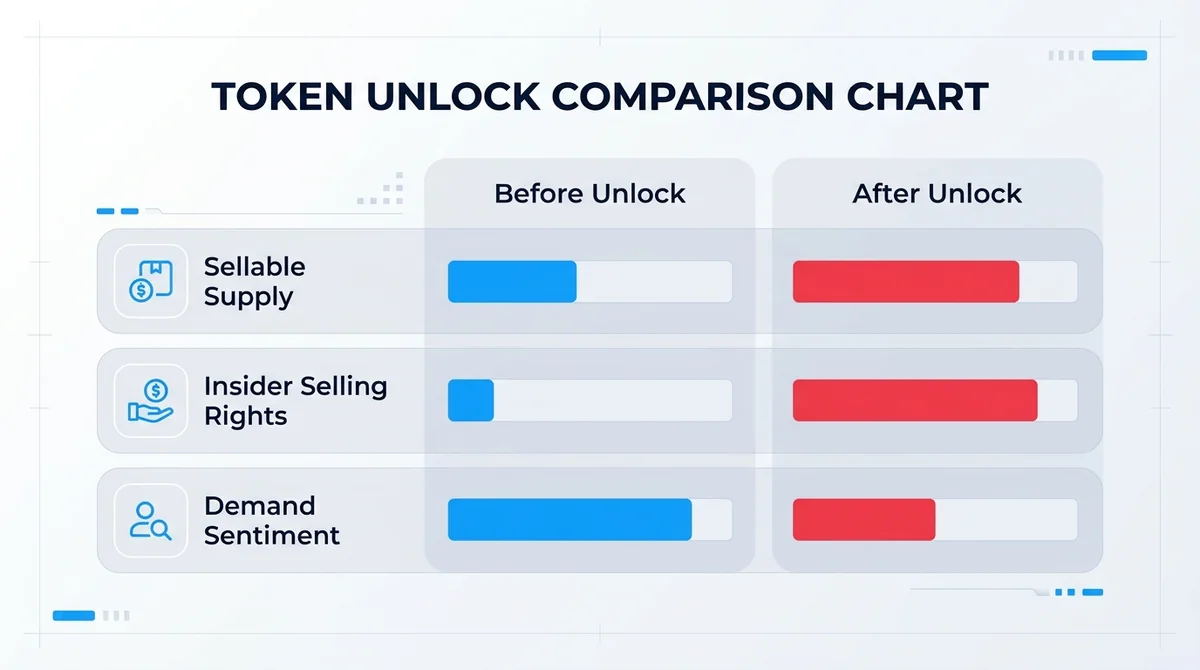
Before the unlock: The market trades on expectations in advance, and some of the concern may already be priced in.
After the unlock: The demand side may stand on the sidelines, waiting for clearer price signals.
The essence: This is a "supply and demand structure event" that combines a change in supply-side rights with a shift in demand-side sentiment.
What ultimately determines price: Company fundamentals and whether there is enough capital to absorb the supply.
#What does a lockup expiration mean for the stock price? What misconceptions should beginners avoid?
Misconception 1: An unlock always causes a decline. There is no inevitable causal link between an unlock and a price drop.
Misconception 2: Treating the unlock date as a buy or sell signal. Stock prices are also affected by earnings, the industry, and the broader market.
What to watch: Company announcements, insider selling plans, and changes in fundamentals.
⚠️ This article explains concepts only and is not investment advice. Stocks and digital assets both carry risk; please make your own judgment.
To keep building your foundation, see MSX Learn's IPO Lockup Period: Definition, Mechanism, and Risks and What Is IPO Due Diligence? A Beginner's Guide.
This article covers concepts only; when you're ready to try your hand, check out the live trading tools on the main MSX site.
FAQ
How long does an IPO lockup period typically last?
There is no universal standard; it commonly ranges from a few months to a year and is determined by the underwriting agreement and regulatory rules. It varies considerably across companies and markets, so rely on the dates disclosed in the company's prospectus and announcements.
Will insiders sell all their shares at once after the lockup expires?
Not necessarily. The unlock only gives insiders the right to sell; actual selling depends on personal intentions, tax arrangements, and company plans. Some companies also release supply in batches through secondary offerings and similar methods.
Does a lockup expiration always cause the stock price to fall?
No. The unlock is only a change in supply structure; stock prices are also affected by earnings, industry conditions, and the broader market. Treating the unlock date as a single buy or sell signal can easily lead to misjudgment.
What information about a lockup expiration should beginners pay attention to?
Focus on the unlock size and date in company announcements, insider selling plans, and the latest financial fundamentals. Consider this information alongside the overall market environment rather than looking at the unlock event alone.
Related Terms
Want to see the real data for this concept?
After you sign up, you can view live prices, funding rates, and fees for the related assets.
View live prices and fees →