What Is Liquidation Price? 2026 Calculation and Influencing Factors Explained
Liquidation price is the price that triggers forced liquidation in leveraged trading. Learn calculation, factors, and myths to manage leverage risk.
Answer: Liquidation price, also known as forced liquidation price, is the price at which an exchange forcibly closes a position when the account margin is insufficient to maintain the position in leveraged trading.
#What Is Liquidation Price?
Liquidation price (also known as forced liquidation price) is a key concept in leveraged trading. When you open a leveraged position and the price moves against you, causing your margin balance to fall below the maintenance margin requirement, the exchange will forcibly close your position at a specific price, which is the liquidation price.
This can be compared to: when you borrow money to invest, if the value of the collateral falls to a certain level, the creditor will forcibly dispose of the collateral. The liquidation price is the price line that triggers this disposal.
Related terms:
- Liquidation price: a synonym for liquidation price; both are interchangeable.
- Margin: funds required when opening a position to cover potential losses.
- Leverage: a tool that amplifies trading positions, and also amplifies gains and losses.
- Maintenance margin rate: the minimum margin ratio required to maintain a position; falling below this ratio triggers liquidation.
- Mark price: some exchanges use a composite index price as the liquidation reference price to reduce erroneous liquidations caused by transient fluctuations in a single market.
#How Is Liquidation Price Calculated?
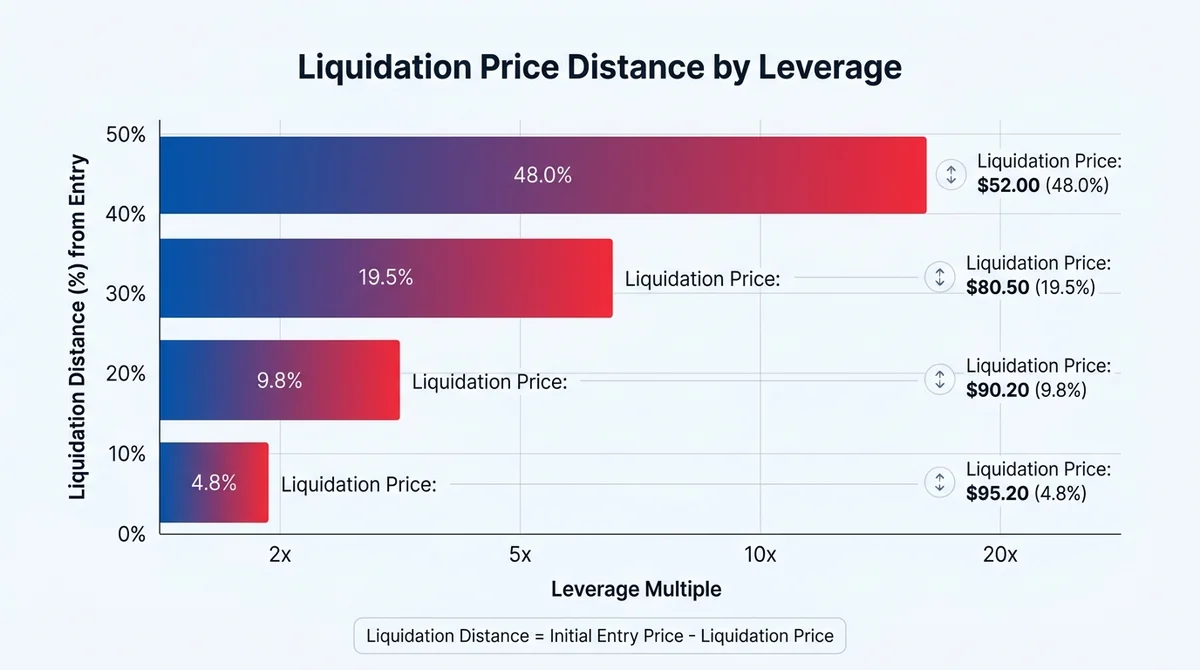
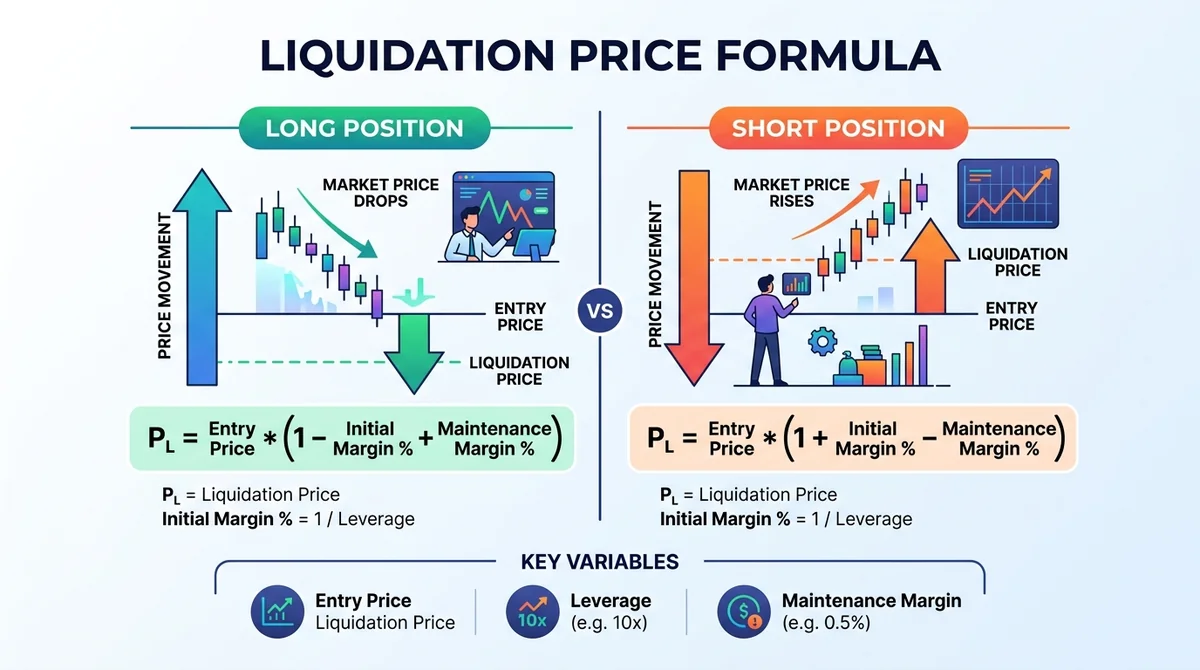
Liquidation price is determined by the entry price, leverage multiple, and the maintenance margin rate (TRUMPUSDT perpetual futures margin requirements explained). For long positions, the liquidation price is below the entry price; for short positions, it is above the entry price. The exact formula varies by exchange, but the core logic is the same: when the price moves against you by an amount close to the inverse of the leverage (after deducting the maintenance margin rate), liquidation is triggered.
For example, if you use high leverage, the price only needs a small adverse move to hit the liquidation price; whereas low leverage or a high margin ratio keeps the liquidation price farther from the current price. Different platforms may have different maintenance margin rates, liquidation mechanisms, and mark price calculation methods, so you should consult the specific exchange's rules before trading.
#What Factors Affect Liquidation Price?
- Leverage multiple: The higher the leverage, the closer the liquidation price is to the entry price, and the greater the risk.
- Margin ratio: Adding margin can push the liquidation price farther away and reduce the risk of forced liquidation; conversely, insufficient margin accelerates the approach to the liquidation line.
- Market volatility: The greater the volatility of the underlying asset, the easier it is for the price to quickly hit the liquidation price; extreme market conditions may lead to wicks or flash crashes.
- Exchange risk control mechanisms: Different platforms may use mechanisms such as mark price and auto-deleveraging, which affect the actual conditions that trigger forced liquidation.
#Common Myths and Risks
Myth 1: Liquidation means losing all your funds. Normally, liquidation only loses the margin used for that position, but in extreme market conditions, account deficit may occur, causing losses exceeding the margin. Some exchanges have loss socialization or auto-deleveraging mechanisms; please check the platform's rules for details.
Myth 2: Liquidation can be completely avoided. Liquidation is an inherent risk of leveraged trading and cannot be completely eliminated. Lowering leverage, setting stop-loss orders, and keeping sufficient margin can reduce the probability, but cannot guarantee it will never trigger.
Myth 3: High leverage is always bad. High leverage is a tool in itself, suitable for professional traders, but for beginners it significantly amplifies risks. Whether to use high leverage depends on personal risk tolerance and trading strategy; you should not blindly follow others.
Risk warning: Leveraged trading involves high risk and may lead to rapid loss of principal. This article is for educational purposes only and does not constitute investment advice. Please make decisions carefully based on your own situation.
FAQ
Are liquidation price and forced liquidation price the same?
Yes, they are the same concept, referring to the price that triggers forced liquidation when the margin is insufficient in leveraged trading.
Will liquidation lose all funds?
Not necessarily. Normally, you only lose the margin for that position, but in extreme markets, account deficit may cause losses exceeding the margin. Some exchanges have loss socialization or auto-deleveraging mechanisms to handle this; please refer to each platform's rules.
How to stay away from the liquidation price?
Lowering leverage, increasing margin, and setting stop-loss orders can reduce the probability of triggering liquidation, but cannot completely avoid it. It is recommended to only invest funds you can afford to lose.
What determines the liquidation price?
It is determined by the entry price, leverage multiple, and maintenance margin rate. For long positions, the liquidation price is below the entry price; for short positions, the opposite is true. Different exchanges have slightly different formulas.
Related Terms
Want to see the real data for this concept?
After you sign up, you can view live prices, funding rates, and fees for the related assets.
View live prices and fees →