What Is a Margin Call? Margin Calls and Liquidation Warnings in 2026 Crypto Futures Trading
A margin call is a risk alert from a crypto exchange telling you to add funds or cut positions before liquidation when your equity drops below a threshold.
A margin call is a notification from a crypto futures exchange when it detects that your margin is insufficient to maintain the risk of your position. It is a risk warning before liquidation, not an immediate forced liquidation, but the exact trigger timing and grace period vary by platform.
#What Is a Margin Call?
Core concept: Futures trading uses margin to open positions. The exchange sets an initial margin and a maintenance margin, and usually sets a warning threshold (above the maintenance margin). When your account equity falls below this warning threshold, the exchange sends a margin call, reminding you to add funds or reduce your position. If equity continues to fall and drops below the maintenance margin, forced liquidation may be triggered.
Analogy: It's like a credit card minimum payment reminder. The bank tells you your credit limit is nearly maxed out and you need to pay down or reduce spending, otherwise your card may be suspended. A margin call is similar, but involves the risk of position liquidation.
Margin call vs. liquidation: A margin call is a warning; liquidation is the execution. When you receive a margin call, you usually still have time to act, but the exact grace period depends on platform rules.
#How Does a Margin Call Work?
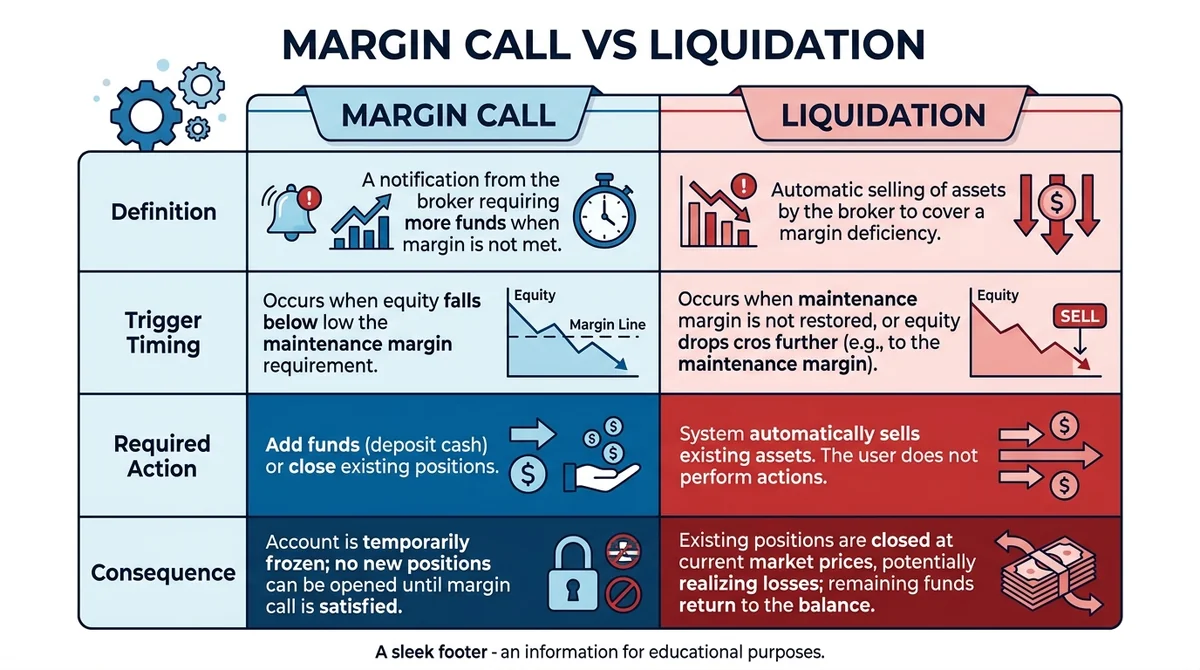
Trigger conditions: The exchange calculates the maintenance margin based on the mark price, leverage, and position size, and sets a warning line. When your equity falls below this warning line, a margin call is triggered. Note: Warning line settings and notification methods may differ across platforms.
Margin call mechanism: The exchange may give you a grace period to add margin or voluntarily reduce your position to lower risk.
- Add margin: Deposit funds into your account to bring equity back above the maintenance margin.
- Reduce position: Close part of your position to lower the margin requirement.
- Do nothing: After the grace period, the exchange may force liquidation according to its rules.
#What to Do When You Receive a Margin Call
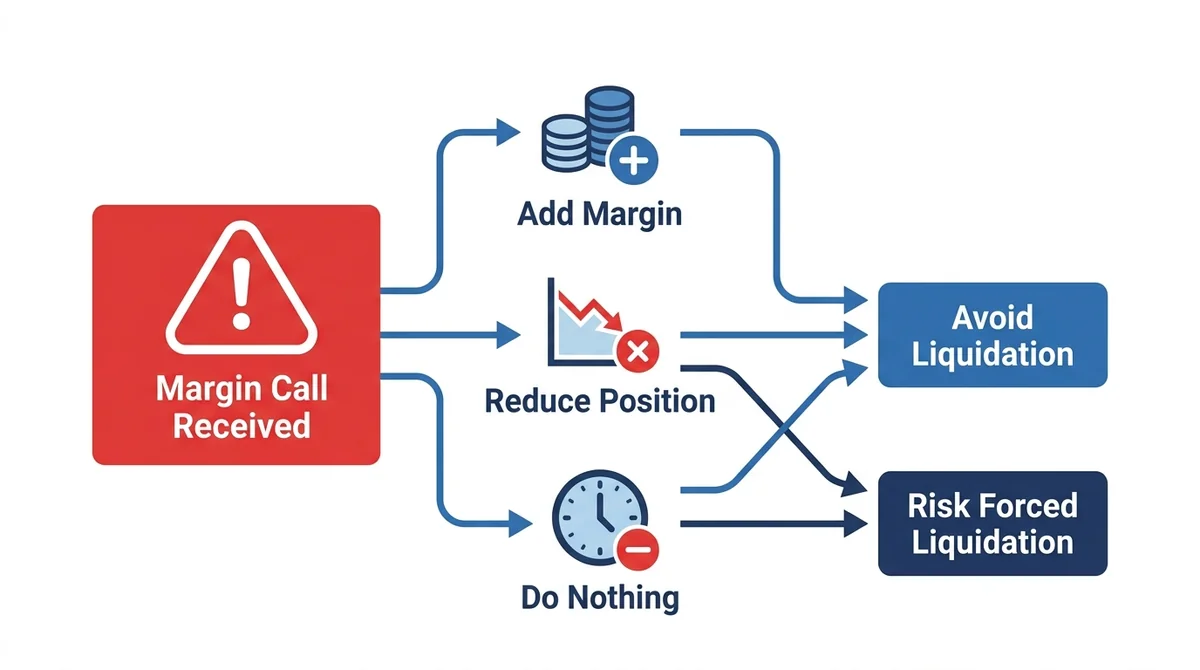
Options: After receiving a notification, you have two main choices: add margin or reduce your position. Example: The BTC futures price drops, your available margin decreases, and the exchange sends a margin call. At this point, adding funds or closing part of your position can clear the warning.
Risk warning: If you ignore the notification, your position may be liquidated and you could lose all your margin. Digital assets are highly volatile, and high leverage amplifies losses. This article explains concepts only and does not constitute investment advice.
#Common Misconceptions for Beginners and Related Terms
Misconception: A margin call is not a loss itself but a risk signal. High leverage reduces your buffer and makes margin calls more likely. Frequently receiving margin calls may indicate your leverage is too high.
Related terms: Maintenance margin is the minimum margin required to keep a position open without being liquidated; liquidation price is the price at which liquidation is triggered; the margin ratio reflects account health. Understanding these together will help you make sense of a margin call.
FAQ
What is the difference between a margin call and liquidation?
A margin call is a reminder sent by the exchange when your margin ratio drops to a warning level, asking you to add funds or reduce positions; liquidation is the exchange forcibly closing your position according to its rules after your equity falls below the maintenance margin. A margin call usually comes before liquidation, but the time gap depends on platform rules.
What should I do after receiving a margin call?
Add margin or reduce your position as soon as possible to bring your equity back above the maintenance margin. Don't ignore the notification, because after the grace period, your position may be forcibly liquidated and you could lose all your margin. The risk is even higher with high leverage.
Why does high leverage make margin calls more likely?
High leverage lets you open the same position size with less margin, so a small adverse price move can quickly push your equity toward the maintenance margin floor, triggering margin calls more often. Lowering leverage increases your buffer.
What is the difference between maintenance margin and initial margin?
Initial margin is the minimum funds required to open a position, while maintenance margin is the minimum funds needed to keep the position from being liquidated. A margin call is usually issued when your equity approaches the maintenance margin, asking you to add funds or reduce positions; if your equity falls below the maintenance margin, the exchange may force liquidation.
Related Terms
Want to see the real data for this concept?
After you sign up, you can view live prices, funding rates, and fees for the related assets.
View live prices and fees →