What Is Margin? Essential Guide to Account Occupation and Risk Isolation for Beginners (2026)
Margin is funds temporarily held by a platform as collateral to ensure traders can cover potential losses and support leveraged trading. Learn the definition, account mechanics, risks, and beginner tips.
Margin: Funds temporarily occupied by the platform as collateral during a trade, ensuring you can cover losses. It's not an extra fee; it's part of your principal.
#What Is Margin?
Margin is like a rental deposit. When you rent a house, the landlord collects a deposit to protect against damage or unpaid rent. Similarly, a trading platform occupies your margin to prevent you from losing money you can't repay.
How does margin differ from ordinary trading funds?
Ordinary trading funds can be freely bought and sold, while margin is locked and cannot be used freely. Only after closing the position is the margin released back to your available balance.
Why does trading require margin?
Because trading involves risk. The platform needs to ensure you can cover potential losses. Occupying margin means you set aside part of your funds as collateral in advance.
#How Does a Margin Account Work?
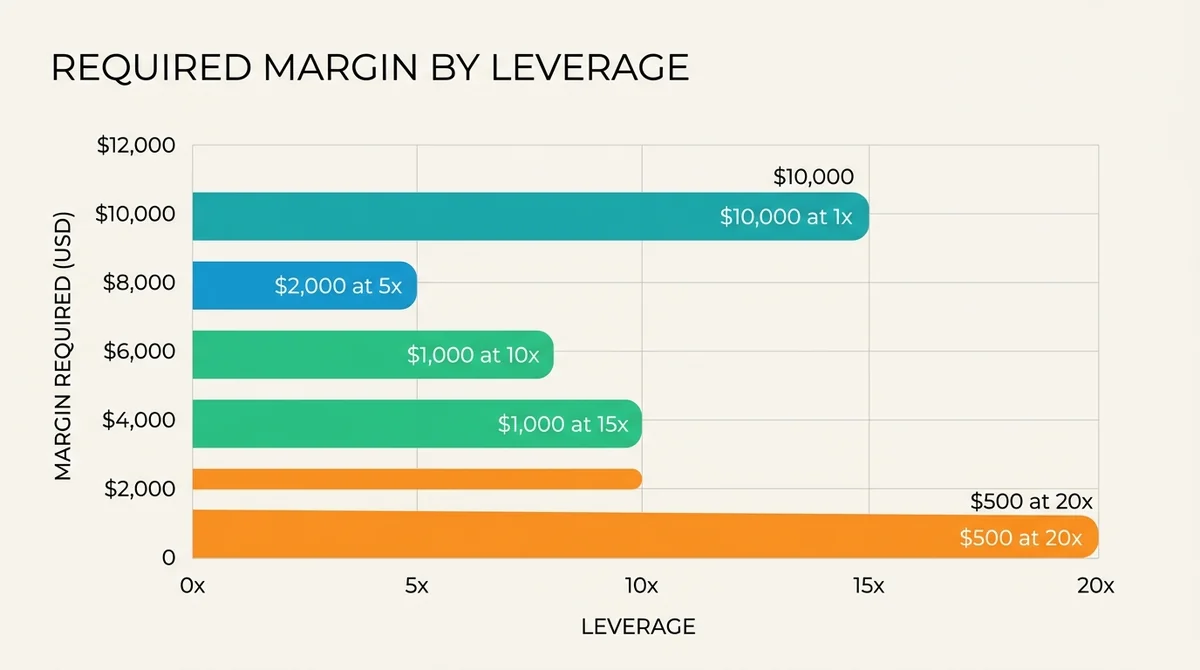
A margin account splits funds into two parts: available balance and used margin. When opening a position, the platform occupies a portion of funds based on the leverage ratio. The higher the leverage, the lower the required margin percentage.
How is margin occupied when opening a position?
Suppose you use $1,000 of principal with 10x leverage to buy a $10,000 position. The platform will occupy your $1,000 as margin. This $1,000 is your initial margin.
What is the relationship between margin and leverage?
The higher the leverage, the lower the required margin percentage. But the risk is also greater. Leverage acts like a magnifying glass, amplifying both gains and losses.
Margin changes dynamically during a position
While holding a position, margin fluctuates with profit and loss. Profits increase your available balance, while losses decrease it. If losses are too large and available balance is insufficient, the platform will require you to add more margin.
#What Are the Risks of Margin Trading?
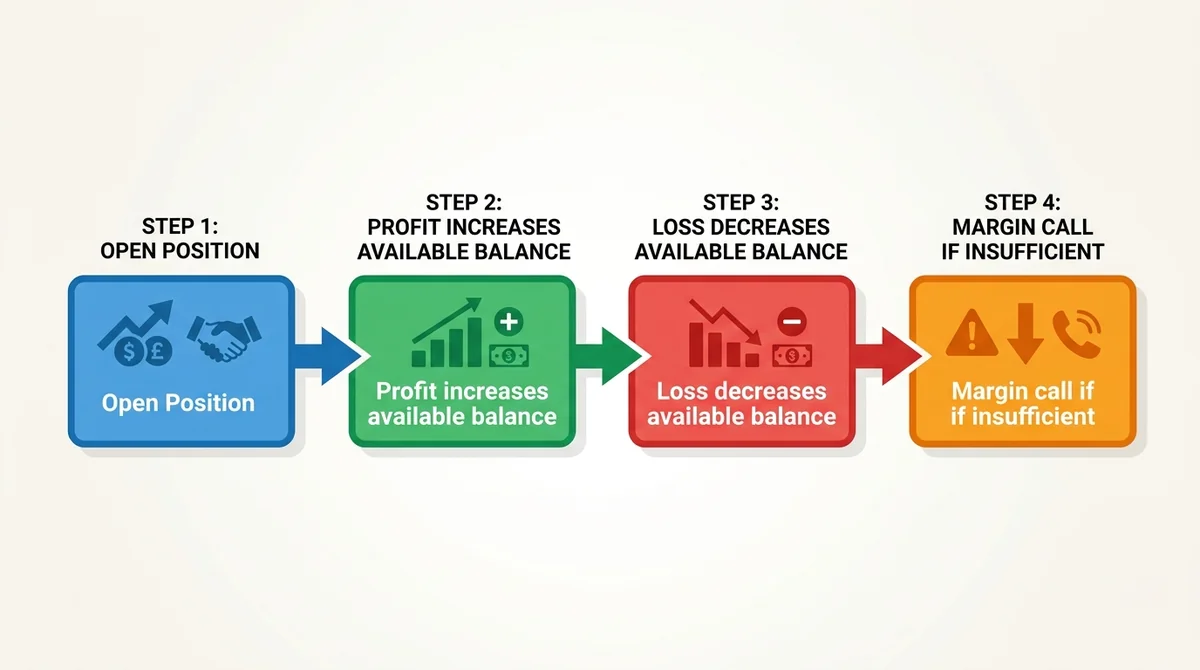
The biggest risk of margin trading is forced liquidation. When losses approach the margin amount, the platform automatically closes the position to prevent further losses. If you don't add margin in time, you'll be liquidated.
What happens if margin is insufficient?
The platform will issue a margin call. If you don't top up, the platform will force-close your position. Your margin will be used to offset losses and may be entirely lost.
How to avoid margin risks?
- Control leverage; beginners should start with low leverage.
- Set stop-loss orders to limit per-trade losses.
- Don't go all-in; keep enough available balance.
- Regularly monitor your account status to avoid unexpected liquidations.
⚠️ Leveraged trading is extremely risky and may result in total loss of principal.
#Why Is Margin Important for Beginners?
Understanding margin helps you avoid misusing leverage. Many beginners jump into high leverage and get liquidated quickly. Knowing the margin mechanism helps you understand the true risk of each trade.
What common mistakes can understanding margin help you avoid?
- Mistaking margin for a fee.
- Using high leverage with full position and no risk isolation.
- Ignoring liquidation risk and not stopping losses in time.
How does margin relate to risk isolation?
Using margin wisely is like setting a safety cushion for your account. You can keep most of your funds in a spot wallet and use only a small portion for margin trading. That way, even if you're liquidated, you won't lose all your assets.
This article covers concepts only; when ready to try your hand, check out the live tools on the main site MSX.
FAQ
What is margin?
Margin is funds temporarily held by a platform as collateral during a trade, ensuring traders can cover potential losses and supporting leveraged trading. It's like a rental deposit and is released back to your available balance after closing the position.
What is the relationship between margin and leverage?
The higher the leverage, the lower the required margin percentage. For example, 10x leverage requires only 10% margin. But leverage amplifies both gains and losses, so risk is higher.
What happens if margin is insufficient?
The platform issues a margin call. If you don't top up, the platform will force-close your position, and your margin will be used to offset losses, potentially resulting in total loss.
How to avoid margin risks?
Control leverage; beginners should start with low leverage. Set stop-loss orders. Don't go all-in. Regularly monitor your account status to avoid unexpected liquidations.
Is margin trading suitable for beginners?
It's not recommended for beginners to engage directly in high-leverage margin trading. First understand the margin mechanism, try with a very small position, and strictly set stop-losses.
Related Terms
Want to see the real data for this concept?
After you sign up, you can view live prices, funding rates, and fees for the related assets.
View live prices and fees →