What Is Margin? Differences Between Initial Margin, Maintenance Margin, and Available Margin
Margin is collateral in leveraged trading, split into initial, maintenance, and available margin. Learn definitions, differences, and liquidation risks.
Margin: a sum of money you put up as collateral when trading to secure your position. It comes in three types: initial margin, maintenance margin, and available margin, corresponding to the entry requirement, the liquidation floor, and funds you can freely use.
#What Is Margin?
Margin: collateral that must be deposited when opening and holding a position. It covers potential losses, like a rental deposit—you put down a small deposit to “rent” a much larger position, but if the price moves against you, the deposit is deducted first. Margin and leverage are two sides of the same coin: with 10x leverage, you only need 10% initial margin to open a position.
#How Do Initial, Maintenance, and Available Margin Differ?
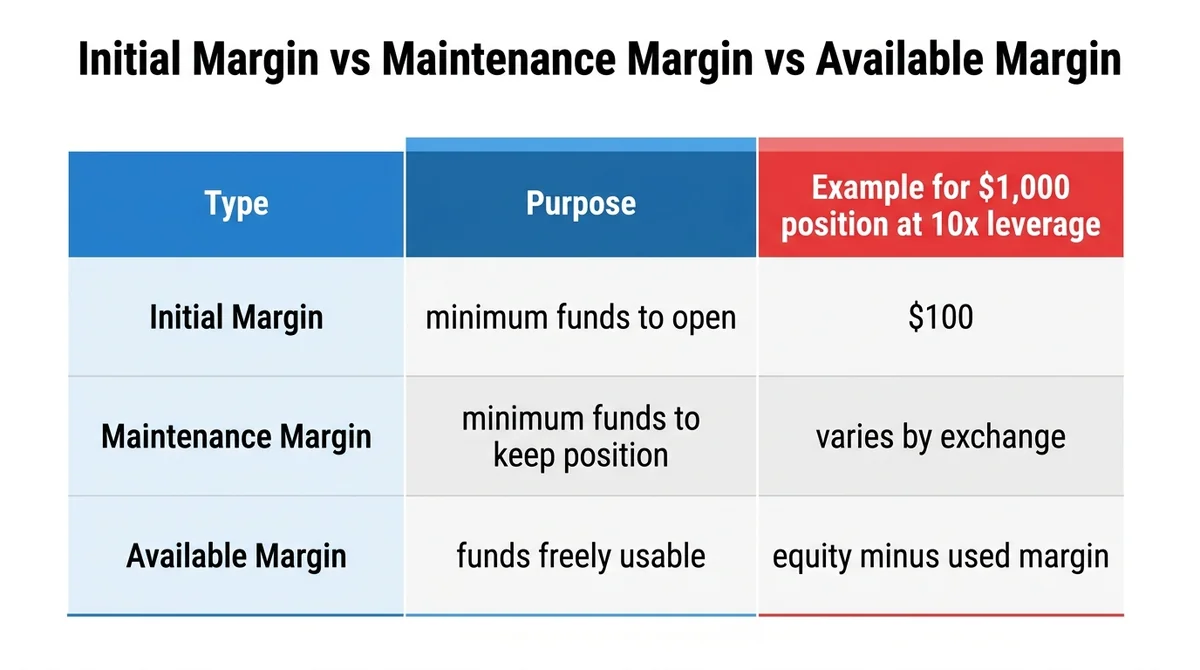
- Initial margin: the minimum funds required to open a position. For example, with 10x leverage on a $1,000 position, you need to deposit $100 first (assuming no other fees).
- Maintenance margin: the minimum funds your account must maintain while holding a position. When your equity falls below this level, forced liquidation may be triggered.
- Available margin: the funds you can still freely use after subtracting used margin from your total account equity. You can use it to add to positions or withdraw.
Remember: initial is the “ticket,” maintenance is the “floor,” and available is the “cash in your pocket.”
#How Does Margin Trading Work?
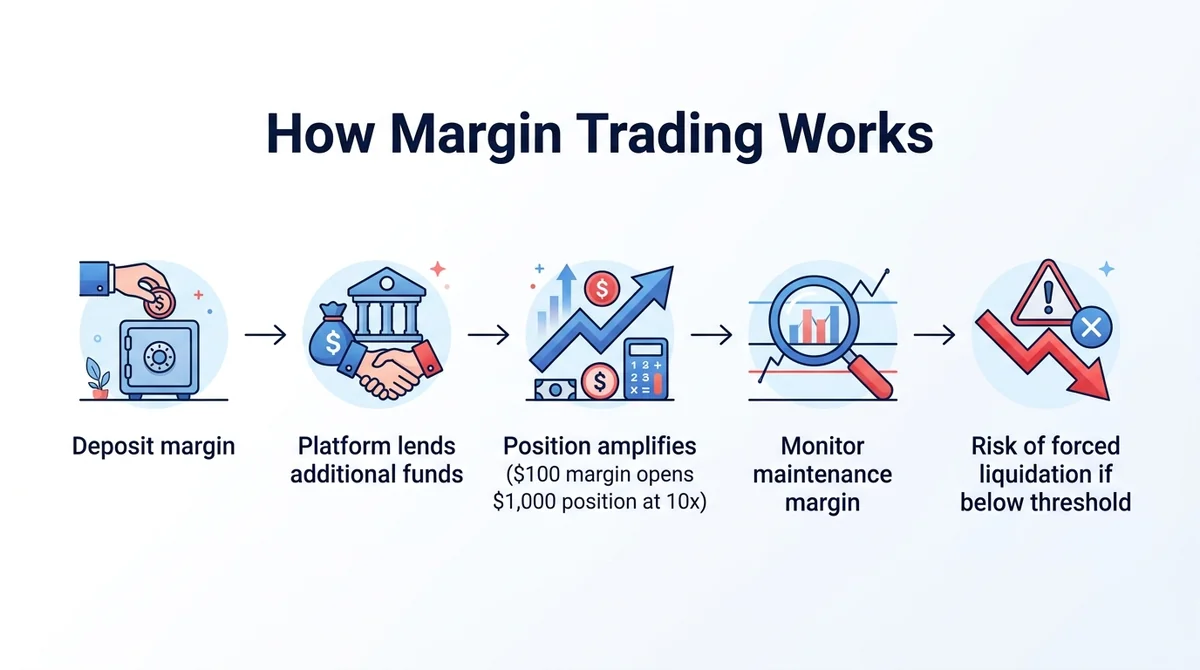
Margin trading: after you deposit margin, the platform lends you additional funds to amplify your position. With 10x leverage, a $100 margin can open a $1,000 position. For every 1% adverse price move, the position loses about $10; when losses push your account equity below the maintenance margin level, the exchange may trigger forced liquidation—you don't necessarily have to lose your entire margin first.
#Why Is Understanding Margin Important?
Margin determines how much adverse price movement your position can withstand. If you don't understand the differences between initial, maintenance, and available margin, you can easily overuse leverage, causing losses to be amplified quickly and potentially being force-liquidated due to insufficient margin before prices even drop significantly. Understanding margin is the first step in risk management.
#Common Risks and Misconceptions
- Higher leverage isn't always better: high leverage lowers the margin ratio but also amplifies losses.
- “Will insufficient margin always lead to liquidation?” Not necessarily, but liquidation is usually triggered when equity falls below maintenance margin. The platform may first require a margin call; in extreme market conditions, it may liquidate directly.
- Beginners often focus only on the entry threshold, ignoring the dynamic changes in maintenance margin and available margin. Avoid using your full margin; leave enough safety buffer.
⚠️ Digital assets are highly volatile, and leverage amplifies losses. Don't pile on leverage just because you can open a large position. This article only explains concepts and does not constitute investment advice.
FAQ
What is the relationship between margin and leverage?
Leverage lets you open a larger position with less margin. For example, with 10x leverage, you only need 10% initial margin. The higher the leverage, the lower the margin ratio, but losses are equally amplified, and liquidation risk is higher.
What is the difference between initial margin and maintenance margin?
Initial margin is the minimum amount you must deposit when opening a position; maintenance margin is the minimum funds your account must maintain while holding a position, and falling below it may trigger liquidation. Simply put: initial is the entry threshold, and maintenance is the survival line.
Will insufficient margin always lead to liquidation?
Not necessarily. If prices move rapidly against you and your account equity falls below maintenance margin, the exchange usually notifies you to add margin first; only if you fail to top up promptly will forced liquidation be triggered. However, in extreme market conditions, direct liquidation is possible, and policies vary by platform.
Why is understanding margin important?
Because margin directly determines how much volatility your position can withstand. Without understanding the differences between initial, maintenance, and available margin, you can easily over-leverage, causing losses to exceed your principal or even get liquidated.
Related Terms
Want to see the real data for this concept?
After you sign up, you can view live prices, funding rates, and fees for the related assets.
View live prices and fees →