What Exactly Does Pre-IPO Mean? A Beginner's Guide to the Pre-Listing Stage and Common Terms (2026)
Pre-IPO refers to the stage before a company's initial public offering. It's a time period, not a product. Plain-English meaning, company status, terms and risks.
Pre-IPO refers to the stage before a company's initial public offering (IPO) — it is a time-period concept, not a specific product or tradable instrument.
#What Exactly Does Pre-IPO Mean?
The literal meaning of Pre-IPO: "Pre" means "before," and IPO stands for initial public offering. Together, it means "before going public."
Its relationship to the IPO: An IPO is when a company first issues shares to the public and lists them for trading; Pre-IPO is the preparation period before that listing event takes place.
Why it's a stage and not a product: Just as "before graduation" is not a course but a stretch of time, Pre-IPO describes where a company stands in its progress — not some standardized asset you can directly buy or sell.
#What State Is a Company Usually In During the Pre-IPO Stage?
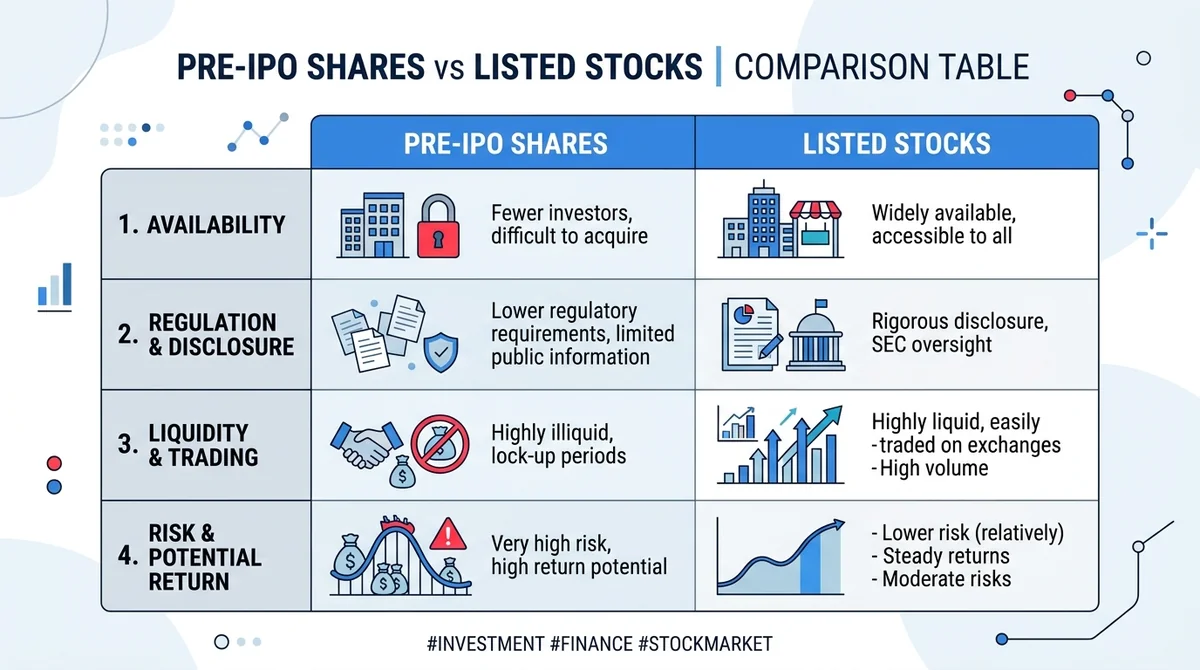
What the company is preparing: It is typically improving its governance structure, organizing financial records, and getting compliance in order, laying the groundwork for filing its listing application.
Can shares be freely traded? No. The shares are not yet freely circulating on a public exchange, and transactions often require private negotiation.
Why is information disclosure lower? Because the company has no obligation to disclose to the public yet, so the materials outsiders can find are limited.
Analogy: It's like a restaurant doing a soft opening before its official launch — only insiders and a few guests can get in, and the menu and books aren't open to the public.
#What Common Terms Come Up Around Pre-IPO?
- Primary market: The venue for equity transactions before a public listing, where the object of trade is the company's shares themselves.
- Secondary sale of existing shares: Existing shareholders transfer their own shares to someone else — this is not newly issued stock from the company.
- Employee options: An incentive arrangement the company gives employees, allowing them to buy shares in the future at an agreed price.
- Listing coaching / filing an application: Milestones on the road to an IPO, indicating the company is advancing its listing progress.
#Why Do Beginners Often Misunderstand Pre-IPO?
Treating a "stage" as a "sure-win opportunity": A stage only indicates a position in time; it promises no returns. A company may fail to list, or its valuation may fall.
Trading works differently from listed stocks: Listed stocks are matched publicly on an exchange, with transparent prices and the ability to sell at any time; Pre-IPO shares have poor liquidity, and selling may require a long wait.
Information transparency differs: Listed companies must disclose financial reports periodically, while Pre-IPO companies have no such obligation, leaving fewer grounds for judgment.
#What Risks Should You Watch For When Learning About Pre-IPO?
Information opacity: Public materials you can find are limited, making it easy to hear only one side of the story.
Insufficient liquidity: Converting shares to cash may take a long time, and you may not be able to sell when you urgently need money.
Stay wary of hype: When you encounter claims like "guaranteed profit" or "internal allocation," figure out the mechanism before deciding.
⚠️ This article only explains concepts and does not constitute investment advice. Digital assets and equity-related arrangements both carry risk; beginners should start with small positions or learn first.
This article only covers concepts; when you're ready to try it out, check out the live trading tools on the main MSX site.
FAQ
Is Pre-IPO a product?
No. Pre-IPO refers to the stage before a company's initial public offering — it is a time-period concept, not a standardized product or tradable instrument. It describes where a company stands in its progress, not an asset you can directly buy or sell.
Can shares be freely traded during the Pre-IPO stage?
Usually not. Shares at this stage are not yet freely circulating on a public exchange, transactions often require private negotiation, liquidity is poor, selling may take a long time, and information disclosure is lower than that of listed companies.
What is the difference between the primary market and the secondary market?
The primary market refers to equity transactions before a public listing, where the object of trade is the company's shares themselves; the secondary market refers to the market where listed stocks are publicly matched on an exchange, with transparent prices and better liquidity.
What does a secondary sale of existing shares mean?
A secondary sale of existing shares means an existing shareholder transfers the shares they hold to someone else, rather than the company issuing new stock. It does not increase the company's total share capital — it is only a transfer of shares between shareholders.
What risks should beginners watch for when learning about Pre-IPO?
The main risks are information opacity and insufficient liquidity. Public materials are limited, leaving few grounds for judgment, and converting shares to cash may take a long time. Be wary of any hype that exaggerates returns, and understand the mechanism before deciding.
Related Terms
Want to see the real data for this concept?
After you sign up, you can view live prices, funding rates, and fees for the related assets.
View live prices and fees →