Unrealized PnL
Unrealized PnL is the paper profit or loss on an open position based on current market price. Learn how it's calculated, how it differs from realized PnL, and common pitfalls.
Unrealized PnL: the paper profit or loss calculated at the current market price while a position remains open. It changes with price movements and does not represent money in hand until the position is closed.
#What Is Unrealized PnL?
Unrealized PnL (unrealized profit and loss) refers to the paper gain or loss derived by comparing the current market price with your position's cost basis while you still hold an asset and have not sold it.
Because it fluctuates up and down with price, it is also called floating PnL.
Analogy: You paid $100 for a concert ticket, and someone tells you it's now worth about $150 on the market. As long as you don't sell, that $50 difference is just "unrealized profit" — the ticket is still in your hands.
It usually consists of two parts:
- Current market value: position quantity × current price
- Cost basis: the cost paid when originally bought (usually calculated at the average purchase price)
#What's the Difference Between Unrealized and Realized PnL?
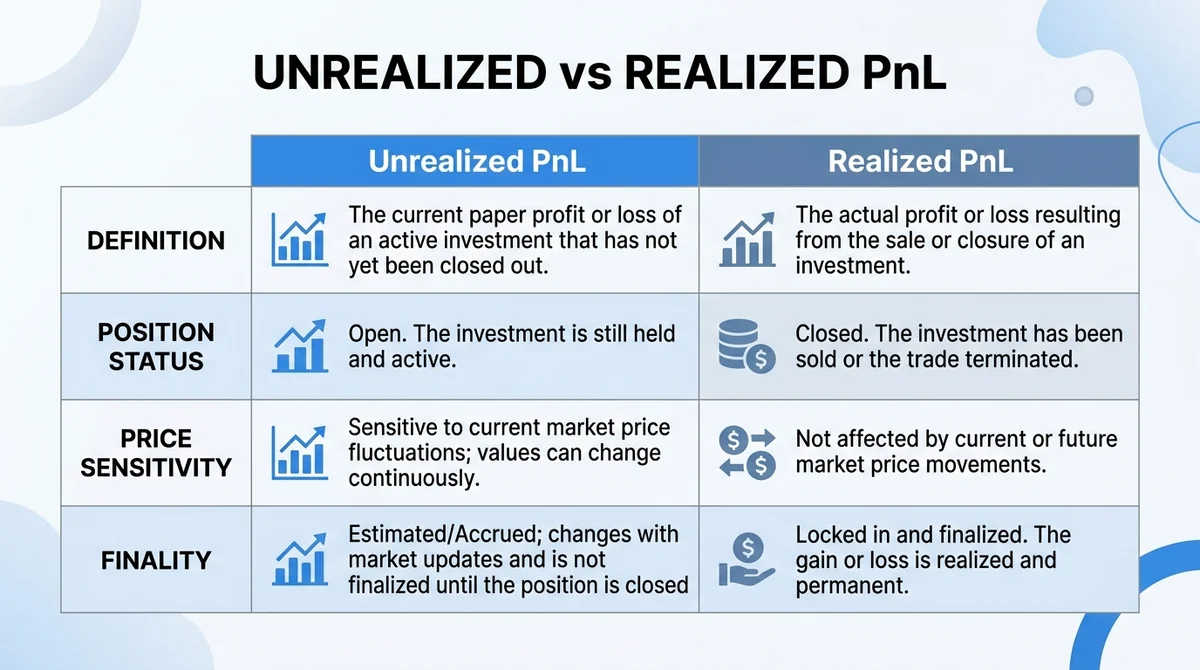
Realized PnL: only when you actually sell (close the position) is the profit or loss locked in and becomes "realized."
- Unrealized PnL: the position is still open, and the figure changes with price.
- Realized PnL: after selling, the profit or loss is essentially determined.
- Partial close: selling part of the position converts that portion to realized, while the remainder stays unrealized.
Analogy: Before you sell the ticket, the $50 gain is just "word of mouth"; only when you actually sell at $150 does the $50 land in your pocket.
#How Is Unrealized PnL Calculated?
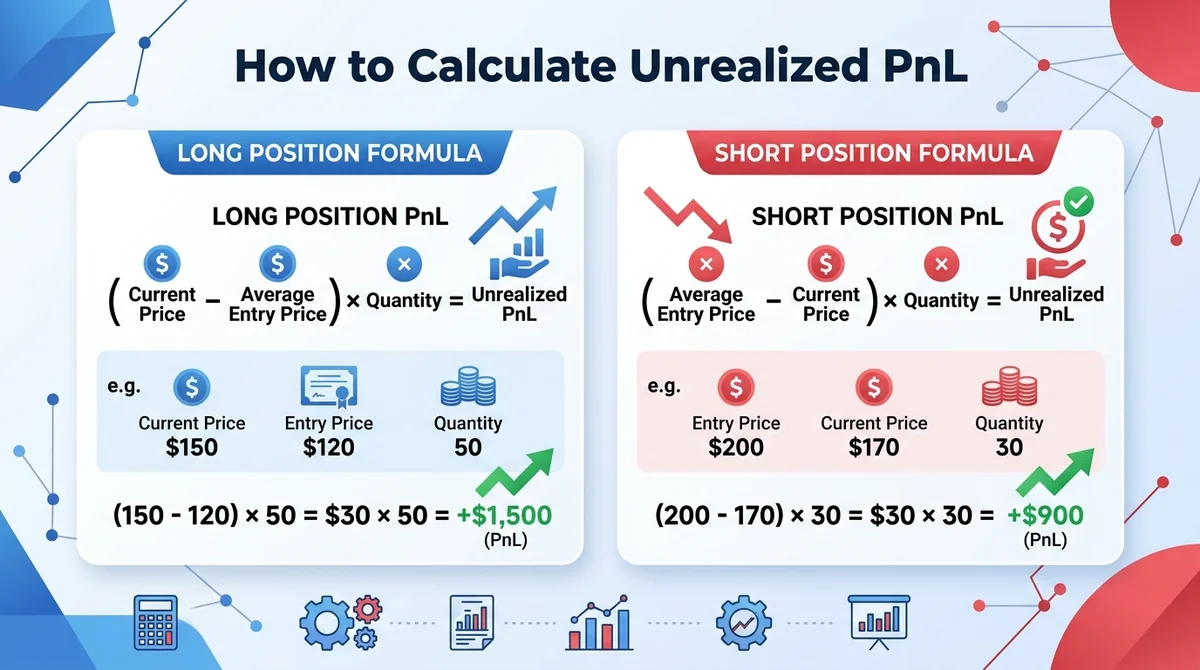
Basic formula: Unrealized PnL = (current price − average entry price) × position quantity.
- Average entry price: when buying in multiple tranches, cost is usually calculated as a weighted average.
- Current price: generally the latest traded price, which may differ slightly across platforms.
- For short positions the direction is reversed: profit comes when price falls, and the formula becomes (average entry price − current price) × quantity.
⚠️ Digital asset prices are highly volatile, and unrealized PnL can quickly turn negative. Please manage your position size and be aware of risk. This article is for educational purposes only and is not investment advice.
#Why Does Unrealized PnL Keep Changing?
Because the system typically recalculates paper PnL every time the price moves.
- Floating profit can be given back: if you don't sell after a rise, a price pullback can shrink the profit or even turn it into a loss.
- Total account assets include the floating portion: part of the "total assets" you see may not yet be locked in.
Analogy: A thermometer dipped in water changes its reading as the water temperature changes, but the water hasn't been scooped out yet.
#What Pitfalls Should You Watch for When Looking at Unrealized PnL?
- Floating profit is not real profit: until the position is closed, it can disappear.
- Fees affect the final result: the amount you ultimately receive usually has trading fees and other costs deducted.
- Making decisions based only on floating profit can lead to impulse moves: combine it with your own plan and risk tolerance.
This article only covers concepts; if you want to learn about related tools, see the product documentation on the main MSX site. Any action involves risk; please make your own judgment. This article is not investment advice.
#FAQ
Q: Is unrealized PnL actual money in hand?
A: No. It is only a paper figure calculated at the current market price. Before the position is sold, it fluctuates with price and may be given back or even turn into a loss; only after closing is the PnL truly locked in.
Q: How is unrealized PnL calculated for short positions?
A: The direction is reversed, usually (average entry price − current price) × position quantity. A price decline shows profit, and a price rise shows loss.
Q: Why doesn't total account assets match unrealized PnL?
A: Total account assets usually include available balance, position margin, and unrealized PnL, among other parts. Unrealized PnL is just the floating component, and calculation methods may differ slightly across platforms.
Q: Are fees charged on unrealized PnL?
A: Unrealized PnL itself is not directly charged, but closing a position usually incurs trading fees, and this cost affects the realized PnL you ultimately receive.
FAQ
Is unrealized PnL actual money in hand?
No. It is only a paper figure calculated at the current market price. Before the position is sold, it fluctuates with price and may be given back or even turn into a loss; only after closing is the PnL truly locked in.
How is unrealized PnL calculated for short positions?
The direction is reversed, usually (average entry price − current price) × position quantity. A price decline shows profit, and a price rise shows loss.
Why doesn't total account assets match unrealized PnL?
Total account assets usually include available balance, position margin, and unrealized PnL, among other parts. Unrealized PnL is just the floating component, and calculation methods may differ slightly across platforms.
Are fees charged on unrealized PnL?
Unrealized PnL itself is not directly charged, but closing a position usually incurs trading fees, and this cost affects the realized PnL you ultimately receive.
Want to see the real data for this concept?
After you sign up, you can view live prices, funding rates, and fees for the related assets.
View live prices and fees →