USDT Perpetual
USDT perpetual contracts are derivatives settled in USDT with no expiry, letting you go long or short. Learn how they work, funding rates, risks, examples, and FAQs.
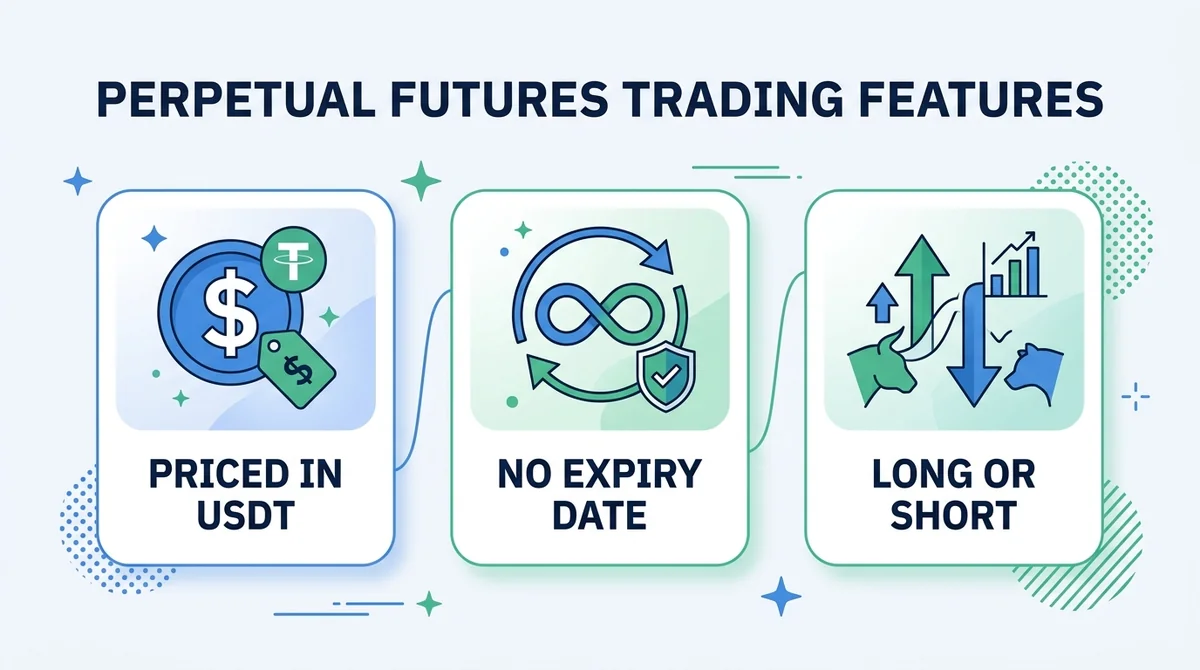
USDT perpetual contracts let you use USDT as money, have no expiry date, and allow you to go long or short.
#What Are USDT Perpetual Contracts?
The only difference from regular perpetual contracts is the settlement currency: everything is priced and settled in USDT.
The difference from spot trading: spot means buying coins directly, while perpetual contracts mean betting on price movements.
Analogy: Spot is like buying apples directly; perpetual contracts are like betting with someone whether apples will go up or down tomorrow.
Key points:
- Priced and settled in USDT
- No expiry date
- Can go long or short
#How Does the Funding Rate Work in USDT Perpetual Contracts?
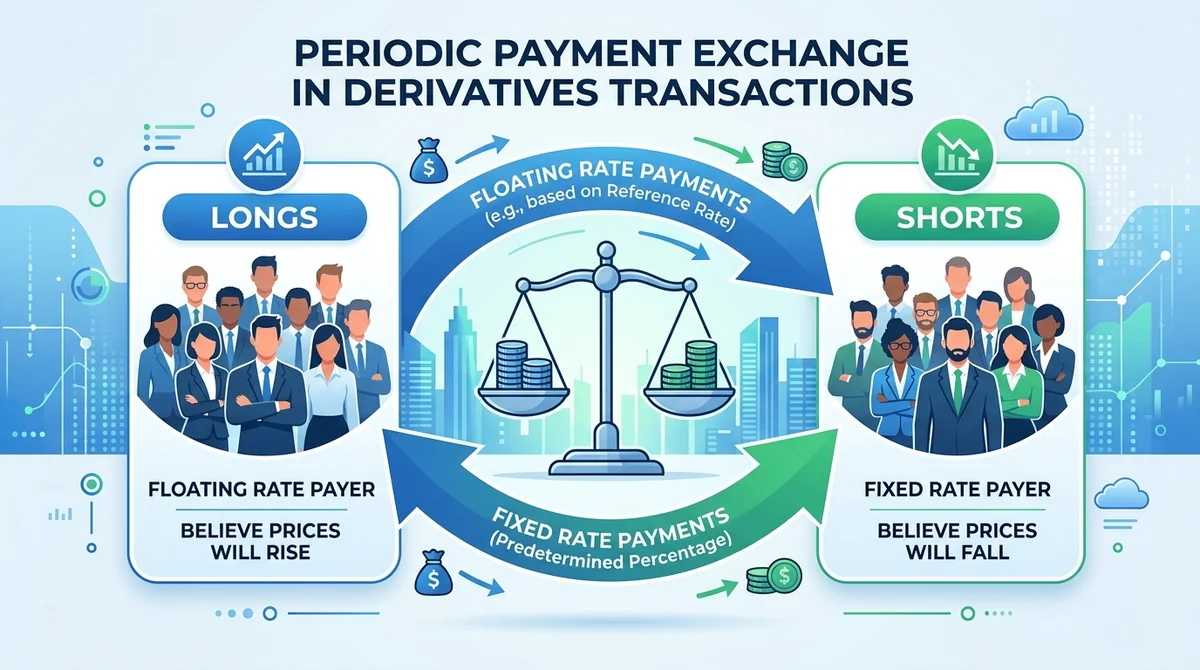
The funding rate is a small payment exchanged periodically between longs and shorts.
Its purpose is to keep the contract price close to the spot price.
Analogy: The funding rate is like a balancing fee when there's an imbalance in supply and demand for capital.
Key points:
- Paid between longs and shorts
- The rate reflects market supply and demand
- Settled periodically (usually every 8 hours)
#Why Do Some People Choose USDT Perpetual Contracts?
The advantage of using USDT as margin: you don't need to hold the underlying asset like Bitcoin.
Trading flexibility: you can profit from falling prices and use leverage to improve capital efficiency.
Note: Leverage amplifies both gains and losses; it's not a guaranteed money-making tool.
#What Risks Should You Consider Before Using USDT Perpetual Contracts?
The danger of leverage is that it magnifies profits and losses.
If the price moves too far against you, liquidation may be triggered and you could lose your entire margin.
Suggestion: Beginners should start with small positions to test the waters before increasing their investment.
Risk Warning: This article is not investment advice. Please assess risks yourself before trading.
#A Simple USDT Perpetual Contract Example
Suppose you open a 10x long position with 100 USDT.
If the price rises 1%, you make 10 USDT; if it falls 1%, you lose 10 USDT.
Note: If the price falls 10%, your 100 USDT margin is gone.
This article only covers concepts; when you're ready to try, check out the live trading tools on the main site MSX.
#FAQ
Q: What's the difference between USDT perpetual contracts and regular perpetual contracts?
A: The only difference is the settlement currency. USDT perpetual contracts are priced and settled in USDT, while regular perpetual contracts may use other currencies. Both have no expiry date and allow going long or short.
Q: How often is the funding rate settled in USDT perpetual contracts?
A: Usually every 8 hours. The funding rate is paid between longs and shorts, reflects market supply and demand, and aims to keep the contract price close to the spot price.
Q: Do I need to hold the underlying asset to trade USDT perpetual contracts?
A: No. You only need USDT as margin to go long or short on the underlying asset, without actually holding assets like Bitcoin.
Q: What are the risks of leverage in USDT perpetual contracts?
A: Leverage amplifies both gains and losses. If the price moves too far against you, liquidation may be triggered and you could lose your entire margin. Beginners should start with small positions.
Q: Are USDT perpetual contracts suitable for beginners?
A: Beginners can first learn the concepts and try with very small positions. But leveraged trading is risky, and it's not advisable to invest large sums without fully understanding the mechanics.
#Related Reading
FAQ
What's the difference between USDT perpetual contracts and regular perpetual contracts?
The only difference is the settlement currency. USDT perpetual contracts are priced and settled in USDT, while regular perpetual contracts may use other currencies. Both have no expiry date and allow going long or short.
How often is the funding rate settled in USDT perpetual contracts?
Usually every 8 hours. The funding rate is paid between longs and shorts, reflects market supply and demand, and aims to keep the contract price close to the spot price.
Do I need to hold the underlying asset to trade USDT perpetual contracts?
No. You only need USDT as margin to go long or short on the underlying asset, without actually holding assets like Bitcoin.
What are the risks of leverage in USDT perpetual contracts?
Leverage amplifies both gains and losses. If the price moves too far against you, liquidation may be triggered and you could lose your entire margin. Beginners should start with small positions.
Are USDT perpetual contracts suitable for beginners?
Beginners can first learn the concepts and try with very small positions. But leveraged trading is risky, and it's not advisable to invest large sums without fully understanding the mechanics.
Want to see the real data for this concept?
After you sign up, you can view live prices, funding rates, and fees for the related assets.
View live prices and fees →