Bitcoin Tokenized Bond Tutorial: How to Buy and Manage On-Chain Bonds with BTC in 2026
2026 Bitcoin tokenized bond tutorial: set up wallet, pick platform, buy with stablecoins/BTC, confirm on-chain. Covers private key security and risks.
By 2026, the process of buying tokenized bonds with crypto assets has become clearer, but most platforms still only support settlement in stablecoins. If you want to participate with BTC, you usually need two steps: first convert BTC into a stablecoin supported by the platform, then complete the purchase. This article walks through the complete process step by step and highlights key security considerations. Risks are your own; check official announcements for the latest platform support.
Tokenized bonds are a form of RWA (real-world asset) on-chain. Their value is pegged to traditional bonds, but trading and custody differ. Once you understand the steps below, you'll be able to get started quickly even if platforms release related products in the future.
#How to Prepare Your Wallet and Assets?
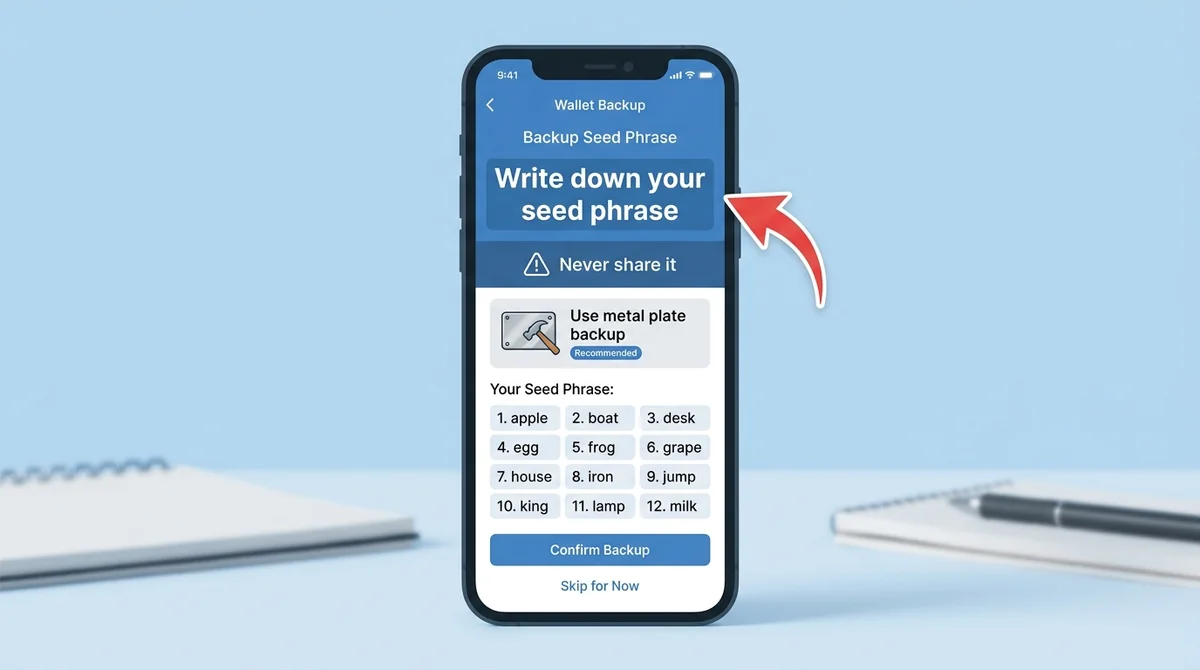
Start with a non-custodial wallet. Non-custodial wallet (glossary definition): you control the private keys, and the assets are in your custody. Think of it like keeping cash in your own safe rather than in a bank. Popular options include software wallets such as MetaMask and Trust Wallet, and hardware wallets such as Ledger and Trezor. Software wallets are convenient for trading, while hardware wallets are better for long-term storage. Whichever you choose, you must write down your seed phrase by hand and store it somewhere safe. Do not screenshot it, do not store it in the cloud, and never share it with anyone. When backing up your seed phrase, you can engrave it on a metal plate to protect against fire or water damage; do not use online backup tools. When using a new wallet for the first time, consider transferring 1 USDT to test the recovery process.
Asset preparation: In addition to the bond price, keep some assets aside for gas fees (on-chain transaction fees, which fluctuate). Start with a small amount to test the waters: digital assets are high risk, so do not invest more than you can afford to lose. If you only hold BTC and the platform only accepts USDT/USDC, you need to convert it first through crypto-to-crypto trading. Some platforms charge zero crypto-to-crypto trading fees, which can reduce conversion costs. When swapping, pay attention to slippage and network selection.
#How to Choose a Compliant Platform?
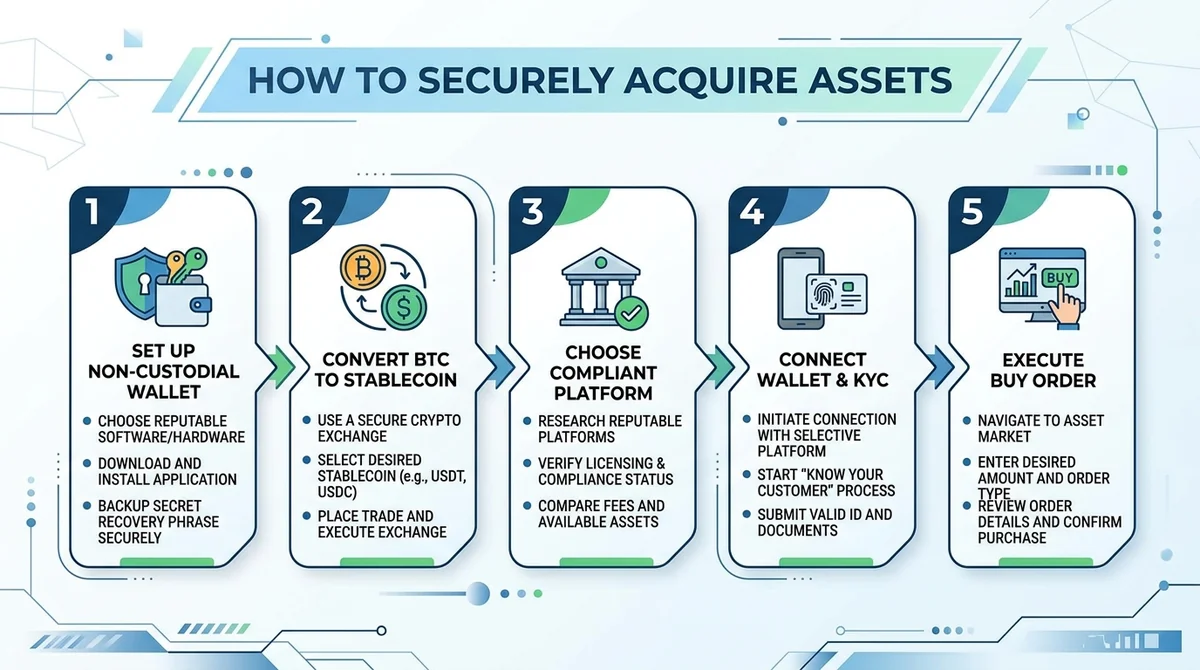
The platform must be compliant. Regulatory licenses: Check whether the issuer or platform holds relevant securities or financial licenses in the relevant country or region. Platforms without licenses carry higher risk. Smart contract audit: On-chain bonds rely on smart contracts, so you need third-party audit reports to confirm there are no vulnerabilities. Liquidity: Bond tokens must be transferable or redeemable, otherwise they may be hard to sell. User reviews: Check community feedback and complaint records, and avoid platforms with exit-scam rumors.
Analogy: Choosing a platform is like choosing a licensed, regulated bank—do not pick a shady, unregulated platform.
Specific checklist:
- Issuer's registration jurisdiction and regulatory status
- Smart contract audit firm and report links
- Secondary market depth and historical trading records
- How user funds are held (whether segregated)
- Customer support responsiveness and channels
Well-known smart contract audit firms currently include CertiK and Trail of Bits, but a passed audit does not mean zero risk. You should still pay attention to ongoing monitoring and bug bounty programs.
#How to Execute a Buy Order?
- Connect wallet: On the platform, click 'Connect wallet' and select your non-custodial wallet. Make sure your browser extension or mobile app is up to date, and avoid using public Wi-Fi.
- Complete KYC: Submit your identity information as required by the platform. Review time depends on the platform. You usually need an ID/passport and proof of address. Some platforms impose stricter requirements for bond products.
- Select a bond: Check the bond's maturity, coupon rate, and credit rating (if any). Don't just look at yield. Pay attention to the issuer, underlying assets, and redemption terms.
- Payment: Confirm the amount and pay using the settlement asset supported by the platform. If the platform only supports stablecoins and you hold BTC, you need to convert it on the platform first. When converting, watch the exchange rate and fees. Some platforms support limit orders, letting you set your desired bond price to avoid slippage from market volatility.
- On-chain confirmation: After the transaction is broadcast, enter the transaction hash in a blockchain explorer and check whether the bond tokens have arrived. Confirmation time depends on the network, usually from a few minutes to a few hours.
Note: Transaction confirmation time depends on the on-chain network. If the tokens do not arrive, first check whether the gas fee is sufficient or contact platform support. Never resubmit the transaction, as that may cause double-spending.
#How to Manage and Secure Your Investment After Buying?
After buying, check regularly. Check assets: You can see bond tokens in your wallet. Interest is usually credited automatically or distributed by the platform. Secure storage: For high-value assets, consider moving them to a hardware wallet. Cold storage isolates them from the network. Anti-phishing: Beware of fake websites, fake customer support, and free airdrop links. Never reveal your seed phrase or private key (private key security guide).
Common mistakes: treating an exchange address as your personal wallet address, ignoring gas fees, using public Wi-Fi for transactions, and not backing up your seed phrase. Remember: your private key is your asset. Whoever has your private key owns your assets.
Also, interest income from tokenized bonds may be subject to tax depending on your jurisdiction. Consider consulting a tax professional. Check quarterly for any contract upgrades or redemption announcements for your bond tokens, and adjust your strategy accordingly.
#Frequently Asked Questions (FAQ)
Q: How much capital do I need to buy tokenized bonds with BTC? A: There is no fixed standard. Besides the bond price itself, you need to prepare a small amount of assets to cover on-chain gas fees. Start with a small amount to test, and don't invest more than you can afford to lose. If the platform only supports stablecoins, you will also need to prepare extra funds for conversion fees.
Q: What is the difference between tokenized bonds and traditional bonds? A: Tokenized bonds record ownership on the blockchain, making transactions more transparent and programmable, but they are subject to smart contract and platform risks. Traditional bonds involve custody by intermediaries, and liquidity may differ. Both carry credit risk that you need to monitor.
Q: What should I do if my private key is leaked? A: Immediately transfer any remaining assets to a new wallet. If they are already gone, the assets may be unrecoverable. That's why you must back up your seed phrase offline and never disclose it.
Q: How can I check interest payments after buying? A: Check your bond token balance and interest records in your wallet or on the platform. Some interest is automatically distributed to your address, while some requires manual claiming. Keep an eye on platform announcements.
Q: How are tokenized bond returns taxed? A: Interest income is generally treated as ordinary income, while capital gains are handled according to holding period and local tax law. Specific tax rates vary by country, so consult a tax professional. Platforms usually do not withhold or remit taxes on your behalf.
Q: What additional risks come with buying tokenized bonds with BTC? A: In addition to the credit risk of the bond itself, you face BTC price volatility, which can change conversion costs, as well as smart contract vulnerability risk. Test with a small amount first and confirm that the platform has third-party audits.
FAQ
How much capital do I need to buy tokenized bonds with BTC?
There is no fixed standard. Besides the bond price itself, you need to prepare a small amount of assets to cover on-chain gas fees. Start with a small amount to test, and don't invest more than you can afford to lose. If the platform only supports stablecoins, you will also need to prepare extra funds for conversion fees.
What is the difference between tokenized bonds and traditional bonds?
Tokenized bonds record ownership on the blockchain, making transactions more transparent and programmable, but they are subject to smart contract and platform risks. Traditional bonds involve custody by intermediaries, and liquidity may differ. Both carry credit risk that you need to monitor.
What should I do if my private key is leaked?
Immediately transfer any remaining assets to a new wallet. If they are already gone, the assets may be unrecoverable. That's why you must back up your seed phrase offline and never disclose it.
How can I check interest payments after buying?
Check your bond token balance and interest records in your wallet or on the platform. Some interest is automatically distributed to your address, while some requires manual claiming. Keep an eye on platform announcements.
Related Terms
Want to see the real data for this concept?
After you sign up, you can view live prices, funding rates, and fees for the related assets.
View live prices and fees →