IPO Bidding: A Beginner's Step-by-Step Guide
Learn how IPO bidding works, what you need before bidding, and common mistakes to avoid. Get a step-by-step guide to applying for IPO shares safely.
#IPO Bidding: A Beginner's Step-by-Step Guide
IPO bidding is the process of applying for shares in an initial public offering by specifying the number of shares and the price you are willing to pay. The final issue price is determined through either a fixed price or a book-building process. This guide walks you through the entire process, from understanding the basics to submitting your bid and avoiding common mistakes.
Key Takeaways:
- IPO bidding lets investors request shares before a company goes public, helping set the final issue price.
- You need a Demat account, bank account with ASBA/UPI, and knowledge of the minimum lot size.
- Bidding steps include logging into your broker/bank platform, selecting the IPO, entering bid details, and authorizing the ASBA block.
- Common mistakes like multiple applications with the same PAN or ignoring lot size can lead to rejection.
- Always research the company through its Red Herring Prospectus and use official platforms to stay safe.
#What Is IPO Bidding and How Does It Work?
IPO bidding is the process where investors submit requests to buy shares of a company before it goes public, specifying share quantity and price. It acts as a price discovery mechanism, helping the company gauge market demand and set a fair value.
#What is a bid in an IPO?
A bid in an IPO is an investor's formal request to buy a certain number of shares at a specific price within the price band. Retail investors often use the cut-off option, which signals willingness to pay the final issue price, increasing allotment chances.
#What are the two types of IPO pricing: fixed price vs book building?
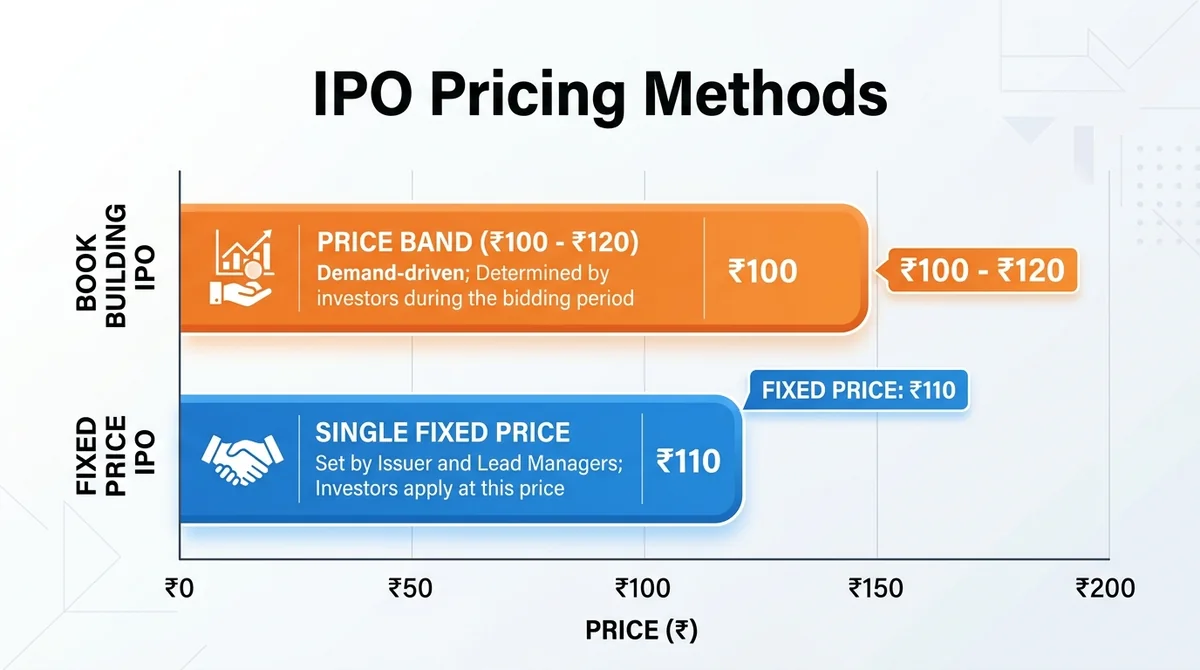
In a fixed price issue, the company sets a single price; investors apply at that exact price. In a book-building issue, the company provides a price band (e.g., ₹100–₹120), and investors bid within that range. After reviewing all bids, the company determines the final cut-off price.
#How is the cut-off price determined?
The cut-off price is the final issue price set after all bids are reviewed. It is the price at which shares are issued to all successful applicants. Bids at or above the cut-off price are eligible for allotment.
#What Do You Need Before You Start IPO Bidding?
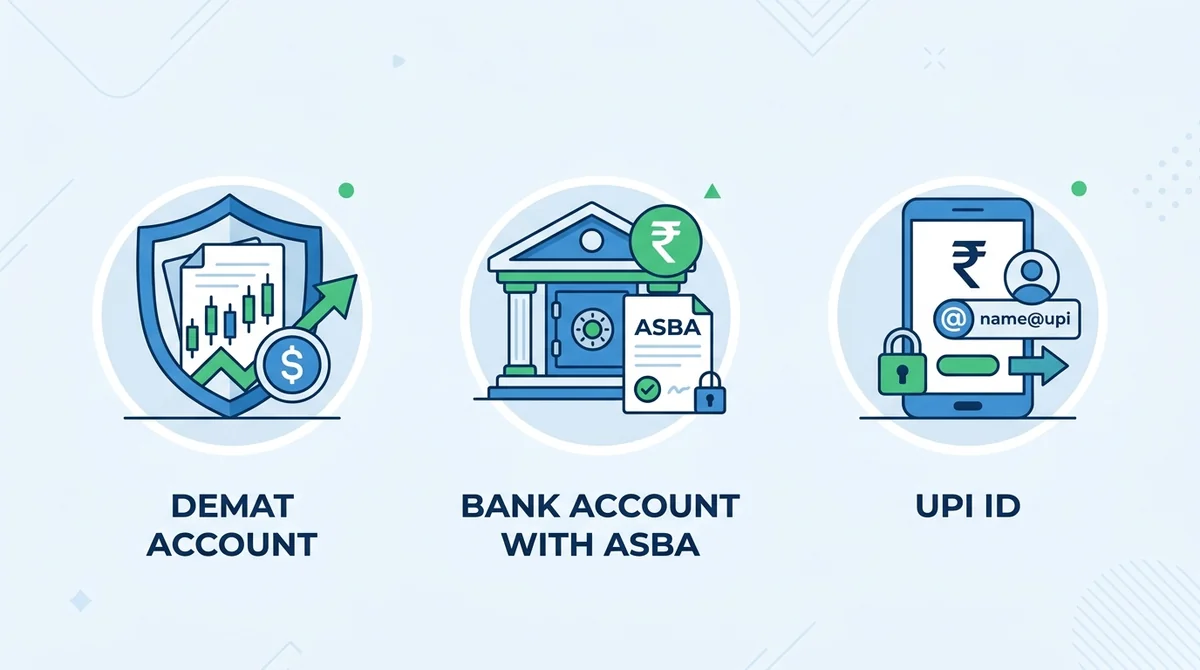
Before bidding, you need a Demat account, a bank account with ASBA or UPI facility, and knowledge of the minimum lot size, as IPO applications must be made in multiples of this lot.
#What accounts are required for IPO bidding?
You need a Demat account to hold shares, a bank account for funds, and a UPI ID for online bidding. These three are the foundation of your IPO bidding experience.
#What is ASBA and why is it used?
ASBA (Application Supported by Blocked Amount) blocks the bid amount in your bank account until allotment. Your money remains in your account and continues to earn interest, and is only debited if shares are allotted.
#What is the minimum investment (lot size)?
IPOs have a minimum lot size, which is the minimum number of shares you must apply for. Bids must be in multiples of this lot; otherwise, they may be rejected.
#How to Bid in an IPO Step by Step
To bid in an IPO, log in to your broker or bank platform, select the IPO, enter the number of lots and bid price, choose your investor category, authorize the ASBA block via UPI, and submit your application before the issue closes.
- Log in to your broker or bank's IPO section – Access the IPO section in your broker's app or net banking.
- Select the IPO and enter your bid details – Choose the IPO and enter the number of lots and your bid price (within the price band or at cut-off).
- Choose your investor category and price – Select Retail, HNI, or QIB category and verify your UPI ID.
- Authorize the ASBA block via UPI or net banking – Approve the mandate request on your UPI app to block the funds.
- Confirm and track your application – After submission, track your application status and check allotment results online.
#What Happens After You Submit Your IPO Bid?
After bidding, the allotment process determines who receives shares based on demand and category. If you are not allotted, your blocked funds are released back to your bank account.
#How does allotment work?
After the bidding window closes, the company and underwriters determine the cut-off price and allot shares to eligible bidders. If allotted, shares are credited to your Demat account on the listing date.
#What if the IPO is oversubscribed?
In oversubscribed IPOs, allotment is often done via lottery for retail investors, so not everyone gets shares. The subscription status influences the probability of allotment.
#When do you get a refund if not allotted?
If you are not allotted shares, the blocked amount is unblocked and returned to your bank account, typically within a few days.
#Common IPO Bidding Mistakes to Avoid
Common mistakes include bidding at the highest price without analysis, submitting multiple applications with the same PAN, and ignoring the lot size requirement, all of which can reduce your chances of allotment.
- Bidding at the highest price blindly – May lead to overpaying if the cut-off price is lower.
- Multiple applications with the same PAN – Leads to rejection of all applications under that PAN.
- Ignoring the lot size – Bids must be in multiples of the lot size; otherwise, they may be rejected.
- Incorrect UPI ID or late mandate approval – Can result in application failure.
- Insufficient bank balance – Ensure funds are available for the blocked amount.
#IPO Bidding Safety Tips and Best Practices
To stay safe, always research the company through its prospectus, use official platforms, and never share sensitive credentials. Be wary of any promise of guaranteed allotment.
#How to research an IPO before bidding
Read the company's Red Herring Prospectus (RHP) to understand financials, risks, and use of proceeds. This helps you make an informed decision.
#How to protect yourself from IPO scams
Never share your UPI PIN or banking credentials with anyone. Legitimate IPO applications only require mandate approval. Be cautious of 'guaranteed allotment' schemes or unsolicited tips on social media.
#What to check in the red herring prospectus
Look for the company's business model, financial performance, risk factors, and how the proceeds will be used. This information is crucial for evaluating the IPO's potential.
FAQ
What is IPO bidding?
IPO bidding is the process of applying for shares in an initial public offering by specifying the number of shares and the price you are willing to pay.
What is the cut-off price in IPO bidding?
The cut-off price is the final issue price determined after all bids are reviewed. Bids at or above this price are eligible for allotment.
What is ASBA in IPO bidding?
ASBA (Application Supported by Blocked Amount) blocks the bid amount in your bank account until allotment, ensuring your money stays with you and earns interest.
What is the minimum lot size in an IPO?
The minimum lot size is the smallest number of shares you must apply for. Bids must be in multiples of this lot size.
Can I submit multiple IPO applications with the same PAN?
No, submitting more than one application with the same PAN leads to rejection of all applications under that PAN.
How do I check my IPO allotment status?
You can check your IPO allotment status online through the registrar's website or your broker/bank platform after the allotment process is complete.
Want to see the real data for this concept?
After you sign up, you can view live prices, funding rates, and fees for the related assets.
View live prices and fees →