Practical Guide to Tokenized Bond Linear Contracts: 2026 Margin, Funding Rate, and Liquidation Calculations
Tokenized bond linear futures use stablecoin margin to track tokenized bond prices. Learn margin rate, funding cycles, liquidation price and leverage risks
Answer: Tokenized bond linear contracts are perpetual contracts that use stablecoins as margin and track tokenized bond prices. They do not hold the underlying bond, allow going long or short, and leverage amplifies both gains and losses. This article is for educational purposes only and does not constitute investment advice.
#What Are Tokenized Bond Linear Contracts?
#How Are They Different from Buying Tokenized Bonds Directly?
Buying tokenized bonds directly means holding the asset and benefiting from the bond's own returns and risks. A linear contract, on the other hand, is a bet on its price movement without holding the underlying. Analogy: if you predict house prices will rise, you don't buy a house; instead, you put down a deposit and sign a price betting contract. If prices rise, you earn the difference; if they fall, you lose the deposit.
#How Do Linear Contracts Differ from Inverse Contracts?
Linear contracts use stablecoins (such as USDT) as margin and quote currency, and profits and losses are also settled in stablecoins. Inverse contracts use the underlying asset itself as margin. Beginners usually start with linear contracts because the mechanics are more intuitive.
Linear contracts have no expiration date and are perpetual contracts. You can hold positions long-term, but you must periodically pay or receive funding fees. See the funding rate section below for details.
#How Does Margin Work in Linear Contracts?
#What Are Initial Margin and Maintenance Margin?
Margin is the collateral you must deposit when opening a position. It is divided into:
- Initial margin: the minimum collateral amount required to open a position.
- Maintenance margin: the minimum margin level required to keep the position open and avoid forced liquidation.
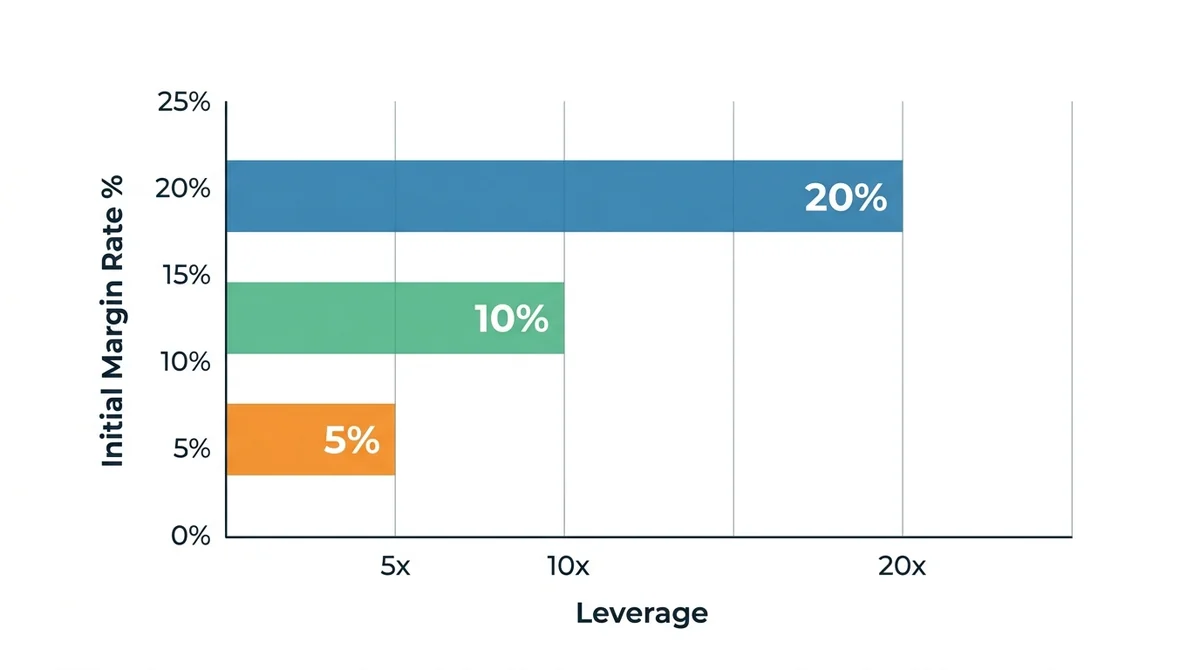
For example, with 10x leverage and a contract position worth 10,000 USDT, the initial margin rate is 1/10 = 10%, meaning you need to deposit 1,000 USDT. If the maintenance margin rate for that contract is 0.5%, the maintenance margin is 50 USDT. When losses reduce the margin account balance to 50 USDT, the system will trigger forced liquidation.
#What Is the Relationship Between Margin Rate and Leverage?
Margin rate = margin ÷ position value × 100%. The higher the leverage, the lower the required margin rate; but the risk is also greater, because adverse price moves can more easily reduce margin to the maintenance level. For example, 5x leverage corresponds to a 20% initial margin rate, and 20x leverage corresponds to 5%. For a deeper dive, see TRUMPUSDT perpetual futures margin requirements explained.
#What Role Does the Funding Rate Play in Linear Contracts?
#What Determines the Funding Rate?
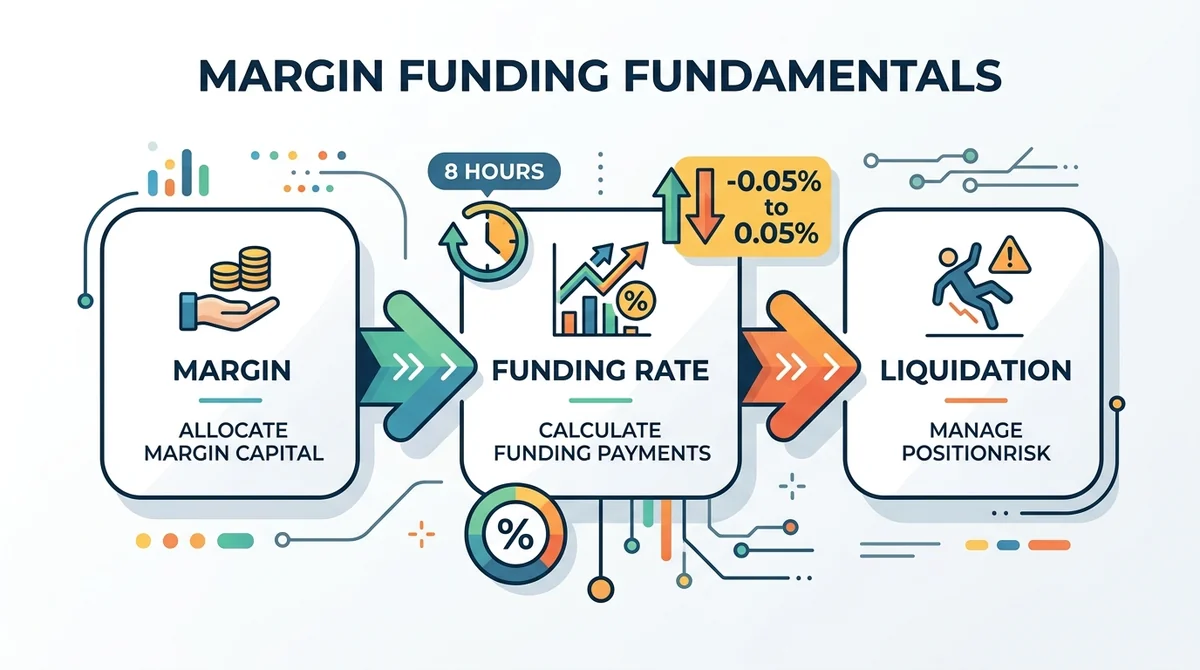
The funding rate is a fee settled periodically between longs and shorts, and it does not go to the exchange. When the contract price deviates from the spot price, the funding rate incentivizes one side to pay the other, pushing the price back toward the spot. The rate level reflects market supply and demand between longs and shorts. Most platforms settle every 8 hours, and historical rates typically fluctuate between -0.05% and 0.05%, but can be higher in extreme market conditions.
#How Often Is It Settled?
Major exchanges generally settle every 8 hours, though some platforms use 4-hour or 1-hour cycles. When the rate is positive, longs pay shorts; when negative, shorts pay longs. The exact cycle and rate are subject to each platform's announcements.
#What Is the Liquidation Price and Why Does Liquidation Occur?
#Are Liquidation and Blow-up the Same Thing?
Liquidation and blowing up usually refer to the same thing: when losses reduce margin to the maintenance margin level, the system automatically closes the position. After liquidation, losses are realized, and in extreme market conditions you may lose your entire margin.
#How to Stay Away from the Liquidation Price?
The liquidation price is determined by leverage, position size, and margin level. The higher the leverage, the closer the liquidation price is to the entry price. For example, with 10x leverage and an entry price of 100 USDT, if the maintenance margin rate is 0.5%, the long liquidation price is about 90.45 USDT (formula: liquidation price = entry price × (1 - initial margin rate) / (1 - maintenance margin rate) = 100 × 0.9 / 0.995). Lowering leverage, keeping extra margin, and setting stop-loss orders can reduce liquidation risk.
#What Risks Should You Understand Before Trading Tokenized Bond Linear Contracts?
#Why Is Leverage Dangerous?
Leverage amplifies both gains and losses. With 10x leverage, a 10% adverse price move can wipe out your entire initial margin; with 20x leverage, only 5% is needed. In unfavorable market conditions, even a small price move can cause a significant reduction in margin, or even total loss.
#What Are the Risks of Tokenized Bonds Themselves?
Tokenized bonds may face credit risk and liquidity risk from the underlying bond, as well as technical risk from the tokenization process.
#What Are Platform Risks?
Exchange security, contract rule changes, and system failures can all affect your positions. It is important to choose a compliant platform with risk control measures.
#How Can Beginners Protect Themselves?
- Learn the basics: Read relevant tutorials first to understand margin, liquidation, and funding rates. Don't rush into live trading.
- Test with a demo or very small funds: Practice in a simulated environment, or validate your strategy with a very small live amount.
- Use low leverage: Beginners are advised to start with 2-5x leverage, keep ample margin, and reduce liquidation risk.
- Set stop-loss orders: Set a stop loss for every trade to avoid holding losing positions that lead to larger losses. You can refer to how to set stop losses.
- Manage position size and funds: Don't invest money you cannot afford to lose, and diversify your holdings.
#FAQ
Q: What is the difference between tokenized bond linear contracts and buying tokenized bonds directly? A: Buying directly means holding the asset. A linear contract is a bet on price movements without holding the underlying. Contracts allow leverage, which amplifies both gains and losses.
Q: How is the margin rate for linear contracts calculated? A: Margin rate = margin ÷ position value × 100%. The higher the leverage, the lower the margin rate and the greater the liquidation risk. For example, 10x leverage corresponds to a 10% initial margin rate.
Q: How often is the funding rate settled, and what do positive and negative rates mean? A: Most platforms settle every 8 hours, some every 4 hours or 1 hour. A positive rate means longs pay shorts; a negative rate means the opposite. It reflects supply and demand between longs and shorts. Check platform announcements for specifics.
Q: Are liquidation price and blowing up the same thing? A: Liquidation and blowing up usually refer to the same thing: insufficient margin triggers forced liquidation by the system. After liquidation, losses are realized, and you may lose your entire margin. With 10x leverage, an adverse price move of about 10% can trigger liquidation (depending on the maintenance margin rate).
Q: What should beginners pay attention to when trading tokenized bond linear contracts? A: Learn first, test with a demo or very small funds, use low leverage, set stop losses, and don't invest money you cannot afford to lose. It is recommended to start with 2-5x leverage.
This article is provided by MSX Learn for educational reference only and does not constitute investment advice. Contract trading involves high risk; please make decisions cautiously.
Reminder: All content in this article is for educational purposes only and does not constitute investment advice.
FAQ
What is the difference between tokenized bond linear contracts and buying tokenized bonds directly?
Buying directly means holding the asset. A linear contract is a bet on price movements without holding the underlying. Contracts allow leverage, which amplifies both gains and losses.
How is the margin rate for linear contracts calculated?
Margin rate = margin ÷ position value × 100%. The higher the leverage, the lower the margin rate and the greater the liquidation risk.
How often is the funding rate settled, and what do positive and negative rates mean?
The settlement cycle of the funding rate is set by the platform; please refer to platform announcements for specifics. A positive rate means longs pay shorts; a negative rate means the opposite, reflecting supply and demand between longs and shorts.
Are liquidation price and blowing up the same thing?
Liquidation and blowing up usually refer to the same thing: insufficient margin triggers forced liquidation by the system. After liquidation, losses are realized, and you may lose your entire margin.
What should beginners pay attention to when trading tokenized bond linear contracts?
Learn first, test with a demo or very small funds, use low leverage, set stop losses, and don't invest money you cannot afford to lose.
Related Terms
Want to see the real data for this concept?
After you sign up, you can view live prices, funding rates, and fees for the related assets.
View live prices and fees →