what is a multisig wallet
A multisig wallet requires multiple private keys to authorize a transaction, like a safe needing multiple keys. This guide explains the principles, pros and cons, setup steps, and security tips in plain language.
Multisig wallet: a cryptocurrency wallet that requires multiple private keys to jointly authorize a transaction. It is like a safe that needs several keys turned simultaneously to open, reducing single-point risk.
#What Is a Multisig Wallet?
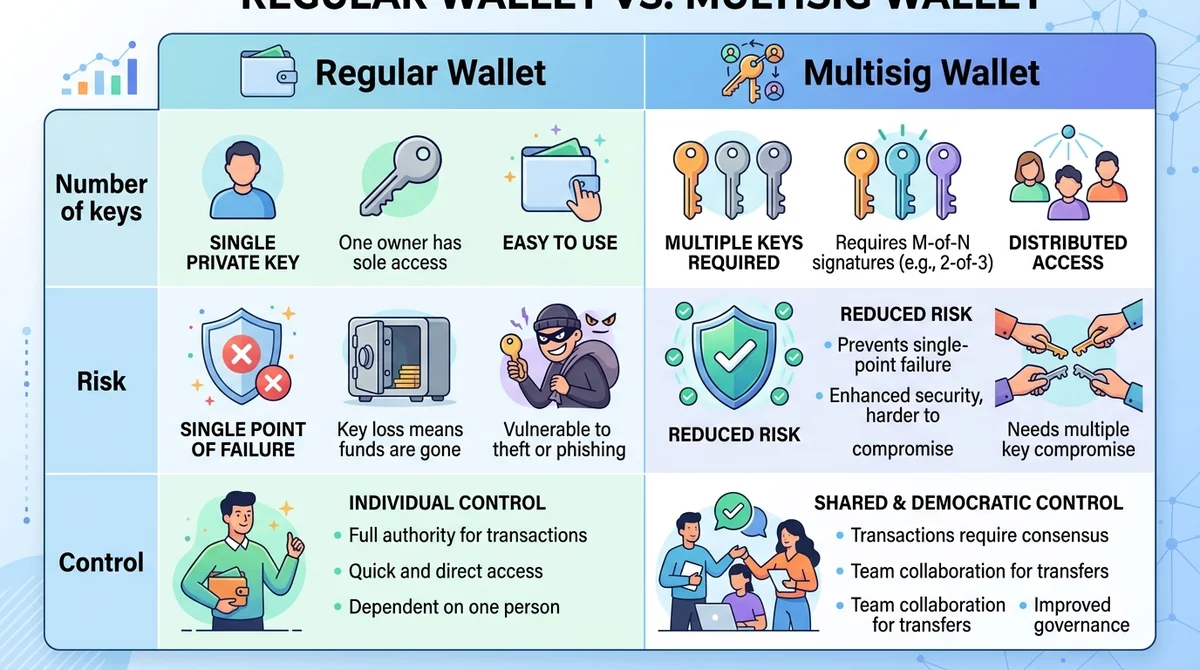
A multisig wallet (multisig wallet) is a cryptocurrency wallet that requires multiple private keys to jointly authorize a transaction. A regular wallet can move assets with just one private key; a multisig wallet requires at least two or more private keys to sign at the same time.
Analogy: A regular wallet is like having only one key at home—anyone who gets it can open the door. A multisig wallet is like a company safe that requires both the finance manager's and the boss's keys to be used at the same time to open.
#How Is It Different from a Regular Wallet?
- Regular wallet: One private key controls all funds; if the private key leaks, assets are lost immediately.
- Multisig wallet: Multiple private keys are held by different people, and a specified number must be gathered to move funds.
- Control: A regular wallet is controlled by one person; a multisig wallet is jointly managed by a team.
#Why Is It Safer?
A multisig wallet spreads risk across multiple keys. A hacker who steals one private key still cannot do anything; they must obtain several at once. As long as not all keys are leaked, assets are relatively safe.
#How Does a Multisig Wallet Work?
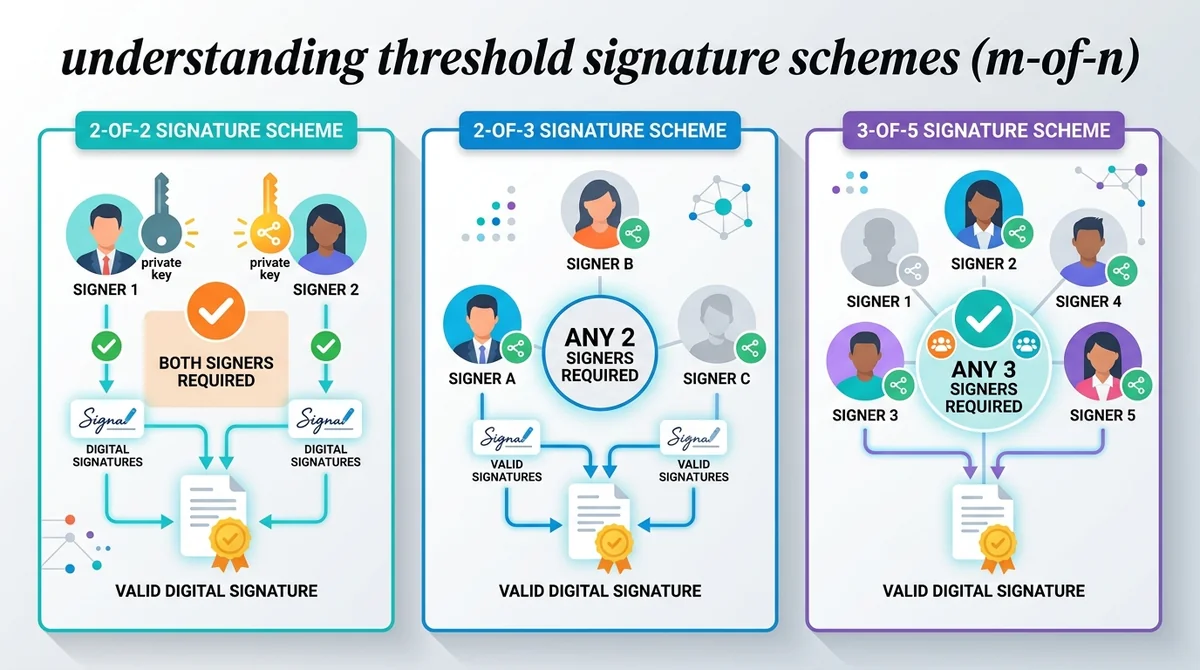
A multisig wallet works through an M-of-N signature scheme. N is the total number of private keys, and M is the minimum number of signatures required for a transaction. For example, 2-of-3 means there are 3 keys in total, and at least 2 signatures are needed to move funds.
Analogy: A company requires an expense report to be signed by at least 2 of 3 managers to be valid—one fewer and it is invalid.
#What Is the M-of-N Signature Scheme?
M-of-N is the core rule of multisig. Common combinations include:
- 2-of-2: Both parties must sign, suitable for a joint account between spouses.
- 2-of-3: Any two of three people can sign, suitable for a small team.
- 3-of-5: Any three of five people can sign, suitable for a large organization or board of directors.
#How Many Signatures Does a Transaction Need?
A transaction needs M signatures. After initiating a transaction, the wallet notifies the other signers. Once M signatures are collected, the transaction is broadcast to the blockchain. With one signature missing, the transaction is stuck.
#What Are the Pros and Cons of a Multisig Wallet?
A multisig wallet is not a panacea; it has benefits and costs.
#What Use Cases Is It Suitable For?
- Team-managed funds: companies, DAOs, family accounts.
- Enhanced security: preventing single-point private key leaks.
- Estate planning: distributing keys to family members to prevent assets from being locked if one person is incapacitated.
#What Are the Potential Risks?
- Complex setup: beginners can easily misconfigure the signature threshold.
- Slower transactions: waiting for multiple signatures takes time.
- Key loss risk: if multiple signers become unreachable at the same time, assets may be permanently locked.
#How to Set Up a Multisig Wallet
Setting up a multisig wallet involves five steps. Be careful at each step; mistakes can lock your assets.
- Choose a wallet tool that supports multisig, such as Safe, Gnosis Safe, etc.
- Create multiple private keys, with each signer keeping one separately—do not store them together.
- Set the signature threshold, such as 2-of-3, to determine the minimum number of signers.
- Test the transaction with a small amount of funds to confirm the configuration is correct before transferring large assets.
- Back up all private keys and recovery information and store them in separate secure locations.
⚠️ Digital assets carry risks; start with a small position.
#Which Tools or Platforms Should You Choose?
Mainstream multisig wallets include Safe (formerly Gnosis Safe), BitGo, Casa, and others. Beginners are advised to practice on a testnet before moving to mainnet.
#What Are the Setup Steps?
The five steps above are the main line. The key point is that private keys must be stored separately by different people, not on the same phone or computer.
#What Security Precautions Should You Take When Using a Multisig Wallet?
The security core of a multisig wallet is distributing keys, but distribution does not mean storing them carelessly.
#How to Back Up Private Keys
- Each signer backs up their own private key or seed phrase.
- Backups should be kept offline, such as written on paper or stored in a hardware wallet.
- Do not take photos, screenshots, or store them in cloud drives.
#How to Prevent Private Key Loss
- Keep at least one off-site backup to protect against fire or flood.
- Regularly check that signers can still sign normally.
- If a signer becomes unreachable, replace the key or adjust the threshold promptly.
Risk warning: A multisig wallet does not constitute investment advice. Any digital asset operation carries risks; please assess them yourself.
#FAQ
Is a multisig wallet suitable for personal use? Yes. An individual can use a 2-of-3 scheme, holding two keys themselves and giving one to a family member or lawyer to prevent accidents.
Does a multisig wallet slow down transactions? Yes. Every transaction requires multiple signatures, making it slower than a regular wallet. It is suitable for scenarios with infrequent transfers.
What if a signer loses their private key? If the remaining signers can still reach the threshold, operations can continue. If the threshold cannot be reached, assets may be permanently locked.
Does a multisig wallet support all cryptocurrencies? Not necessarily. Multisig functionality depends on blockchain and wallet support; major cryptocurrencies are generally supported, but niche tokens may not be.
Which is safer, a multisig wallet or a hardware wallet? The two can be combined. A hardware wallet protects a single private key, while a multisig wallet distributes control. Using them together provides higher security.
This article only covers concepts; when you are ready to try it out, check out the live tools on the main MSX site.
FAQ
What is a multisig wallet?
A multisig wallet is a cryptocurrency wallet that requires multiple private keys to jointly authorize a transaction, reducing single-point failure risk by distributing control.
How does a multisig wallet work?
A multisig wallet works through an M-of-N signature scheme, meaning a transaction requires at least M signatures out of N private keys to be broadcast to the blockchain.
What are the pros and cons of a multisig wallet?
The pros are enhanced security and suitability for team-managed funds; the cons are complex setup, potentially slower transactions, and the risk of assets being locked if keys are lost.
How do you set up a multisig wallet?
Choose a wallet tool that supports multisig, create multiple private keys, set the signature threshold, and verify the configuration with a small test transaction.
What security precautions should you take when using a multisig wallet?
You should back up private keys in a distributed manner, avoid single-point storage, and regularly check the availability of each signer to prevent assets from being permanently locked.
Related Terms
Want to see the real data for this concept?
After you sign up, you can view live prices, funding rates, and fees for the related assets.
View live prices and fees →