what is a spot ETF
Spot ETFs directly hold assets like Bitcoin or gold. Buying shares means indirect ownership. Learn how spot ETFs work, their differences from futures ETFs, and risks.
Spot ETF is a fund that directly holds real assets such as Bitcoin or gold. When you buy its shares, you indirectly own those assets.
#What Is a Spot ETF?
ETF: Exchange-traded fund. Traded on exchanges like a stock.
Spot: Directly holds the real asset, not a contract.
Spot ETF: The fund directly buys and custodies Bitcoin or gold. When you buy fund shares, you gain exposure to the asset's price movements.
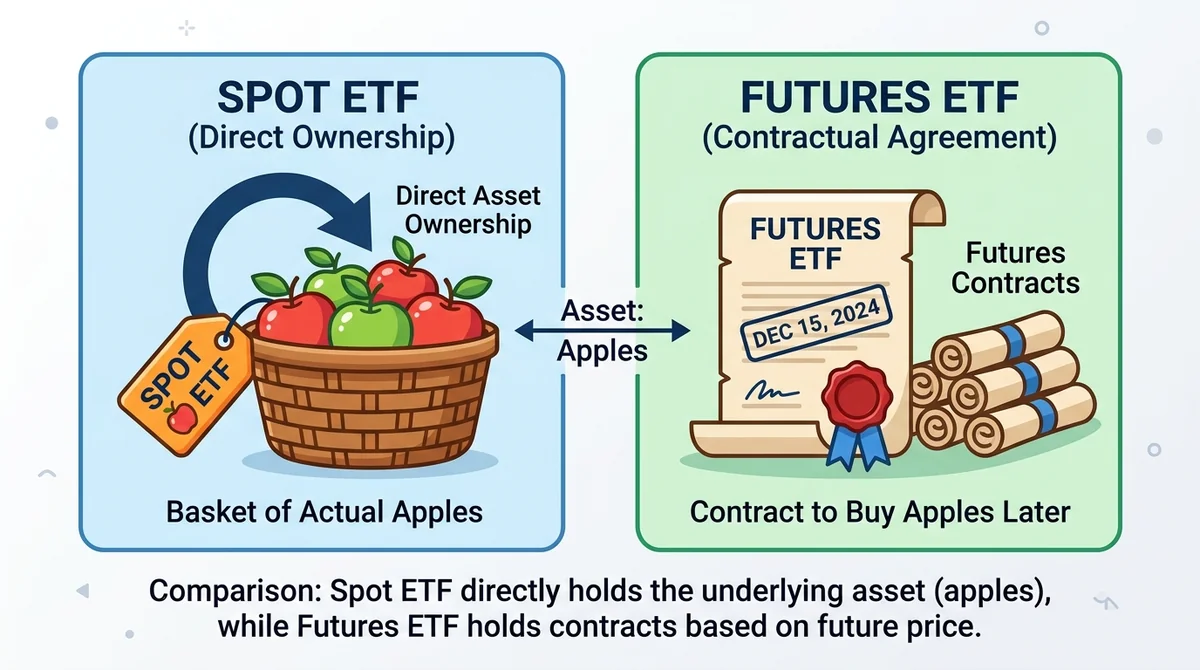
Analogy: A spot ETF is like buying a claim ticket for a basket of apples. There really are apples behind the ticket. A futures ETF is like buying a contract to receive apples at a future date.
#How Does a Spot ETF Work?
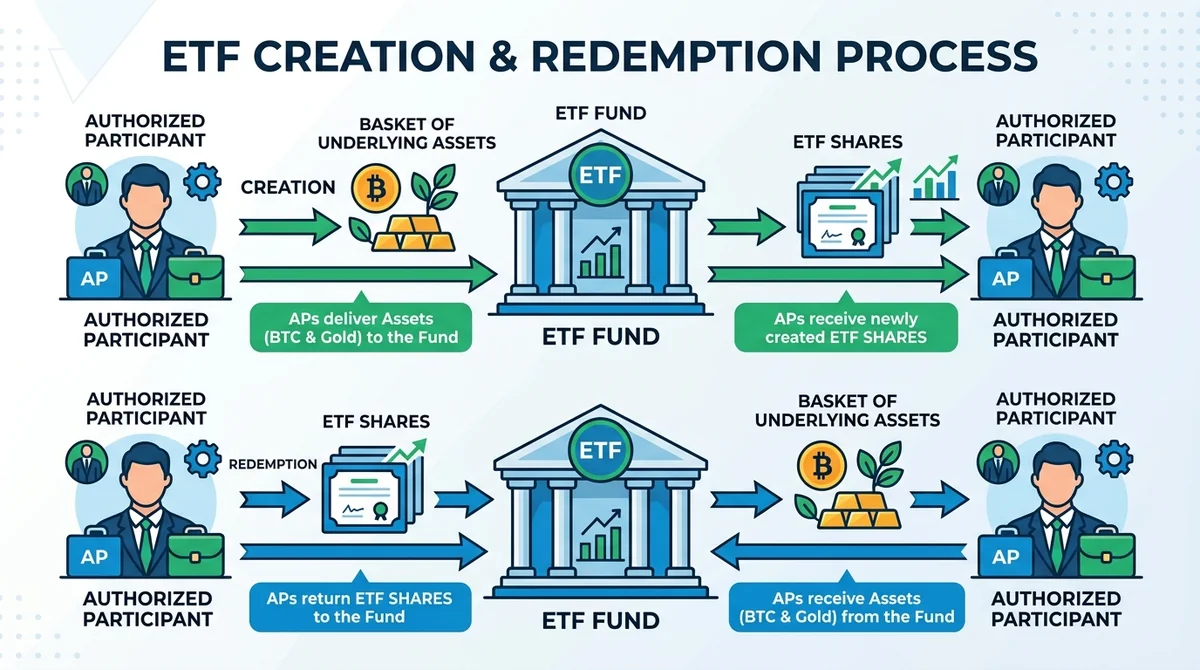
Creation and Redemption: Authorized participants (APs) exchange real assets for fund shares. Redemption works in reverse: shares are exchanged back for assets.
Price Determination: Market price is set by supply and demand. Arbitrageurs keep the price close to net asset value (NAV).
Analogy: The fund is like a big warehouse. APs put apples into the warehouse and take out claim tickets. The ticket price doesn't drift far from the apples because someone will arbitrage the difference.
#What's the Difference Between Spot ETFs and Futures ETFs?
| Comparison | Spot ETF | Futures ETF |
|---|---|---|
| Assets Held | Real Bitcoin/gold | Futures contracts |
| Price Tracking | Tracks spot price closely | May deviate, has rollover costs |
| Rollover Costs | None | Yes, monthly or quarterly contract rollover |
Spot ETF: Like buying apples and keeping them at home.
Futures ETF: Like signing a contract to buy apples at a set price next month. When the contract expires, you must roll into a new one, which may cost extra.
#What Are the Advantages and Risks of Investing in Spot ETFs?
Advantages:
- Convenience: No need to custody Bitcoin or gold yourself.
- Liquidity: Buy and sell anytime on the exchange.
- Diversification: One ETF may hold multiple assets.
Risks:
- Management fees: The fund company charges annually.
- Tracking error: Price may not exactly equal NAV.
- Market risk: The underlying asset itself can drop sharply.
Note: This article explains concepts only and is not investment advice. Digital assets are volatile; start with a small position.
#Common Types of Spot ETFs
Spot ETFs cover various asset classes. Common ones include:
- Bitcoin Spot ETF: Directly holds Bitcoin, tracking its price.
- Gold Spot ETF: Directly holds physical gold, tracking gold prices.
- Equity Spot ETF: Directly holds a stock portfolio, tracking a stock index.
Different types of spot ETFs differ in custody methods, fee structures, and regulatory requirements, but the core logic is the same: the fund truly holds the underlying assets.
#How to Choose a Spot ETF?
When choosing a spot ETF, consider the following:
- Expense Ratio: Lower management fees mean lower long-term holding costs.
- Liquidity: ETFs with high trading volume and tight bid-ask spreads are easier to enter and exit.
- Tracking Error: ETFs with historically low tracking error stay closer to NAV.
- Custodian: Check whether the fund's asset custodian is reliable.
This information is usually available on the fund's official website or exchange announcements.
#FAQ
What's the difference between a spot ETF and buying Bitcoin directly? A spot ETF has the fund custody the assets, so you don't need to manage private keys yourself, but you pay a management fee. Buying Bitcoin directly requires you to manage your own wallet, with no management fee but full security responsibility.
Is a spot ETF safe? Spot ETFs are regulated as securities, but the underlying asset (like Bitcoin) is highly volatile, and the fund still carries management risk and counterparty risk. Evaluate carefully before investing.
Is a spot ETF suitable for beginners? For beginners who don't want to manage private keys themselves, a spot ETF offers a convenient indirect investment method, but you still need to understand fees and tracking error.
Do spot ETFs pay dividends? Bitcoin spot ETFs typically do not distribute dividends; returns come from price changes. Some equity or bond ETFs may pay dividends. Refer to the fund prospectus for specifics.
How to buy a spot ETF? You need to open an account with a stock exchange that supports the ETF and place an order through a broker, just like buying stocks.
How does the creation and redemption mechanism affect ordinary investors? Ordinary investors usually do not directly participate in creation and redemption, but this mechanism ensures the ETF price stays close to NAV, allowing investors to trade at fair prices.
What's the difference between a spot ETF and spot trading? A spot ETF is indirect ownership of assets through a fund, while spot trading is directly buying and selling the asset itself. ETFs offer custody and convenience but charge a management fee.
FAQ
What's the difference between a spot ETF and buying Bitcoin directly?
A spot ETF has the fund custody the assets, so you don't need to manage private keys yourself, but you pay a management fee. Buying Bitcoin directly requires you to manage your own wallet, with no management fee but full security responsibility.
Is a spot ETF safe?
Spot ETFs are regulated as securities, but the underlying asset (like Bitcoin) is highly volatile, and the fund still carries management risk and counterparty risk. Evaluate carefully before investing.
Is a spot ETF suitable for beginners?
For beginners who don't want to manage private keys themselves, a spot ETF offers a convenient indirect investment method, but you still need to understand fees and tracking error.
Do spot ETFs pay dividends?
Bitcoin spot ETFs typically do not distribute dividends; returns come from price changes. Some equity or bond ETFs may pay dividends. Refer to the fund prospectus for specifics.
How to buy a spot ETF?
You need to open an account with a stock exchange that supports the ETF and place an order through a broker, just like buying stocks.
Related Terms
Want to see the real data for this concept?
After you sign up, you can view live prices, funding rates, and fees for the related assets.
View live prices and fees →