What Is a Custodial Wallet?
A custodial wallet is a digital asset wallet where a third party holds your private keys. Learn its pros, cons, how to choose one, and safety tips.
A custodial wallet is a wallet where you entrust your digital assets to a platform for safekeeping. The platform manages your private keys, and you can operate using just your account credentials. It's like depositing money in a bank: the bank manages the vault, and you manage your bank card.
#What Is a Custodial Wallet?
A custodial wallet has its private keys held by a third party (such as an exchange). You only need to register an account to send and receive assets. The platform is responsible for security; you are responsible for remembering your password.
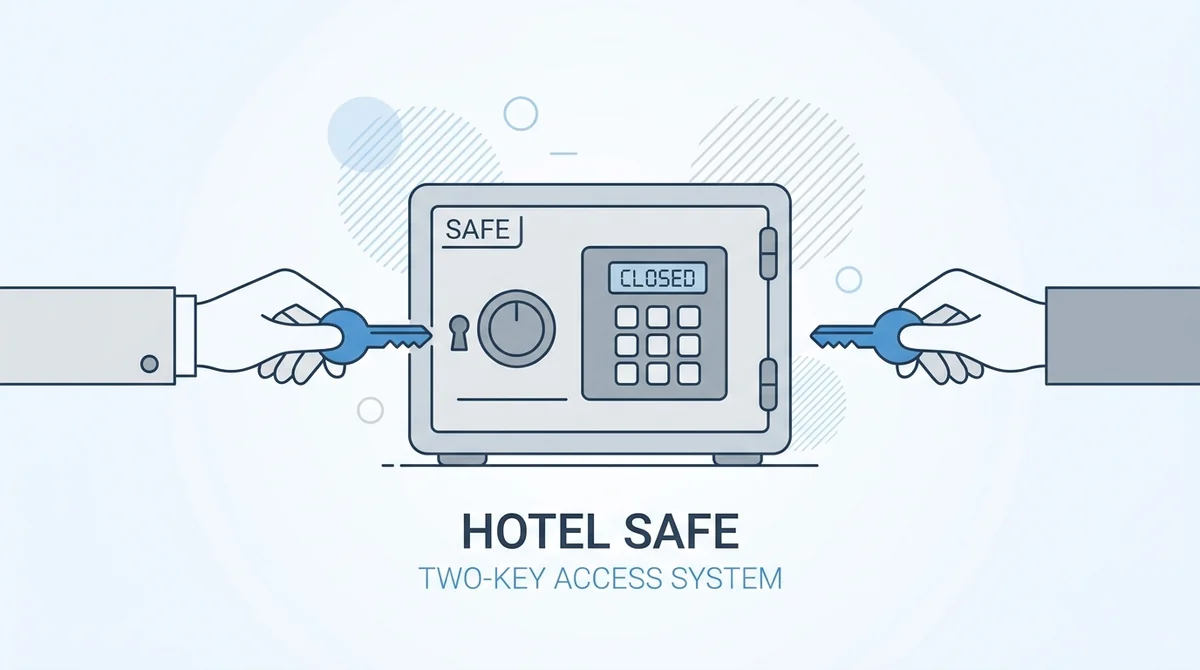
Analogy: A custodial wallet is like a hotel safe. The front desk has a spare key, so you can recover access if you lose your key. But the front desk can also open your safe.
#What is the difference between custodial vs non-custodial wallet which is safer?
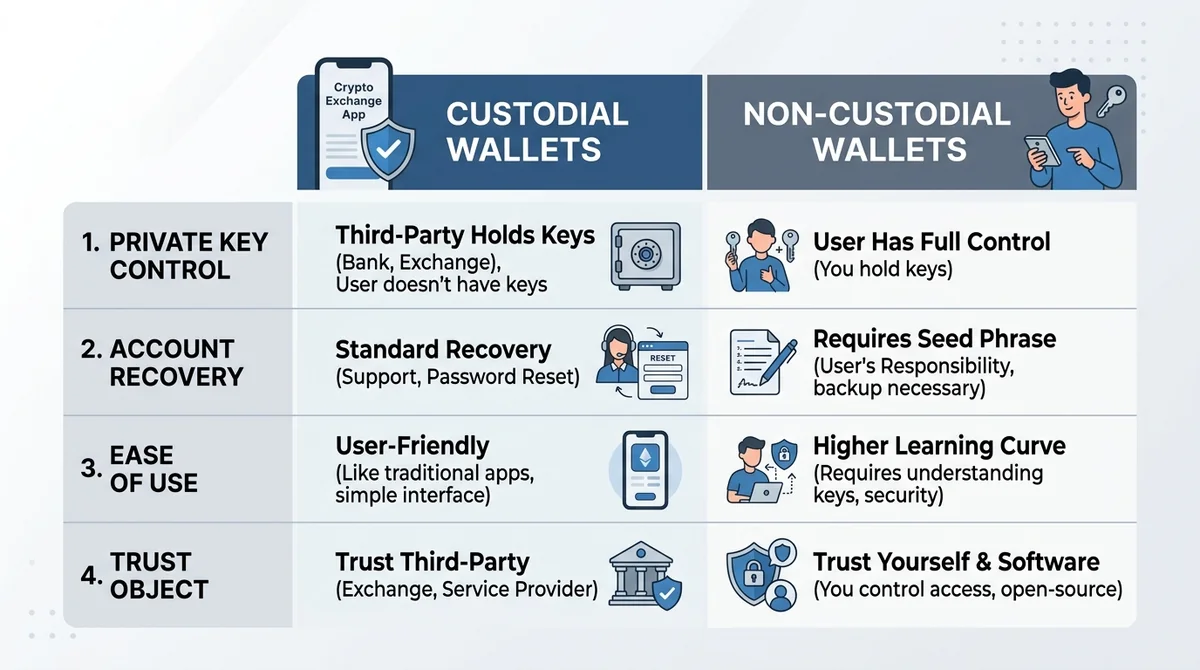
| Feature | Custodial Wallet | Non-Custodial Wallet |
|---|---|---|
| Private key control | Held by platform | Held by user |
| Account recovery | Can be recovered via platform | Assets permanently lost if seed phrase is lost |
| Ease of use | Low, suitable for beginners | High, requires self-backup |
| Trust object | Platform | Yourself |
#Why do platforms hold users' private keys?
Platforms hold private keys to provide convenient services. Users can reset forgotten passwords, and asset operations are simpler. But the trade-off is that you must trust the platform.
#What Are the Pros and Cons of a Custodial Wallet?
Pros:
- Simple to use, ready after registration.
- Forgot password? You can recover it.
- Platform provides customer support.
Cons:
- Private keys are not in your hands; control belongs to the platform.
- If the platform is hacked or goes rogue, assets may be lost.
- Platform may freeze your account.
#Why do beginners often choose custodial wallets?
Beginners are unfamiliar with private key management and can easily lose or have them stolen. Custodial wallets lower the entry barrier, but you need to understand the risks.
#What risks might you face when using a custodial wallet?
The main risk is platform risk. If the platform goes bankrupt, gets hacked, or maliciously exits, your assets may be unrecoverable.
#How to Choose a Suitable Custodial Wallet?
When choosing a custodial wallet, focus on platform reputation, security measures, and compliance. Don't put your money in unknown small platforms.
Factors to consider:
- Is the platform regulated and licensed?
- Does it use cold storage for most assets?
- Is there an insurance fund or user protection plan?
- User reviews and historical security record.
#What factors should you focus on when choosing a custodial wallet?
Prioritize platforms with long operating history, good reputation, and compliance licenses. Check if the platform publicly discloses proof of reserves.
#What are some common custodial wallet platforms?
Common ones include built-in wallets of centralized exchanges, such as Binance, Coinbase, OKX, etc. These platforms offer custodial services, but risks vary.
#What Security Measures Should You Take When Using a Custodial Wallet?
Even if the platform holds your private keys, you should secure your account.
- Enable two-factor authentication (2FA), preferably using an authenticator app.
- Set a strong password and change it regularly.
- Beware of phishing emails and fake websites; don't click suspicious links.
- For large amounts, consider diversifying across multiple platforms or What is a non-custodial wallet.
- Regularly review account activity and contact the platform immediately if you notice anything unusual.
⚠️ Digital assets involve risk. This article does not constitute investment advice. Please act prudently based on your own situation.
#How to reduce the risks of using a custodial wallet?
Don't keep all your assets on one platform. Use custodial wallets for small transactions, and consider a non-custodial wallet for long-term storage.
#How important are two-factor authentication and strong passwords?
Very important. Two-factor authentication prevents account theft even if your password is leaked. Strong passwords reduce the chance of brute-force attacks.
#FAQ
Is a custodial wallet safe? The safety of a custodial wallet depends on the platform. Choose a reputable platform with robust security measures and protect your account well, and the risk is manageable. But no wallet is absolutely safe.
Which is better for beginners: custodial or non-custodial wallet? Beginners usually find custodial wallets more suitable because they are easy to use and recoverable. But you need to understand platform risks and gradually learn to use non-custodial wallets.
If the platform exits scam, can I get my assets back? It's very difficult. After a platform exit scam, user assets are usually hard to recover. Therefore, choose compliant, regulated platforms and avoid storing large amounts.
How to judge if a custodial wallet platform is reliable? Check whether the platform is regulated, has security certifications, user reputation, and whether it discloses proof of reserves. Avoid platforms with little recognition or many negative news reports.
FAQ
What is a custodial wallet?
A custodial wallet is a digital asset wallet where a third party (such as an exchange) holds the user's private keys. Users manage assets through a platform account without needing to secure private keys themselves, but they must trust the platform.
What is the difference between custodial vs non-custodial wallet which is safer?
In a custodial wallet, the platform holds the private keys and users operate via an account; in a non-custodial wallet, users hold their own private keys, and losing the seed phrase means permanent asset loss. The former is easy to use but relies on the platform; the latter offers autonomy but greater responsibility.
What are the risks of using a custodial wallet?
The main risk is platform risk, including hacking, internal theft, exit scams, or account freezes. Users should choose reputable platforms and implement account security measures.
How to choose a suitable custodial wallet?
Consider the platform's reputation, compliance licenses, security measures (such as cold storage, insurance), user reviews, and history. Avoid platforms that are unknown or have poor security records.
Is a custodial wallet safe?
The safety of a custodial wallet depends on the platform. Choose a reputable platform with robust security measures, enable two-factor authentication, use strong passwords, and beware of phishing attacks to reduce risk. But no wallet is absolutely safe.
Related Terms
Want to see the real data for this concept?
After you sign up, you can view live prices, funding rates, and fees for the related assets.
View live prices and fees →