Why Crypto Exchanges Require KYC
KYC means Know Your Customer, the identity verification process exchanges use. Learn why exchanges require KYC, its benefits, the steps, and privacy tips.
Answer: KYC is the identity verification process known as "Know Your Customer." Cryptocurrency exchanges are typically bound by anti-money laundering and sanctions compliance requirements, so they must confirm users' real identities before enabling deposits, withdrawals, and trading.
#What Is KYC, and Why Must Exchanges Do It?
KYC stands for Know Your Customer. It is an identity verification process, not an attempt by the exchange to make things difficult for users.
What documents do you need to submit? Common materials include a government-issued ID (national ID card or passport), facial recognition, and, on some platforms, proof of address. Specific requirements vary by platform and jurisdiction.
Can you trade without completing KYC? Most compliant exchanges require it: without completing verification, you cannot deposit, withdraw, or trade. Whether it is mandatory and how far the restrictions go depends on platform rules and local regulatory requirements.
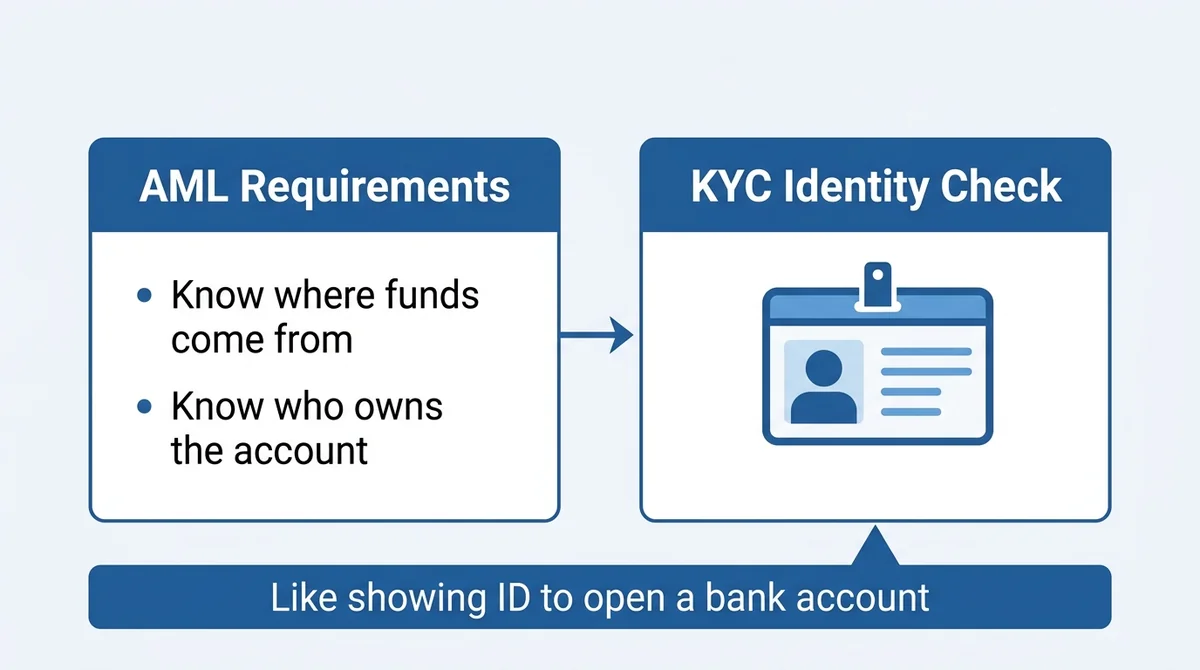
How does KYC relate to anti-money laundering? Anti-money laundering rules require financial institutions to know "where the funds come from and who owns the account." KYC is the first step in identifying users, and the two work together.
Analogy: KYC is like showing your ID to open a bank account — the bank doesn't distrust you; the rules require it to know who you are.
#What Are the Benefits of KYC for Regular Users?
KYC ties an account to a real identity, making account theft and fraud harder to carry out.
What risks does identity verification prevent?
- Account thieves have a harder time withdrawing funds freely, because platform risk controls can block suspicious activity.
- Impersonating someone else to commit fraud becomes more costly.
- If a dispute arises, the platform has a traceable identity record.
How does KYC help if your account is stolen? Users can appeal to the platform using their identity information and request that the account be frozen and unusual logins investigated. Whether assets can be recovered depends on the specific circumstances.
Why are compliant exchanges more trustworthy? Regulated platforms must follow rules on customer asset protection and anti-money laundering, and KYC is one part of that. But "compliant" does not mean zero risk; users should still evaluate a platform's credentials themselves.
#How Does the KYC Process Usually Work, and What Should Beginners Prepare?
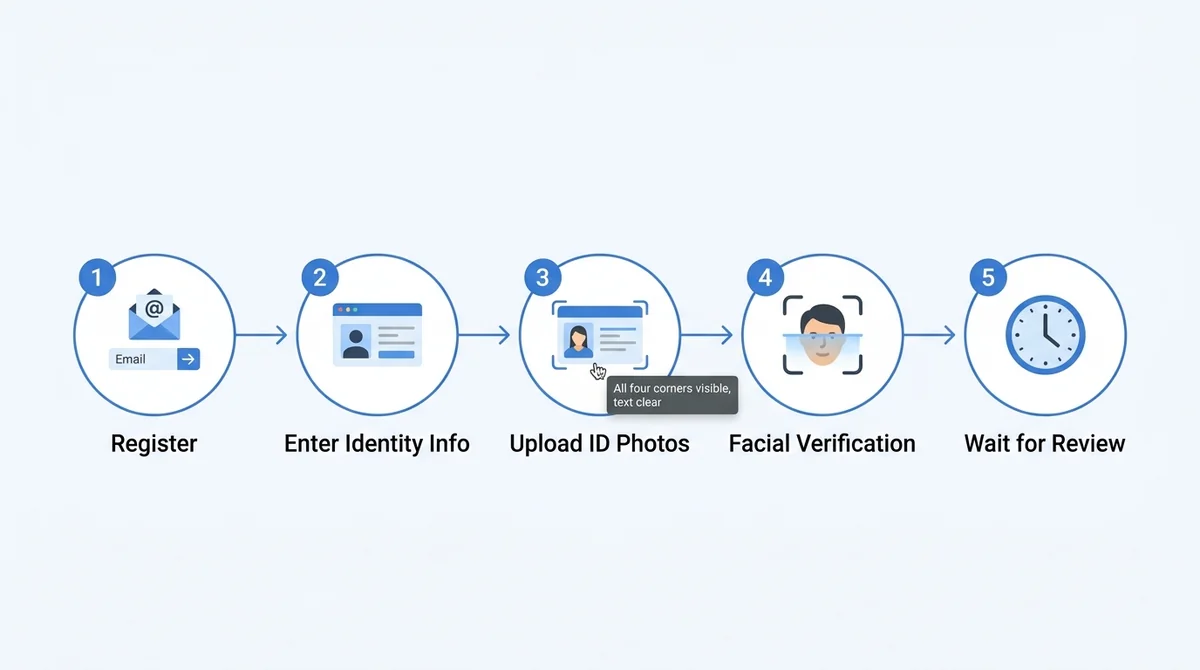
The typical process is below; follow the prompts on each platform's pages for the exact steps:
- Register an account: Sign up with an email address or phone number.
- Enter your identity information: Name, ID number, residential address, and so on, which must match your documents.
- Upload photos of your ID: Make sure it is valid, all four corners are visible, and the text is clear.
- Complete facial verification: Follow the prompts in a well-lit, unobstructed environment.
- Wait for review: Timing varies by platform and review volume; refer to the on-page prompts.
What if you get rejected? Common causes are blurry photos or inconsistent information. Resubmit as prompted, and if problems persist, use the official customer service channel.
⚠️ Risk notice: Digital asset prices are highly volatile. This article is for educational purposes only and is not investment advice.
#What Privacy and Security Risks Should You Watch for During KYC?
KYC materials are highly sensitive information, and if leaked they could be used for fraud.
How can you tell whether a verification page is official? Complete verification only in the official app or on the official website. Don't click unfamiliar links or scan QR codes of unknown origin.
Why should you never send ID photos to someone claiming to be customer service? Legitimate platform support will never ask for your ID photos, verification codes, or passwords, and will never ask you to transfer funds. If you encounter such requests, verify directly through official channels.
Why do decentralized wallets usually not require KYC? Self-custody wallets are managed by users themselves, who hold the private keys and assets, with no centralized institution verifying identity. But this also means that if the private key is lost, usually no one can help you recover it.
Analogy: KYC materials are like a copy of your ID — give them only to legitimate institutions, not to strangers.
#How Does KYC Relate to Encryption?
What role does encryption play in transmitting identity data? Identity data is typically protected by encryption during transmission and storage, reducing the risk of theft or tampering.
Why is blockchain itself not anonymous? A blockchain address is a pseudonym rather than full anonymity. Transaction records are publicly viewable, and combined with exchange KYC, a link between on-chain addresses and real identities may be established.
This article explains concepts only and is not investment advice; to learn about specific platform features, consult their official documentation.
FAQ
Why must crypto exchanges require KYC?
Exchanges are typically bound by anti-money laundering and sanctions compliance requirements and must identify users' real identities to provide services. KYC is the standard identity verification process, and without completing it you usually cannot deposit, withdraw, or trade. Specific rules vary by platform and jurisdiction.
What documents does KYC require?
Common materials include a government-issued ID (national ID card or passport) and facial recognition, and some platforms also require proof of address. Documents must be valid, legible, and match your identity.
What are the benefits of KYC for regular users?
KYC ties an account to a real identity, raising the cost of account theft and fraud. If something unusual happens, platform risk controls can block operations, and if a dispute arises there is a traceable identity record.
How can I protect my privacy during KYC?
Submit materials only in the official app or on the official website, and don't click unfamiliar links. Legitimate support will never ask for ID photos or verification codes or request transfers. Leaked KYC materials could be used for fraud.
Why don't decentralized wallets require KYC?
Self-custody wallets are managed by users themselves, who hold the private keys and assets, with no centralized institution verifying identity. But users bear the risk of losing their private keys themselves.
Related Terms
Want to see the real data for this concept?
After you sign up, you can view live prices, funding rates, and fees for the related assets.
View live prices and fees →